NPR has Lucinda Williams's new album, Blessed, which will be released March 1, streaming in its entirety:
Williams also offers up a touching requiem to a good friend in "Copenhagen," in which Greg Leisz and his various guitars really shine. She contemplates and questions war — and her changing attitude toward American politics — in "Soldiers Song," for which she adopts the perspective of a solider who's far away from his young family. (Only Lucinda Williams could make the line, "Baby tells the little one / Daddy's gone bye-bye" sound unaffected and totally sincere.) And in "Born to Be Loved," she rocks a sultry blues sound, but in a surprisingly optimistic way. It's the antithesis of "Seeing Black," in which she sings, "You weren't born to suffer / You weren't born for nothing / You were born to be loved."
NPR had the right idea. Suggesting songs or albums that would help a 13-year-old get through her adolescence is a great way to connect with and guide the next generation, but I don't know many 13-year-old girls raised on a steady diet of Katy Perry and Ke$ha who could really get into King Crimson's In the Court of the Crimson King or Neil Young's After the Goldrush. Any chance one would have to drive a teenage girl away from pop music's message that she has to be thin, sexy, and available to boys, take it. But Neil Young isn't going to cut it. At 13, I would have dismissed it as "dad rock."(If you have to go the Bob/Neil/Bruce route, I'd suggesting buying her a guitar to go along with cds.)
Truth be told, I wasn't listening to much of anything at 13. My neighborhood didn't have MTV yet, and my parents kept the radio tuned to talk or country. What little music I listened to had to be so ubiquitous that it was unavoidable. The trifecta of Cyndi Lauper's She's So Unusual, Culture Club's Colour By Numbers, and Thriller made up the entirety of my record collection. I didn't really start getting into music until my late teens or early twenties. Fortunately for me, a lot of great music came out during the latter part of the 80s and into the 90s with the rise of commercial "alternative" rock. (Biggest oxymoron in the world, I know, but it did shake up the music industry for a few years, and dealt the final blow to hairspray rock.) However, by then I was a little too old to really enjoy it. I wish some of it was around when I was younger. If I could send a care package to my 13-year-old self, this is what it would include:
Queen Latifah's "Ladies First" and "U.N.I.T.Y"
My earliest taste of feminism came courtesy of hip hop, and both these songs left a huge impression on me. Hearing Queen Latifah in "U.N.I.T.Y" threaten to punch her harassers "dead in the eye" planted the seed in my head that, "Wow. I can do that?" I never had to, but I used to play that song on a loop in my brain whenever I'm walking home alone.
Patti Smith's "Gloria" Jesus died for somebody's sins but not mine... Truer words have never been spoken, especially to a budding atheist like myself. I kind of wish someone would have pointed me toward this song when, at age eleven, I asked my dad how I could become excommunicated from the church. I actually got to see Patti Smith a few years ago, and it was the closest I've ever been to a true religious experience.
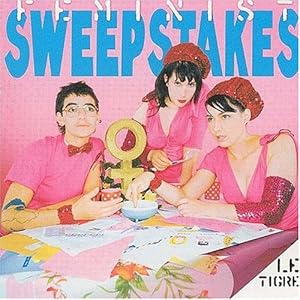
Le Tigre's Feminist Sweepstakes
Going with the entire album here, as there are few artists these days calling themselves feminists, and even fewer records that make the word sound not scary or antiquated.
TLC's "No Scrubs"
What I've always loved about this song, though it was a huge pop hit, was that it was completely free of the victimization of street harassment. Many times "message" songs make me feel more powerless than I did before. This one doesn't, and puts the onus on the creepy guy "hanging out the passenger side."
So, what songs are albums would you recommend to a girl just entering her teens?
In March, NPR asked over 700 female musicians about their experiences in the music industry. Those stories, unedited and uncensored, are now available on NPR's website and they are, "by turns infuriating, hilarious, downright inspiring and heart-breaking."
The project is called Hey Ladies: Being A Woman Musician Today, and topics cover everything from the inevitable sexism of being "the girl in the band"to raising families while being a working musician, plus lots of advice to novice musicians and how much -- or sometimes how little -- the music industry has changed:
Dot Allison: "I think women need to see themselves as worthy without having to allow themselves to be sexualized in a 'victim' kind of way... sexuality is beautiful.. but I think the objectification of any human being in an exploitative way is really sad."
Marissa Nadler: "I think women today have a more DIY approach, with much of that due to the prevalence of technology. Women can book their own tours and build their own fanbases, as well as control their own images and imagery, from home. They don't necessarily need a record label and they don't need a label telling them how to dress or how to sound."
Bettye Lavette: "I see differences between women after the seventies. Women entertainers were suggestive until then. Women have become way too salacious since then. There is little left to the imagination."
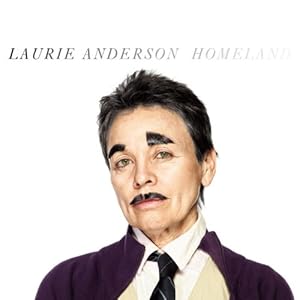
"Anderson gets help from a lot of similarly provocative innovators: vocals by Antony Hegarty, Four Tet's Kieran Hebden on keyboards, Lou Reed on guitar, John Zorn on saxophone and vocal assistance from Tuvan throat singers. And, through application of an effect she calls "audio drag," Anderson even turns to her male alter ego, Fenway Bergamot."
NPR has an interesting podcast about shock value and popular music. As for which "controversial" artist marks my generation, I fall somewhere between Ozzy biting the head off a bat and Marilyn Manson... well, being Marilyn Manson (both, by the way, mentioned in the podcast), but most of the musicians I listened to in the waning years of the 80s through the alterna/grunge/you-pigeonhole-it 90s preferred earnestness to courting controversy. However, I have to bring this quote from pop culture critic, Ronda Pierce:
"I think it's increasingly harder to shock people, but what is relevant with these three particular works (Lady Gaga's "Telephone," "Born Free" by M.I.A., and Erykah Badu's "Window Seat") is that they're by women. And I don't think in the time of Ozzy Osbourne that women could make as strong a statement as these three women are making now."
Reading that, my reaction is to "but.. but" with women like Nina Hagen, Patti Smith, Yoko Ono, and so on... none of whom was afraid of a little shock value. Oh and then there's Madonna. Not controversial at all, she. Save for Madonna, those artists weren't exactly mainstream, as show host Neda Ulaby noted:
"As least not in mainstream media. And the internet has changed what counts as mainstream..."
I think it needs mentioning that shock value and controversy are two different things. I'd consider an artist like, oh, Steve Earle controversial, but not hardly shocking. This is why I find it confusing to think of Lady Gaga's (or Badu's, or hell, Miley Cryus's) videos as being a cause célèbre for the music blogosphere. The line between shock and controversy gets a little blurry, Or I'm just getting old.