
Showing posts with label 90s. Show all posts
Showing posts with label 90s. Show all posts
Sunday, March 30, 2014
Video of the Day: David Foster Wallace on the future of literature in the information afe
From the Charlie Rose Show, 1996.

Saturday, January 11, 2014
Saturday, October 19, 2013
Earworm of the Day: Propagandhi - Refusing to be a Man
So I'm not totally sold on cis, het dudes singing about sexism (see Fugazi's Suggestion), but this is one of the better ones. That it examines masculinity in a way that doesn't try to explain (mansplain) sexism to women is a huge deal.
Tuesday, July 16, 2013
Tuesday, June 25, 2013
Liz Phair and the problem of universality

I did own Guyville. I bought it about five years after it was released as part of my Columbia House "12 for a dollar" (or whatever) quota. When it was first released, it flew under my radar with a lot of cool "indie" stuff that the local alternative radio station wasn't playing (read: any music that wasn't Alice in Chains or Stone Temple Pilots). I remember a write-up in Vogue, of all places, with Phair draped languidly in a chair, guitar in her lap. She looked cool enough; cooler than me. I used to have this little test for vetting new favorites: would this artist let me sit at their lunch table? Liz Phair most definitely wouldn't. When I finally got around to hearing Guyville, I was less than impressed. I thought her voice was weak and her guitar playing subpar. (For what it's worth, I had a similar reaction to the Replacements for the first time, the only band for whom I've managed to sustain an unhealthy: they can't play, he can't sing).
Granted, in the world of rock and roll, passion wins out over talent, but I never felt the same connection to Guyville and Liz Phair that many women of my generation felt. I wasn't in a relationship, and didn't have any desire to be in one, and a lot -- okay, all -- of the songs were about relationships (specifically heterosexual ones, but more on that in a minute). It's a handy excuse, but it didn't stop me from loving other relationship-centered pop music.
But here lies the problem of universality: music made by a white, conventionally attractive, middle-class, heterosexual woman can be called "universal" because hers is the voice thats most likely to be heard, even rock's boys' club. I don't fault any woman for having an emotional connection to Guyville, but it really needs to be re-examined as something that spoke to, or for, an entire generation of woman.
Saturday, June 22, 2013
Earworm of the Day: Imani Coppola - Legend of a Cowgirl
I feel like such a dork. I used to love this song, but could not, for the life of me, remember its name nor the artist who sang it. I had to Google it by its unmistakeable sample of Donovan's "Sunshine Superman" (which has long been a stealth favorite of mine).
Sunday, June 24, 2012
Earworm of the Day: Guided by Voices - I Am A Scientist
I've been to exactly one Guided By Voices show, a few months before they broke up in the early 00s. It had been postponed once due to Bob Pollard's back injury, and even then he performed most of the show sitting down (where, at some point, he launched into a monologue about how shittily they were being paid). I think I may have been one of a handful of women at the show, and while I knew GBV was the prototypical indie dude band, it was a little disconcerting. A large part of being a fan is interacting with other fans. It's one thing to trade shows, along with the minutia of indie rock fandom, with online phantoms, it's quite another to have to be assumed to be someone's wife, dragged to the show under duress.
Anyway, this is a pretty obvious, I guess, quazi-hit -- or what qualifies as a hit for a band that remained largely underground. It hits a lot of early 90s video stereotypes: grainy B&W, shaky camera angles. But it's one of Bob Pollard's most straightforward songs.
Monday, June 11, 2012
Earworm of the Day: Mary Lou Lord - Lights Are Changing
Some songs smack so much of the era they're from that they're practically encased in amber.
I try to avoid the most obvious of the 90s nostalgia craze, but I rarely hear this song anymore and at one point it was a big part of my low-power/college radio listening life. There were two stations I could tune to in the pre-iTunes 90s that weren't big corporation owned: one was a really weak college radio station, and the other was a larger, public radio station that -- at the times -- doled out indie rock and pop between their usual blues and bluegrass. The college station's signal I could only pick up in the hallway outside the bathroom of my small apartment, and, weakly, on the front porch. Sometimes I'd have to physically hold the antenna for the signal to steady itself. Oh the things we did not to hear another Dishwalla or Everclear song.
Sunday, April 8, 2012
Death of the music snob/ Long live the music snob
"Obscure knowledge was once a kind of currency. To get it, you had to be in the loop. You had to know the right people to learn about the right bands. You had to know the right record stores to hear those bands. The right record stores, like the right comic and book and video stores, were manned by knowledge guardians who scared the bejeezus out of us, so the act of going in to these stores felt kind of intrepid." -- Alexandra MolotkowI'm probably quite a bit older than Molotkow, but I think my own generation has a lot to answer for. I grew up in the High Fidelity school of music fandom where obscurity was a mark of importance. Knowledge of unheard, unheralded bands was worn like a badge of honor among music fans -- "real" music fans -- which in hindsight is ridiculous -- who gets to determine who is a proper music fan? I think the primary focus here is that the underground doesn't really exist these days. It can't. There are too many avenues for artists to get their music out there, to reach an audience -- and this is a good thing. Growing up in the 80s or 90s, there were very few options for those of us without a good record store, or a community of college radios station. You were pretty much at the mercy of the radio or MTV, whose playlists were limited. The underground had to happen, but to paint that world with wide, rosy brushstrokes is unfair: it was insular, exclusive and a lot of great stuff still went unheard, particularly if it didn't fit a certain template. "Indie" right now is sort of a meaningless term (kind of like authenticity), but at least bands now have an easier time finding an audience and maybe more artistic control to boot.
I think Molotkow makes a few valid points, but I think she's been unduly criticized. Reading the comments on the original post, it's easy to come to the conclusion that almost any music story with a female byline brings with it harsh judgement. I'm not saying that by simply being a woman daring to write about music, one should be immune to criticism, but music snobbery -- and its deconstruction -- has long been the domain of guys. So progress, sort of?
Tuesday, March 13, 2012
Earworm of the Day: Aimee Mann - That's Just What You Are
I've been wanting to do an Aimee Mann earworm ever since her guest appearance on Portlandia brought her back onto my radar:
To be honest, I sort of hated Portlandia at first, but I had to admit that, yes, I do know people exactly like that: over-privileged, educated, nouveau-hippie types who seemed to exist in a perpetual early-90s time warp. It's also one of the primary reasons the whitewashed 90s-nostalgia craze makes me want to pull my hair out at times.
Tuesday, February 7, 2012
Goodbye Lookout Records
Although it stopped releasing new material in 2005, Lookout Records is officially closing its doors in the coming months. Lookout was the go-to punk-pop label in the 90s and early 00s and the home of artists like Green Day, Operation Ivy, and the Donnas before they moved to bigger labels. Citing lagging sales and the demise of their distribution and mail order partners, the decision was inevitable:
It wasn't easy to keep catalog items in print and that became especially challenging when our primary compact disc manufacturer and our distribution partner Lumberjack-Mordam went out of business unexpectedly. Having our physical distributor and a manufacturer go belly up disrupted our sales, meant a significant loss of income, and caused inventory and accounting problems. The next year when our mail order partner, Little Type, went out of business, Lookout was also dealt another significant blow. We did our best to resolve the issued caused by these developments but both ultimately amounted to a lot more work and severely impacted income.As someone whose musical "coming of age" coincided with the commercialization of alternative and punk which benefitted a lot of smaller labels too, this is pretty bittersweet. The era of discovering new artists through zines or mail-order companies may have ended nearly a decade ago, but hearing that these small, but hugely influential labels are folding gives it a sense of finality. Goodbye Lookout.
Tuesday, January 31, 2012
Rewind: Jeff Buckley - Grace

I have a well-documented love/hate relationship with everything 90s, mostly having to do with the whitewashing of nostalgia. Though not limited to the Clinton era, 90s nostalgia seems to exist in a world that begins with Nirvana and ends with Britney. I don't want to pretend Grace was the record that changed my life. It was a good debut record whose hype outlived its singer. But I'd be lying if I said he didn't have one of the best voices of an era marked with battered rasps and bored hipsters. Here's a good video that showcases his upper range.
And one of my favorites from Grace, his cover of "Lilac Wine."
Sunday, January 22, 2012
Club Kids on Daytime Television (90s Redux)
I'm pretty sure I stayed home that day, not necessarily to watch this, but a fun surprise considering I was the most boring school-skipper every, staying home to watch daytime TV.
Michael Alig, James St. James, Amanda Lapore, Leigh Bowry, and Ernie Glam on the Joan Rivers Show, early 90s.
Saturday, November 12, 2011
Break It Down: Suggestion
I didn't know the backstory behind Fugazi's song "Suggestion" until about a year ago when I read Sara Marcus's book, Girls to the Front, about the history riot grrrl and the third-wave feminist movement associated with it. During their set, Fugazi would invite a female vocalist to sing the lyrics, which are about street harassment and rape:
Why can't iI walk down a street free of suggestion? Is my body the only trait in the eye's of men? I've got some skin. You want to look in. There lays no reward in what you discover. You spent yourself watching me suffer. Suffer your words, suffer your eyes, suffer your hands. Suffer your interpretation of what it is to be a man. I've got some skin. You want to look in. She does nothing to deserve it. He only wants to observe it. We sit back like they taught us. We keep quiet like they taught us. He just wants to prove it. She does nothing to remove it. We don't want anyone to mind us. So we play the roles that they assigned us. She does nothing to conceal it. He touches her 'cause he wants to feel it We blame her for being there But we are all guilty.The song itself doesn't give me pause: the lyrics are harsh, brash, and self-aware enough to want break down those institutions that allow men to objectify women. A lesser songwriter would fail at this self-awareness; however, I don't think this is a man's song to sing (hence the guest vocalists), or even a man's song to write. Regardless of the all the good intentions, "Suggestion" always felt like appropriation to me, especially since hardcore itself was pretty inhospitable to women.
Saturday, October 29, 2011
Break It Down: Sheela-Na-Gig
I wanted to do a series of short posts on popular songs that explore gender roles after I realized I had quite a few on my iPod, but I struggled with what to call it. Feminist classics seems a little reductive, and for myriad and often valid, not every woman identifies as a feminist. To label those songs as such reeks of a sort of ownership I'm not entirely comfortable with. (Plus the label "feminist" is becoming less and less meaningful to me as I get older, even though I still call myself one.)
So "break it down" it is, as I tend to do a bit of deconstructing. (Or until I figure out whom I stole it from.)
When I think of songs that really get to the meat (pardon the pun) of male/female relations, PJ Harvey's "Sheela-Na-Gig" tops my list. It was one of the first songs that made me step back and listen to words, and one of the few that made me a little afraid of what I was listening to. In his book, The Sex Revolts, Simon Reynold's says:
When I was going through songs, I tried to find the most "empowering" while disregarding the male gaze. I couldn't find any. Most themes of female empowerment unfortunately still have a "look at me" quality. This is also disconnect I feel with a lot of sex positive and choice feminists. I fail to see how empowering it is to still be an object of someone's affection. With "Sheela-Na-Gig" at least there's some level of awareness that our choices don't exist in a vacuum.
So "break it down" it is, as I tend to do a bit of deconstructing. (Or until I figure out whom I stole it from.)
When I think of songs that really get to the meat (pardon the pun) of male/female relations, PJ Harvey's "Sheela-Na-Gig" tops my list. It was one of the first songs that made me step back and listen to words, and one of the few that made me a little afraid of what I was listening to. In his book, The Sex Revolts, Simon Reynold's says:
"Sheela-Na-Gig" turns around the gap between woman as ethereal icon and the fleshy reality of female physiology. The sheela-na-gig is a startling image, if you've ever seen one -- it's a Celtic fertility icon, a statue of a bulky, squatting woman pulling apart her vagina for all to see. In the verses, Harvey flaunts her "child-bearing hips," only to be rebuffed by the chorus, where she plays the part of a contemptuous or scandalized male: "You exhibitionist!"While icons of the Female Absolute from sheela-na-gigs to the Virgin Mary are idealized, flesh-and-blood woman with their periods and smells are deemed dirty.I agree with this, but I think he's missing the larger point in reclaiming power in the grotesque. Instead of an idealized, plasticized doll, she's flesh-and-blood, reveling in the "grossness" that comes with being a woman, which she "lays down at his feet," only to yank it away and "take these hips to a man that cares." Look at this. You don't want it? Well, you can't have it anyway.
When I was going through songs, I tried to find the most "empowering" while disregarding the male gaze. I couldn't find any. Most themes of female empowerment unfortunately still have a "look at me" quality. This is also disconnect I feel with a lot of sex positive and choice feminists. I fail to see how empowering it is to still be an object of someone's affection. With "Sheela-Na-Gig" at least there's some level of awareness that our choices don't exist in a vacuum.
Thursday, October 13, 2011
Earworm of the Day: Ciccone Youth - Addicted to Love
I was never the biggest fan of Sonic Youth. Like so many artists in the 90s, when formerly underground music was becoming mainstream, I bought their records. I liked them, but they never were "my band." This, however, is one of the weirdest, coolest things they've done.
Recorded in a Karaoke booth, their side project, Ciccone Youth's deadpan cover of "Addicted to Love" smacks of everything that was great about the 90s -- mining its disposable "pop" culture and turning it on its head:
Recorded in a Karaoke booth, their side project, Ciccone Youth's deadpan cover of "Addicted to Love" smacks of everything that was great about the 90s -- mining its disposable "pop" culture and turning it on its head:
Saturday, October 8, 2011
Nostalgia For All? Not Quite...

(Sorry for the awkward title. I swear I have a point, despite how disjointed this post seems.)
Tom Ewing's post for the Guardian about never really listening to Nirvana's Nevermind hit a nerve. I've written here, many times, about various aspects of pop culture that "defined my generation" that either passed me by completely, or that I've come to piecemeal years later through fan and critical accounts. This is especially true with music, which is odd because I'm a music blogger. I understand -- and appreciate -- certain records' acclaim, but the original context is missing.
There are records you come to late – very late, in this case – but also records you miss out on through no fault of your own: you weren't born, you weren't old enough. There's a mystique to these: you hear about them through storytelling, and you get to use the album to magic up a time you could never have seen. These imagined contexts can be stronger, stranger and richer than anything in the grooves. At 13, I was enthralled by a coffee table book called Top 100 Albums of All Time – not because I cared about the placings, but because the terse descriptions and glossy sleeve photos conjured a world of far-off adult experience. John Fogarty leaning on his guitar as if it really were an axe, dappled by sunlight on the cover of Green River – I love Creedence Clearwater Revival now, but that picture and the words "swamp rock" made me imagine something far deeper, muddier and more elemental than the actual records.I can agree with this. I think it's completely possible to create your own context, and historical distance often adds to a band's mystique. The Replacements were a band I can to really late: a half-decade after they broke up. I have no memories of the drunken, sloppy shows that are a huge part of the band's image. I don't remember staying up late to see their television debut on Saturday Night Live when lead singer Paul Westerberg dropped the f-bomb (frankly, I don't know why this is considered a benchmark in their career). They were basically a collection of images and second-hand stories, and that made them hugely appealing. I was a fan of the ghost more than the band.
But more importantly, I think there's a danger in labeling things "universal." So much of the 20th anniversary Nirvana talked about Nevermind being the single most record that defined Generation-X, and while it would be silly to deny its influence, its appeal is far from universal. I wish it were mentioned more often, or at all, that 90s nostalgia is incredibly white-washed. Or maybe just nostalgia blogging is. I think people forget that not everyone has access to the same things, or that those things resonated with everyone. When I think of Nirvana in 1991, I remember feeling like it wasn't for me, or someone like me. Everyone I knew still had huge hair and listened to metal. I didn't want that either, but Nirvana was, as my cousin said, "the jocks' band." I'm guessing Kurt wouldn't have appreciated this.
This isn't the first time I've written about the the current deluge of 90s nostalgia being almost exclusively the domain of white, middle-class 30-somethings (at what's getting published is). In fact, I almost feel like I'm taking a cheap shot, conveniently inserting it here, but when I find writing that doesn't necessarily wax poetic about how wonderful the 90s were, or how this big, huge record resonated with the writer, I heave a little sigh of relief that I'm not just being a contrarian when I say, "That's not my nostalgia."
Monday, October 3, 2011
The Perils of Being the "Cool Girl"

It's not as dissimilar as you'd think.
I spent the last years of my teens and most of my twenties in the 90s, when "cool" girl role models were in abundance: Margaret Cho, Janeanne Garafolo, Kim Gordon, Missy Elliott, Sophia Coppola. Movies life Girls Town and Foxfire featured tough, stand-up-for-themselves heroines who didn't worry if a hair was out of place, or a nail got chipped. Not to wax too poetic about the 90s, but at some point "cool" became the norm rather than the exception. (Granted, this was also the decade that gave us Anna Nicole Smith and Britney Spears in baby barrettes and a schoolgirl skirt.) It was easy to be that girl, especially when you fell outside the the thin, pretty, blonde stereotype. Here's where it gets sticky: the cool girl is often a "guy's girl."
I've been a guy's girl for as long as I can remember. On the surface, there's nothing wrong with this. I've never been "girly," so it makes sense that I would find myself in the company of men more often than I would women. Again, nothing inherently wrong with this -- and I hate feeling like there's supposed to be something wrong with it -- but it's the disdain toward things and behaviors traditionally associated with women that is the problem. Being "one of the guys" is another way of winning men's approval, just one that doesn't always involve short skirts and lipstick. The girl who says she only has guy friends because women are just too complicated? Yeah, I've been her too.
The truth is, it's hard overcome the internalized misogyny that says "female is bad," or "girl is weak." The bigger truth is that women's behavior is always going to be scrutinized, whether it's knitting or watching football.
Sunday, September 25, 2011
Kurt Cobain: Stealth Feminist?
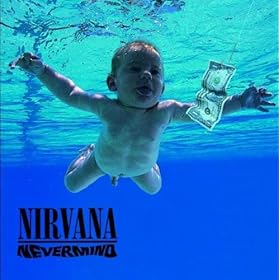
Can I focus for a while on that last thing? Rock's overtly misogynistic lyrics? I have to credit Nirvana for, at least, providing an alternate version of rock's masculinity that didn't take pleasure in degrading women.
Amanda Marcotte wrote a great piece for The Daily Beast about Nirvana's "secret feminism ," but I don't think it was really all that secret. Kurt did, from what I could tell, respect women as artists and as peers: he married one. And even if Kurt and Courtney's version of marital bliss strayed, er, pretty far from the norm, I'm pretty sure they were soul mates. Kurt also wrote lyrics that twisted gender roles, sometimes singing from a woman's point-of-view, most notably in the controversial song "Rape Me, from Nevermind's follow-up, In Utero" :
Many of the women interviewed initially found “Rape Me” an unsettling song, but eventually came around to seeing it as Cobain’s clumsy but well-intentioned attempt to incorporate feminist theory into his worldview. It’s one of the few songs in all of rock history to acknowledge rape as a crime of power and violation, instead of excessive sexual desire. Many feminists object to using rape as a metaphor this way, but what was undeniable was Cobain’s extreme hostility to the possessive mentality that leads to rape.I'm in the camp that says rape shouldn't be used as a metaphor, or at least tread very, very lightly if you do especially when you are a cis, straight, white man with tons of industry respect and critical and commercial clout. I definitely have mixed feelings about that one. On one hand, I love that a man is able to put himself in a vulnerable position, but there's still a hint of appropriation going on. But during a time when not many people were talking about rape as a crime of power, not sexual conquest -- at least not outside academia -- it was a risky move, and one that paid off in the end.
Saturday, September 24, 2011
Goodbye REM

After three decades of making music, REM calls it quits:
To our Fans and Friends: As R.E.M., and as lifelong friends and co-conspirators, we have decided to call it a day as a band. We walk away with a great sense of gratitude, of finality, and of astonishment at all we have accomplished. To anyone who ever felt touched by our music, our deepest thanks for listening. (via REM's official website)I only got to see them once, in 1999 after drummer Bill Berry had left, and at a huge outdoor arena that managed to be less than half-filled, despite the band being near enough to their commercial -- and creative -- peak. The outright majesty of their live show blew me away, especially since they weren't exactly arena-rock stars. (I take it the proper venue would have been a small club in Athens, GA or another college town in 1984, but I was still too young, too naive, and too into Wham.)
REM was never "my band" (an honor that goes to their contemporaries, The Replacements, the only band for whom I've managed to cultivate an unhealthy obsession), but their influence loomed large, not only over my record collection, but how I saw myself in general. It feels wrong to claim ownership or a band, but when indie rock was still the domain of college radio, it was the most conspicuous way one could say, "Yes, I'm different. I think differently. I don't but into all the bullshit."The first song of theirs I ever heard was "Fall On Me," I want to believe streaming from a cheap boombox flanked by a group of older, cooler kids I saw on a trip to the zoo (I swear this is what I remember!), but I probably caught it late-night on MTV. I didn't know what this was, or who was singing, but it was something I wanted to be a part of.
REM was the rare band who never compromised their ideals while courting mainstream fame, though not without a cost. In a interview in the Guardian this past March, singer Michael Stipe said, "Suddenly we had an audience that included people who would have sooner kicked me on the street than let me walk by unperturbed. I'm exaggerating to make a point but it was certainly an audience that, in the main, did not share my political leanings or affiliations, and did not like how flamboyant I was as a performer or indeed a sexual creature. They probably held lots of my world views in great disregard, and I had to look out on that and think, well, what do I do with this?" But it's hard to deny they were bona fide rock stars, while still maintaining that cool, underground, college band image. And in Stipe they had a queer-identified frontman who managed to avoid a lot of the pigeonholes that plague other out artists. In the 80s and early 90s, this was pretty revolutionary stuff.
It's hard to wrap this up without feeling like I'm writing a eulogy, though in a sense I am for a band that spawned a generation's worth of underground rock, and made it palatable for mainstream audiences. Without bands like REM, there would have been no Nirvana, no 90s "alt-rock" explosion (however you may personally feel about that), or how we define rock music today. Goodbye guys.
Subscribe to:
Posts (Atom)