The Screamers were another early punk band that kind of got lost to history. The only album of theirs that exists, I think, is a collection of singles, and even that is hard to find. There's nothing on Amazon available for downloading, sadly.
The Screamers' founders Tomata du Plenty (born David Xavier Harrigan) and Tommy Gear first collaborated in Seattle in 1975, where they formed The Tupperwares. The original lineup of the Tupperwares included Tommy Gear (at the time, using the name "Melba Toast"), Tomata du Plenty, and Rio de Janeiro on vocals, backed by Pam Lillig and Ben witz (later of Girls), as well as Bill Rieflin (later of The Blackouts and Ministry) and a teenage Eldon Hoke (later known as "El Duce" of The Mentors). [...] The Screamers created a visual presence in the press before they ever played live. Studio photos of the band began to appear in magazines even before a full band had been assembled. Artist Gary Panter's logo for the band, a stylized cartoon of a screaming head with spiked hair, became one of the most recognizable images to emerge from punk rock. -- Wikipedia
"I wrote the majority of the record in St Augustine, in Florida where I recently moved to and just around the corner from my house there's this church and the front lawn is covered in these little white crosses, and behind them there's a piece of text saying each of the crosses is there to represent how many abortions occur in America every day. So the song is in essence a pro-choice song, and seeing those crosses everyday, I fantasised about smashing them down, or driving my car through them. I think there's something to be said for acts like that - it'd be very gratifying, but instead I play music and write about this stuff. That's why I say in the lyric, 'I wanna smash them all'" -- Laura Jane Grace
So I'm not totally sold on cis, het dudes singing about sexism (see Fugazi's Suggestion), but this is one of the better ones. That it examines masculinity in a way that doesn't try to explain (mansplain) sexism to women is a huge deal.
My "punk rock" education came piecemeal, through whatever books of music criticism I could find in my neighborhood library (hello Greil Marcus!) and courtesy of a scratchy, distant college radio station. Punk was a dirty word at my high school. Maybe dirty is overstating it a little; embarrassing is more like it. Punk was a relic from another generation, or a fashion statement filtered through popular media. It was patently uncool to call any kind of loud, subversive rock music "punk."
I couldn't tell you were I was when I first listened X-Ray Spex's "Oh Bondage." It's one of those songs so firmly embedded in its particular culture it has no teleology, but like most defunct punk bands I eventually glommed onto, I'm pretty sure I heard of X-Ray Spex before I ever heard them. During the ass-end of the eighties, this was the way I acquired most of my musical knowledge. I bought a lot of albums having no idea what the band sounded like, something I couldn't imagine doing now, even with the low risk of downloading. And "Oh Bondage" was a feminist rock song before there was a template for feminist rock songs. Another big selling point.
Malic White wrote a great piece for Bitch magazine about the blurring of gender roles in rock and punk, in light of Against Me!'s singer's announcement she's trans:
"Rock stars who defy gender roles have always been at the forefront of music—the New York Dolls, David Bowie, Annie Lennox, Patti Smith, Boy George—the list goes on and on. Then we have bands with trans-identified singers like Jayne County and the Electric Chairs and the heavel metal group Life In Agony, whose lead singer, Mina Caputo, came out as transgender last year (and made this gorgeous music video).
But Gabel's transition has made a bigger splash, perhaps because she made her big reveal Rolling Stone. According to Josh Ells, who wrote the piece, Gabel wanted her story to be a very public resource. "Instead of having people e-mail and call over and over, she could just say, '[The Rolling Stone] article explains everything and after that we can talk,'" he said of the piece."
I think it's interesting to note that when listing cis artists who play with gender norms, it's usually men who are mentioned first, with maybe Patti Smith and Annie Lennox thrown in for good measure. This is not to slight the writer of the original piece -- I'd probably do the same thing. In fact, I have done the same thing, but it's most likely a combination of women's lesser profile in punk in general, and men queering gender roles are seen as more transgressive.
A while back, The Guardian's Alexis Petridis linked to an online archive of feminist rock from the 70s and 80s. If you think that feminist rock and punk starts with Patti Smith and ends with Le Tigre, well, there's a whole wealth of music that directly addresses women's issues, and you've probably never heard any of it. Petridis says:
"There is a well-worn narrative about women in rock, centring on Patti Smith and Blondie; the women's liberation archive offers a parallel, alternative history. For the most part, these acts existed utterly apart from the mainstream, distributing their own music and facing their own unique challenges. "Nothing ever rhymed with patriarchy," laments one songwriter."
The site is called The Women's Liberation Music Archive, and it focuses on feminist music in the UK dating from the 1970s through the early 90s. Their mission is "to research and document the feminist bands, musicians and related projects of the 1970s and 80s, creating a collection of written and oral histories and memorabilia. This will include photographs, videos, recordings, discographies, gigographies, lyrics and musical scores, press clippings, posters, weblinks and manifestos that testify to the creativity of the Women’s Liberation Movement (WLM) of that time."
To be honest, the punk rock dilettante that lives inside me groaned a little when I heard that there was an online repository of feminist-inspired folk rock (note: it's not all folky, but a lot of the music smacks of the time it was originally released enough that it's practically encased in amber), but it's a pretty fascinating read, even if you don't like a lot of the actual music.
Out Magazine has a great feature on the history of queercore with interviews from Donna Dresch, Lynn Breedlove, Pansy Division's Jon Ginoli, writer Dennis Cooper, and Bob Mould, who recently published a memoir about coming out as an artist in the punk scene.
I'm not a huge fan of oral histories, but this provides a much-needed look at a little-known (at least to the general music-listening public) faction of the punk rock scene in the 80s.
Although it stopped releasing new material in 2005, Lookout Records is officially closing its doors in the coming months. Lookout was the go-to punk-pop label in the 90s and early 00s and the home of artists like Green Day, Operation Ivy, and the Donnas before they moved to bigger labels. Citing lagging sales and the demise of their distribution and mail order partners, the decision was inevitable:
It wasn't easy to keep catalog items in print and that became especially challenging when our primary compact disc manufacturer and our distribution partner Lumberjack-Mordam went out of business unexpectedly. Having our physical distributor and a manufacturer go belly up disrupted our sales, meant a significant loss of income, and caused inventory and accounting problems. The next year when our mail order partner, Little Type, went out of business, Lookout was also dealt another significant blow. We did our best to resolve the issued caused by these developments but both ultimately amounted to a lot more work and severely impacted income.
As someone whose musical "coming of age" coincided with the commercialization of alternative and punk which benefitted a lot of smaller labels too, this is pretty bittersweet. The era of discovering new artists through zines or mail-order companies may have ended nearly a decade ago, but hearing that these small, but hugely influential labels are folding gives it a sense of finality. Goodbye Lookout.
In the pre-YouTube 90s, CD comps were a relatively cheap way to sample lots of music one wouldn't hear otherwise lacking a good college or community radio station. Rhino put out some of the best punk and post-punk comps of the decade. Just as alternative rock was becoming less and less "alternative, the hunger for underground music increased and Rhino stepped up to the plate with their DIY series. I think I still have one, somewhere, featuring Pete Shelley's "Homosapien," which isn't all that rare or unheard, at least in its day, but did manage to get banned from British radio for "explicit references to gay sex." (source ) Shelley was one of punks first openly bisexual stars, though his sexuality was only hinted at in his Buzzcocks singles.
Cazz Blaze wrote a great post for the F-Word about the perceived lack of "angry young women" in genres other than rock or punk. She says:
[...] there is the basic assumption that angry women only exist, music wise, in the area of rock music - we presumably don't have angry pop stars because there is a credibility issue that goes with being mainstream and angry (ie people would assume you aren't really meaning it, see Alanis Morrisette as a case in point) but also people don't talk of angry dance music, angry urban music, angry folk music... Why is that? Why must anger be equated with an electric guitar?
As much as riot grrrl brought feminism and the inequality of being a woman in society to the forefront, this is one of my biggest pet peeves, too: its claim to the anger and righteousness that comes with that awareness, almost exclusive to other styles of music. Riot grrrl suffered from its own internalized misogyny, pitting pop against punk -- good girl (quite, complacent, well-behaved) against bad girl (outspoken, polemic.)
One of my favorite "angry woman" songs of the last half-decade or so is Martha Wainwright's "Bloody Mother Fucking Asshole." Along with the examples provided in the original post, there are quite a few angry folk (or folk-rock) songs penned by women. Hip-Hop has produced its share of stealthily feminist righteous anger also:
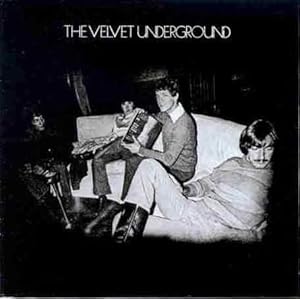
I have a somewhat complicated relationship with The Velvets. It's long been said that not a lot of people know their music, but those who do go out and form bands themselves. The Velvet Underground was pretty much and indie or punk rock institution by the time I'd heard of them, and I never got around to forming that band myself (unless you count the "tapes" my cousin and I made when we were teens trying super hard to be all goth and angsty -- I don't). So that shoots that theory down.
The Velvet Underground has the distinction of being one of those "critics' pets" (see yesterday's post) that can do no wrong, and is at the apex of cool according to my record-collecting guy friends. The latter, though unfair, has always been an issue of mine, although I like a lot of "dude rock." If the critics -- the ones whose voices are being heard, at least -- are men, and they are the ones setting the standards, you have an unfair balance of male-dominated acts in the canon. Duh. (Okay, the Velvets had a pre-Meg White "ladydrummer" in Mo Tucker, and Nico guest croaked on the Warhol-produced The Velvet Underground and Nico, but they're thought of as primarily Lou Reed's band.)
So why does "the couch album" make it past my sensors? Eh, I have to go with the simple (and very reductive) "it's a good album." A strong collection of songs that explore things like religion and sexuality and anything that was off-limits to my adolescent brain. The cornerstone of a lot of "really good albums." I'll give the dudes this one.
I didn't know the backstory behind Fugazi's song "Suggestion" until about a year ago when I read Sara Marcus's book, Girls to the Front, about the history riot grrrl and the third-wave feminist movement associated with it. During their set, Fugazi would invite a female vocalist to sing the lyrics, which are about street harassment and rape:
Why can't iI walk down a street free of suggestion?
Is my body the only trait in the eye's of men?
I've got some skin. You want to look in. There lays no reward in what you discover. You spent yourself watching me suffer. Suffer your words, suffer your eyes, suffer your hands. Suffer your interpretation of what it is to be a man. I've got some skin. You want to look in. She does nothing to deserve it. He only wants to observe it. We sit back like they taught us. We keep quiet like they taught us. He just wants to prove it. She does nothing to remove it. We don't want anyone to mind us. So we play the roles that they assigned us. She does nothing to conceal it. He touches her 'cause he wants to feel it
We blame her for being there
But we are all guilty.
The song itself doesn't give me pause: the lyrics are harsh, brash, and self-aware enough to want break down those institutions that allow men to objectify women. A lesser songwriter would fail at this self-awareness; however, I don't think this is a man's song to sing (hence the guest vocalists), or even a man's song to write. Regardless of the all the good intentions, "Suggestion" always felt like appropriation to me, especially since hardcore itself was pretty inhospitable to women.
Television's Adventure isn't under-appreciated as much as it is unappreciated -- I mean in the most literal sense. As far as post-punk albums go, it's rarely mentioned, at least in light of the massive amount of critical acclaim Marquee Moon has garnered in the past three decades.
Adventure runs slightly more commercial, but I like its relative accessibility. Tom Verlaine's ace guitar work is still here, minus some of the "doodly-doodly-doo" (technical term) soloing on Marquee Moon. I'm not a musician, and most of my musical knowledge is limited to singing, but Tom Verlaine is one of my favorite guitarists. His style manages to be both technical and soulful -- thinking and feeling.
"Glory" is my top pick from this records. Someone once said this single song foreshadowed REM, and while I think that may be taking it a bit too far, the jangly sound is unmistakably familiar:
I hate giving a lot of promotion to books I've yet to read, but this looks interesting as race is sorely overlooked in punk (and later indie) rock: White Riot: Punk Rock and the Politics of Race , edited by Stephen Duncombe author of Notes from the Underground, and Max Tremblay, a writer for the zine Maximumrocknroll. I read what I could through Google Books free preview. There's a piece on Patti Smith's use of the n-word in a song title, which I thought went a bit far in trying to justify it, but I'm glad it's being discussed, though, especially in light of Smith's good standing among critics. Here's a snippet from Drowned in Sound' s more comprehensive review:
One objection – and it’s a large one – is that this neglects to contextualize punk-rock as a musical genre AND social movement, other than in relation to a limited range of black genres. Over and over again, we’re told that that reggae was an ‘absent presence’ for punks, or that ideas of 'blackness' were appropriated by whites as a token of their underdog status. In doing so, it becomes difficult for the reader to see how much punk may have achieved, by comparison with other movements. As examples of writing on race issues that could be called 'proto-punk', Duncombe and co-editor Maxwell Tremblay select several excerpts already found in Ann Charters’ (essential) Beat Reader. All are relevant, but Mailer’s The White Negro, and others, basically serve to illustrate white fantasies and projections without linking them to real social changes after Civil Rights (in the US) and the post-WWII surge in immigration (to the UK). Since punk reacted so violently against hippie culture, it would have been useful to survey (however briefly) the shortcomings of the previous mass youth movement to frighten the Establishment.
I know that you're about to say: Disco? Huh? But bear with me.
Not having cool older siblings to hip me to those albums considered crucial for any young rock fan who just discovered there's music beyond what's playing on the radio or MTV, I turned to Rhino's compilation CDs. Actually, those things were my cool older siblings. And long before you could sample any song online, or download only the ones you loved, Rhino's comps served as a combo platter of some of the greatest unheard music.
In hindsight, it was pretty 101 stuff. Most of the big names in punk or alternative of the 70s and 80s were there: The Jam, Siouxsie and the Banshees, The Buzzcocks; and some unexpected nuggets, like the Vibrators or the Damned -- something I could never image being played on my local rock radio station sandwiched between Warrant and The Allman Brothers. (Though REM and the Replacements did manage to finagle their way onto the airwaves, if not during most people's waking hours.)
I was well-versed enough in punk rock, in that I thought of it as a somewhat antiquated style of basic three-chord rock, and as a sartorial statement marked by safety pins in the face. Current punk, as defined by my late-80s/early 90s youth, was loud, raw, inherently masculine, and mostly played by the kind of skater boys I wasn't supposed to hang around. No dancing involved unless it required bone-crushing body slams. I liked that -- the anger, the unbridled energy of it all, but I liked to dance, too. I mean, actually move in time to the music, not just pitch myself into a crowd of sweaty bodies. (Hell, I still had a poster of Whitney Houston on my wall for crissakes!)
So I was quite surprised when I first heard Gang of Four's "To Hell With Poverty" smack in the middle of my latest cut-out bin find. (The cut-outs were lousy with Rhino comps.) It was definitely punk in all its nihilistic glory, but it had a beat and well, I could dance to it. It was also smart, little snotty, and weirdly elegant in a way. The synths were pure disco. It wasn't gritty mosh pit rock, but eons away from the brainless pap playing on the radio, which I secretly still secretly loved but rarely admitted, even to myself.
I know this plays into some pretty old tropes about women as music fans: they don't care about artistry, they only want to dance. (A recent book, which I won't name, exploited the hell out of this stereotype.) And I believed it, even while trying to wedge myself into a punk scene that was, and still is, largely inhospitable to women. Right, Gang of Four is hardly the Bee Gees, but they allowed me to embrace music that isn't sweaty and hard, and that danceable beats can be arty, too.