
Showing posts with label 70s. Show all posts
Showing posts with label 70s. Show all posts
Tuesday, November 26, 2013

Monday, June 3, 2013
Jean Stapleton, R.I.P.
Neil Genzlinger wrote a nice tribute to Jean Stapleton, most famous for playing Edith Bunker on the 70s television show, All in the Family, who died earlier this week at the age of 90:
But what set Ms. Stapleton’s work in the show apart was her ability to create a character who was not imprisoned by her own daffiness. There have been plenty of female airheads on television: bikinied bimbos, empty-headed housewives, batty old broads. But only a few have been able to make the kinds of transitions from the comic to the dramatic that were asked of Ms. Stapleton in “All in the Family.”
Wednesday, April 25, 2012
Feminist Rock Archive
A while back, The Guardian's Alexis Petridis linked to an online archive of feminist rock from the 70s and 80s. If you think that feminist rock and punk starts with Patti Smith and ends with Le Tigre, well, there's a whole wealth of music that directly addresses women's issues, and you've probably never heard any of it. Petridis says:
To be honest, the punk rock dilettante that lives inside me groaned a little when I heard that there was an online repository of feminist-inspired folk rock (note: it's not all folky, but a lot of the music smacks of the time it was originally released enough that it's practically encased in amber), but it's a pretty fascinating read, even if you don't like a lot of the actual music.
"There is a well-worn narrative about women in rock, centring on Patti Smith and Blondie; the women's liberation archive offers a parallel, alternative history. For the most part, these acts existed utterly apart from the mainstream, distributing their own music and facing their own unique challenges. "Nothing ever rhymed with patriarchy," laments one songwriter."The site is called The Women's Liberation Music Archive, and it focuses on feminist music in the UK dating from the 1970s through the early 90s. Their mission is "to research and document the feminist bands, musicians and related projects of the 1970s and 80s, creating a collection of written and oral histories and memorabilia. This will include photographs, videos, recordings, discographies, gigographies, lyrics and musical scores, press clippings, posters, weblinks and manifestos that testify to the creativity of the Women’s Liberation Movement (WLM) of that time."
To be honest, the punk rock dilettante that lives inside me groaned a little when I heard that there was an online repository of feminist-inspired folk rock (note: it's not all folky, but a lot of the music smacks of the time it was originally released enough that it's practically encased in amber), but it's a pretty fascinating read, even if you don't like a lot of the actual music.
Monday, March 19, 2012
Ellen Willis on Dylan
(A version of this was posted to my Tumblr)
Also interesting is that Dylan, when viewed with enough historical distance, was once a "teen pop idol." Even when I think of the Dylan of my parents' generation, I don't see him as a pop star, only as a "serious" artists. It goes to show how much someone's narrative can change throughout their career given a few twists of fate. (Pun intended.)
"Many people hate Bob Dylan because they hate being fooled. Illusion is fine, if quarantined and diagnosed as mild; otherwise it is potentially humiliating (is he laughing at me? Conning me out of my money?) Some still discount Dylan as merely a popular culture hero (how can a teenage idol be a serious artist -- at most, perhaps a serious demagogue.) But the most tempting answer -- forget his public presence, listen to his songs -- won't do for Dylan has exploited his image as a vehicle for artist statement."Willis said this more than thirty years ago, but what's really telling is that you could easily sub a number of artists for Dylan and it still rings true. (Madonna? No stranger to demagoguery. Gaga? Well, people discount her as a mere "pop" star, too.)
Also interesting is that Dylan, when viewed with enough historical distance, was once a "teen pop idol." Even when I think of the Dylan of my parents' generation, I don't see him as a pop star, only as a "serious" artists. It goes to show how much someone's narrative can change throughout their career given a few twists of fate. (Pun intended.)
Thursday, September 1, 2011
Reread: Lost in the Grooves: Scram's Capricious Guide to the Music You Missed

I can't really say I was inspired to pick up any of the music mentioned (scarily enough, I owed more than a few of those records), but as someone who's admittedly spent a good chunk of her life trolling used record stores or dingy old thrifts, I get it. And not to sound like an old fogey, though I guess I have no choice by now, though all but the criminally obscure is available for downloading, nothing can replace the feeling of digging through dusty record bins
Saturday, August 20, 2011
Gloria: In Her Own Words (And Ours)
 |
| tumblr |
The reason why I called this doc “precise” is because I didn’t expect it to be nothing more and nothing less than a reflection of the mainstream Second Wave feminist movement…which was, in reality, notoriously short on analysis of race and racism as it functioned within it. When it was addressed, the rhetoric talked about white men and their race vis-à-vis “male privilege.” Some of the white women within that movement may have deeply empathized with and felt themselves in solidarity with the struggles of people of color—Steinem presents herself as such a person—but, as cravenly cynical as it seems, those struggles were also a media-friendly “hook” so people could grasp why women were fighting for, say, equal pay and the right to safe abortion. And, as critiqued again and again, loaded with white female privilege.Maybe I'm being unusually optimistic, but I had hoped the second-wave's lack of women of color, working-class women, and sometimes outright disdain for queer women would have been addressed, but befitting a mainstream documentary, it was only briefly given lip service. It's too bad, because those problems still plague feminism today. Granted, this was more a personal look at Steinem herself, and in that, the film excelled, but being that her identity is intrinsically tied to the second-wave feminist movement, I expected more.
Monday, June 6, 2011
Confession: I Still Don't Own a Digital Camera
I found this old commercial for Polaroid's landmark SX-70s instant camera:
It's 2011, and I still do not own a digital camera. I used to wear this as a badge of cool, but now it's simply part of who I am. And while I tend to ignore how film cameras currently hold some kind of hipster cachet, the primary reason I do not have a digital camera is I like all aspects of photography: the tactile pleasure of snapping open a film canister and loading into a camera, measuring light, f-stops -- things that have gone the way of the dinosaur in favor of digital photography's convenience. Plus there's an almost buttery quality to a really well done conventional C-print that I rarely see in digital prints, even good ones.
If this makes me a snob or a luddite, well, I guess I have to own that.
The thing is, it's the only outdated technology I desperately cling to. I had no issues forgoing CDs for iTunes, and I'm definitely planning on buying a kindle before the year is out. I had a cell phone long before it was a prerequisite for modern living -- it was as big as a man's shoe and just as heavy. So it's not as if I am afraid to embrace new technology, I'm just not embracing this one. And as long as I can buy film online, or at the handful of places in my city that still cater to us film dinosaurs, I will.
(Recently, two long-time favorites bit the dust: Kodak's iconic slide film, Kodachrome, and Polaroid's instant film. As a child of the 70s and 80s, the latter was the bigger blow. It's funny, now, speaking of it as a "classic," when during peel-apart film's introduction, it was commonly thought to eventually replace conventional film.)
Another reason I've been resistant all these years to buying a digital camera is that when they first hit the market, they were well out of my price range. Photography was always something I did relatively cheaply, buying most of my gear at thrifts and learning how to process my own film. (Thank god for windowless bathrooms.) I liked learning the craft of photography -- it wasn't something just anyone could do. Okay, yeah, anyone could pick up a camera, but that didn't make one a "photographer." As much as can be done with digital photography, a lot of that art is lost.
It's 2011, and I still do not own a digital camera. I used to wear this as a badge of cool, but now it's simply part of who I am. And while I tend to ignore how film cameras currently hold some kind of hipster cachet, the primary reason I do not have a digital camera is I like all aspects of photography: the tactile pleasure of snapping open a film canister and loading into a camera, measuring light, f-stops -- things that have gone the way of the dinosaur in favor of digital photography's convenience. Plus there's an almost buttery quality to a really well done conventional C-print that I rarely see in digital prints, even good ones.
If this makes me a snob or a luddite, well, I guess I have to own that.
The thing is, it's the only outdated technology I desperately cling to. I had no issues forgoing CDs for iTunes, and I'm definitely planning on buying a kindle before the year is out. I had a cell phone long before it was a prerequisite for modern living -- it was as big as a man's shoe and just as heavy. So it's not as if I am afraid to embrace new technology, I'm just not embracing this one. And as long as I can buy film online, or at the handful of places in my city that still cater to us film dinosaurs, I will.
(Recently, two long-time favorites bit the dust: Kodak's iconic slide film, Kodachrome, and Polaroid's instant film. As a child of the 70s and 80s, the latter was the bigger blow. It's funny, now, speaking of it as a "classic," when during peel-apart film's introduction, it was commonly thought to eventually replace conventional film.)
Another reason I've been resistant all these years to buying a digital camera is that when they first hit the market, they were well out of my price range. Photography was always something I did relatively cheaply, buying most of my gear at thrifts and learning how to process my own film. (Thank god for windowless bathrooms.) I liked learning the craft of photography -- it wasn't something just anyone could do. Okay, yeah, anyone could pick up a camera, but that didn't make one a "photographer." As much as can be done with digital photography, a lot of that art is lost.
Tuesday, May 17, 2011
Rewind: Lizzy Mercier Descloux - Press Color
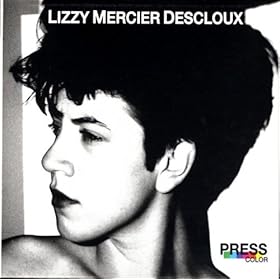
Born in Paris, raised in Lyon, french singer and musician Lizzy Mercier Descloux released her debut album Press Color in 1979. To call it minimalist would be generous. Press Color straddles the line between worldbeat, punk and dance pop, and remains largely unheard to the music listening public at large.
One of her best-known songs is a cover of Arthur Brown's "Fire." (And this performance includes an unintentional cameo from one Serge Gainsbourg.) Full disclosure: I'm not sure if I really love this, or really hate, but either way, I can't stop listening to it. And let's face it, she looks like the coolest girl in the world here.
Wednesday, May 11, 2011
Michael Stipe: The Interview interview
(Link via Perpetua)
Interview Magazine recently posted a pretty meaty article on REM's Michael Stipe. He candidly talks about his band, growing up in the early years of AIDS awareness, and even his bout with bulimia:
 |
| courtesy of last.fm |
We had moved out of opening for the Gang of Four or The English Beat. At that point we were playing our own shows and people liked us, but I was unraveling on the inside. I was also vegetarian, trying to eat from fast-food restaurants without meat. I didn't know how to eat properly and I was starving. I was adrenalized to the eyeballs from performing. I was afraid that I was sick with AIDS. We were playing five shows a week. I even went through a period of abstinence where I didn't drink and stopped having sex. Which is crazy. Maybe I'm answering too many questions at once here, but this is where my mind was at the age of 25.I hate throwing out platitudes, but I think those few sentences speak volumes about the multi-faceted nature of eating disorders, their persistence in the music industry (that's compounded by road travel/bad food), and men's resistance to talking about what is thought of as a "woman's disease."
Thursday, April 28, 2011
Phoebe Snow, R.I.P.
It's been a sad week for music fans. Singer Phoebe Snow, best known for her hit song, "Poetry Man," also died this week from complications from a 2010 brain hemorrhage. She was fifty-eight years old. Matt Perpetua from Rolling Stone says:
Here's a cool version of "It's In His Kiss" with Linda Ronstadt:
Snow came to prominence in the Seventies as a folk guitarist but broke through by integrating elements of jazz and blues into her music. In 1975, "Poetry Man" became a Top Five hit, and she appeared on the cover of Rolling Stone and as a musical guest on Saturday Night Live. She stepped away from the spotlight shortly afterward to care for her daughter Valerie, who was born with significant brain damage. Though Snow would continue to record and perform until 2008, she spent much of her time looking after her daughter until Valerie died in 2007.
Here's a cool version of "It's In His Kiss" with Linda Ronstadt:
Wednesday, April 27, 2011
Poly Styrene, R.I.P.

She always was the incisive cultural chronicler and commentator from the very beginning. X-Ray Spex’s 1978 album Germ Free Adolescents was an iconic punk release, anticipating and influencing greatly the future riot girl movement as well as being one of punk’s and late ‘70s Britain’s most important records. Poly Styrene’s music was always smart and fun in equal doses, making listeners think about gender politics, while shaking their booty and enjoying her marvelous wit. One of the great women of popular music has passed and will be greatly missed.Poly Styrene also broke barriers by being a WOC in England's mostly white, male, punk rock scene:
Here's the thing about the 1970s British and American punk scenes: they were every bit as misogynistic and race-exclusive as the society they claimed to stand counter to. And Styrene didn't look the part of a punk -- at the time, she was a mixed-race not-skinny avowed-feminist teenager with braces and day-glo old lady clothes, who later struggled with mental health issues. But Styrene embraced her role as punk's conscience, both as critic and role model; she screamed down consumerism and magazine culture both inside and outside the scene, with a bullying shriek still heard in singers like latter-day feminist icon Kathleen Hanna. (Colorlines )Says tumblr downlo:
It is unfortunate (but perhaps unsurprising) that Styrene never achieved the same levels of fame that Patti Smith and Debbie Harry did. Besides being a feminist icon, she was also anti-racist and an activist and was a much needed source of pushback against the white male hegemony in punk and rock music in general.I don't have anything poignant to add other than Poly Styrene and X-Ray Spex were a big part of my punk rock education, and I can remember the excitement I felt finally scoring a cut-out bin copy of Germ Free Adolescents, and later playing that album, feeling like I was being let in on a special secret. At the time it was one of those records that was so hard to find in my uncool Midwest town, and that made its mythos grow. The real secret was really no secret at all: women can survive, thrive even, in punk's boys' club. Poly Styrene is just one of reasons this blog exists today, or that I could have even dreamed it could.
RIP Poly:
Tuesday, March 22, 2011
How Gang of Four Made Me Like Disco
I know that you're about to say: Disco? Huh? But bear with me.
Not having cool older siblings to hip me to those albums considered crucial for any young rock fan who just discovered there's music beyond what's playing on the radio or MTV, I turned to Rhino's compilation CDs. Actually, those things were my cool older siblings. And long before you could sample any song online, or download only the ones you loved, Rhino's comps served as a combo platter of some of the greatest unheard music.
In hindsight, it was pretty 101 stuff. Most of the big names in punk or alternative of the 70s and 80s were there: The Jam, Siouxsie and the Banshees, The Buzzcocks; and some unexpected nuggets, like the Vibrators or the Damned -- something I could never image being played on my local rock radio station sandwiched between Warrant and The Allman Brothers. (Though REM and the Replacements did manage to finagle their way onto the airwaves, if not during most people's waking hours.)
I was well-versed enough in punk rock, in that I thought of it as a somewhat antiquated style of basic three-chord rock, and as a sartorial statement marked by safety pins in the face. Current punk, as defined by my late-80s/early 90s youth, was loud, raw, inherently masculine, and mostly played by the kind of skater boys I wasn't supposed to hang around. No dancing involved unless it required bone-crushing body slams. I liked that -- the anger, the unbridled energy of it all, but I liked to dance, too. I mean, actually move in time to the music, not just pitch myself into a crowd of sweaty bodies. (Hell, I still had a poster of Whitney Houston on my wall for crissakes!)
So I was quite surprised when I first heard Gang of Four's "To Hell With Poverty" smack in the middle of my latest cut-out bin find. (The cut-outs were lousy with Rhino comps.) It was definitely punk in all its nihilistic glory, but it had a beat and well, I could dance to it. It was also smart, little snotty, and weirdly elegant in a way. The synths were pure disco. It wasn't gritty mosh pit rock, but eons away from the brainless pap playing on the radio, which I secretly still secretly loved but rarely admitted, even to myself.
I know this plays into some pretty old tropes about women as music fans: they don't care about artistry, they only want to dance. (A recent book, which I won't name, exploited the hell out of this stereotype.) And I believed it, even while trying to wedge myself into a punk scene that was, and still is, largely inhospitable to women. Right, Gang of Four is hardly the Bee Gees, but they allowed me to embrace music that isn't sweaty and hard, and that danceable beats can be arty, too.
Not having cool older siblings to hip me to those albums considered crucial for any young rock fan who just discovered there's music beyond what's playing on the radio or MTV, I turned to Rhino's compilation CDs. Actually, those things were my cool older siblings. And long before you could sample any song online, or download only the ones you loved, Rhino's comps served as a combo platter of some of the greatest unheard music.
In hindsight, it was pretty 101 stuff. Most of the big names in punk or alternative of the 70s and 80s were there: The Jam, Siouxsie and the Banshees, The Buzzcocks; and some unexpected nuggets, like the Vibrators or the Damned -- something I could never image being played on my local rock radio station sandwiched between Warrant and The Allman Brothers. (Though REM and the Replacements did manage to finagle their way onto the airwaves, if not during most people's waking hours.)
I was well-versed enough in punk rock, in that I thought of it as a somewhat antiquated style of basic three-chord rock, and as a sartorial statement marked by safety pins in the face. Current punk, as defined by my late-80s/early 90s youth, was loud, raw, inherently masculine, and mostly played by the kind of skater boys I wasn't supposed to hang around. No dancing involved unless it required bone-crushing body slams. I liked that -- the anger, the unbridled energy of it all, but I liked to dance, too. I mean, actually move in time to the music, not just pitch myself into a crowd of sweaty bodies. (Hell, I still had a poster of Whitney Houston on my wall for crissakes!)
So I was quite surprised when I first heard Gang of Four's "To Hell With Poverty" smack in the middle of my latest cut-out bin find. (The cut-outs were lousy with Rhino comps.) It was definitely punk in all its nihilistic glory, but it had a beat and well, I could dance to it. It was also smart, little snotty, and weirdly elegant in a way. The synths were pure disco. It wasn't gritty mosh pit rock, but eons away from the brainless pap playing on the radio, which I secretly still secretly loved but rarely admitted, even to myself.
I know this plays into some pretty old tropes about women as music fans: they don't care about artistry, they only want to dance. (A recent book, which I won't name, exploited the hell out of this stereotype.) And I believed it, even while trying to wedge myself into a punk scene that was, and still is, largely inhospitable to women. Right, Gang of Four is hardly the Bee Gees, but they allowed me to embrace music that isn't sweaty and hard, and that danceable beats can be arty, too.
Monday, February 14, 2011
I can't motivate myself to write today, so here are some, um, entertaining videos
(And I don't do Valentine's Day posts.)
I was barely a toddler during the 70s, but this, I think, sums up the zeitgeist of the era. (Or at least it does in my imagination.)
Bowie and Cher:
Bowie and Marianne Faithfull (inexplicably dressed as a nun) singing Cher:
I was barely a toddler during the 70s, but this, I think, sums up the zeitgeist of the era. (Or at least it does in my imagination.)
Bowie and Cher:
Bowie and Marianne Faithfull (inexplicably dressed as a nun) singing Cher:
Thursday, April 8, 2010
Retro Read: Bubblegum Music: The Nake Truth by Kim Cooper and David Smay
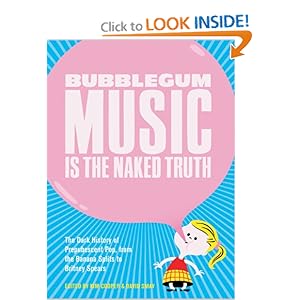
Of course, the 60s weren't all hippies and love-ins. The younger siblings, and the children of older baby boomers were cutting their teeth on sugary AM radio pop. At first I was hesitant to read Bubblegum Music, thinking it would be teeming with hipster irony, but it's actually a pretty cool homage to all those songs that should qualify as "guilty pleasures." (A concept I refuse to embrace. If it gives you pleasure, don't feel guilty. Own it.) There are a lot of fun, sometmes serious, essays here about bubblegum pop ranging from the 60s through the late 90s, including one really funny conversation about The Monkees. (Full disclosure: I am a huge Monkees fan.) It's aged surprisingly well, too (the book was written a decade ago.) The chapter, "1999: The Year Bubblegum Snapped," is just waiting for the next generation's misty-eyed nostalgia.
Wednesday, March 3, 2010
Lost and Found (Video): Down To Zero by Joan Armatrading
Have you ever liked a song so much you wished you could live inside it forever? Yeah, it's that good. I was first hipped to Joan Armatrading via Bettye LaVette's cover of "Down To Zero." Loved the Lavette version -- it's rougher and more bluesy than the original -- but when I finally heard Joan's version, I was blown away. This is a fantastic live version shot at a German TV station more than twenty years ago.
Subscribe to:
Posts (Atom)