“Up from Radicalism” [one of the pieces included] is still really relevant for anyone who comes from a conservative background and suddenly discovers leftist ideas. This narrative is still so applicable. On one hand, it’s depressing we’re dealing with the same issues, on the other hand, they’re still relevant because she talks in such general terms, she gets to the root of these issues. I think if more people had done that maybe we wouldn’t keep spinning on the hamster wheel; maybe we’d be talking about these deep-seated issues with regard to patriarchy, fear, and misogyny, not just skimming the surface with a woman’s right to choose. There are very few people who go that far. It still feels new and it might push the conversation forward. And we’re still talking about motherhood, having it all… she never uses that phrase, but it’s in “The Family: Love It or Leave It,” and “Is Motherhood Moonlighting?” She actually proposes solutions. She said women should be compensated for being stay-at-home moms, part-time workers should be paid as full-time worker because of what women are contributing to society. She’s not just saying what people have said.
Showing posts with label ellen willis. Show all posts
Wednesday, May 14, 2014
Recently Published: The Essential Ellen Willis
A new anthology of Ellen Willis's writing is out now: The Essential Ellen Willis , and it looks to be a nice companion/continuation to 2011's Out of the Vinyl Deeps, a collection of her music writing. Her daughter Nona, who edited the collection, recently talked to The Hairpin about her mother's work and legacy:
Labels:
ellen willis
Monday, March 19, 2012
Ellen Willis on Dylan
(A version of this was posted to my Tumblr)
Also interesting is that Dylan, when viewed with enough historical distance, was once a "teen pop idol." Even when I think of the Dylan of my parents' generation, I don't see him as a pop star, only as a "serious" artists. It goes to show how much someone's narrative can change throughout their career given a few twists of fate. (Pun intended.)
"Many people hate Bob Dylan because they hate being fooled. Illusion is fine, if quarantined and diagnosed as mild; otherwise it is potentially humiliating (is he laughing at me? Conning me out of my money?) Some still discount Dylan as merely a popular culture hero (how can a teenage idol be a serious artist -- at most, perhaps a serious demagogue.) But the most tempting answer -- forget his public presence, listen to his songs -- won't do for Dylan has exploited his image as a vehicle for artist statement."Willis said this more than thirty years ago, but what's really telling is that you could easily sub a number of artists for Dylan and it still rings true. (Madonna? No stranger to demagoguery. Gaga? Well, people discount her as a mere "pop" star, too.)
Also interesting is that Dylan, when viewed with enough historical distance, was once a "teen pop idol." Even when I think of the Dylan of my parents' generation, I don't see him as a pop star, only as a "serious" artists. It goes to show how much someone's narrative can change throughout their career given a few twists of fate. (Pun intended.)
Labels:
70s,
dylan,
ellen willis,
willis series
Wednesday, July 13, 2011
Pitchfork's 60 Favorite Music Books Short On Female Authors
I don't fault Pitchfork's writers for only including two female-penned books -- the new Ellen Willis anthology and Ann Powers and Evelyn McDonnell's Rock, She Wrote -- in their list of 60 Favorite Music Books. When I think of the volumes of music criticism I've read over the course of the last two decades, just as a fan, not enough of them were written by women. I'm trying to rectify that.
And if putting together a list of music writing where women are fairly represented is hard enough, designing a list of criticism solely written by women is near impossible, not because women aren't writing about music, but because women's music criticism is largely unread. Though to read some of the selections on Pitchfork's list, you'd think women weren't interested -- or worse, in capable of -- critically thinking about music. What's most disappointing, though, is more than a few of the writers whose books made the list have some pretty archaic ideas about women as music fans. I'd like to see a list where a Tricia Rose shares billing with Greil Marcus and Robert Christgau, but it's no secret that music criticism is still overwhelmingly a boy's club.
Labels:
ann powers,
ellen willis,
evelyn mcdonnell,
lists,
not surprising,
pitchfork,
writing
Friday, July 8, 2011
More On Being a Fan and a Feminist
I've quoted Ellen Willis a lot here lately, but I think this is especially valuable for female music nerds:
Female fans made an analogous identification with male rock stars — a relationship that all too often found us digging them while they out us down. This was not masochism but expendiency. For all its limitations, rock was the best thing going, and if we had to filter out certain indignities — well, we had been doing that all our lives, and there was no feminist movement to suggest things might be different.Willis wrote this probably more than thirty years ago, and sadly, not a lot has changed, though there is more of an awareness of the misogyny that permeates all forms of mass media — books, movies, tv — not only music. The problem is, I think, is that awareness isn’t filtering down to the mainstream consumers — it’s still too connected to academia.
And I’m not above this: like most people, I’m still consuming art made by men, not informed by feminism. I don’t think one should have to give up everything they enjoy simply because it doesn’t jibe with their personal politics, though I struggle with this more often than I’d care to admit. I said this in another post over a year ago, but if I removed every song from my Ipod, or every book from my bookshelf, with even the slightest tinge of misogyny, I'd be left with... not much.
That's not to say we shouldn't question the media we consume, but it's just really damn hard to rake through everything. It sounds like a cop-out, for sure, but sometimes it's all you can do. (An invariably, we miss things.) I don't want to say acceptance is the key because acceptance implies complacency. I keep coming back to the word "awareness," though awareness doesn't always equal action.
Labels:
ellen willis,
feminism,
sexism
Saturday, May 21, 2011
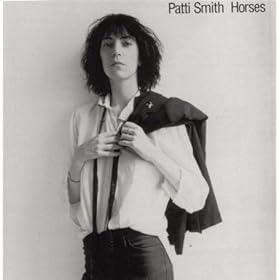
Ellen Willis on Patti Smith
(An earlier version of this was posted to my Tumblr.)
The “one of the guys” image isn’t necessarily bad by itself, but it’s usually accompanied by a certain degree of disdain for anything “feminine,” and more than a little internalized misogyny. I’ve heard stories about Patti Smith not being that nice to her female contemporaries.
Don’t get me wrong, I love Patti Smith as an artist and as a performer, but I think her status as a “feminist icon,” even a “stealth” one, needs to be reexamined.
I’ve always wondered if she were afraid of her own considerable power. I’m also uncomfortable with her androgynous, one-of-the-guys image; its rebelliousness is seductive, but it plays into a kind of misogyny — endemic to bohemian circles, and, no doubt, to the punk-rock scene — that consents to distinguish women who act like one of the guys (and is also sexy and conspicuously “liberated”) from the general run of stupid girls. -- Ellen WiilisI know I've written a lot about the recently published Ellen Willis anthology, Out of the Vinyl Deeps, but this pretty much sums up my reluctance to call Patti Smith a “feminist icon,” although she’s often presented as such.
The “one of the guys” image isn’t necessarily bad by itself, but it’s usually accompanied by a certain degree of disdain for anything “feminine,” and more than a little internalized misogyny. I’ve heard stories about Patti Smith not being that nice to her female contemporaries.
Don’t get me wrong, I love Patti Smith as an artist and as a performer, but I think her status as a “feminist icon,” even a “stealth” one, needs to be reexamined.
Labels:
androgyny,
ellen willis,
feminism,
patti smith
Sunday, May 15, 2011
Some notes on Out of the Vinyl Deeps
|
| seriousladies.tumblr.com |
It's heavy on the sixties and seventies -- her years at the New Yorker -- which made me feel a little more disconnected that I'd like to admit. There were a couple pieces from the 90s, and a stellar essay on Bob Dylan's 2001 album, Love and Theft, but overall it speaks the language of that era: the burgeoning feminist and civil rights movement, and later, the birth of punk rock.
Another thing that really struck me was that Willis was a fan, first and foremost. Her writing was informed by fandom, but not clouded by it. I think this is really important to note. I've read a number of books written by critically acclaimed male rock critics whose work relies too much on gender essentialism, and the gap between fans and critics. Female fandom is often treated as silly and superfluous and over-reliant on emotion, whereas male rock fans are the true students of rock. (As if there really is such a thing.) I think Willis more than proves that fandom and critical thought aren't mutually exclusive and women are more than capable of the latter. (I know! Hard to believe, right?)
Overall, I really enjoyed Out of the Vinyl Deeps. It was long overdue, and I hope more people become aware of her writing because it, but really, I want to see more women join the music journalist canon, along with the Marcuses, Christgaus and Bangses.
Labels:
books,
ellen willis,
out of the vinyl deeps
Thursday, May 5, 2011
The Willis Test is the Bechdel Test for Music
I vaguely remember lamenting the lack of a way to evaluate music for sexism, a la the Bechdel test for movies. Enter the Willis test :
Disappointing, but not surprising, some of my favorite highly-acclaimed songwriters, from Tom Waits to Richard Thompson to Ryan Adams, fail the Willis test. (Not always, but a lot more than I'd anticipated.) That these guys have a ton of respect in the music industry says volumes.
More on the Willis Test:
Finally, a way to evaluate music for gender bias (What Tami Said)
Some people work very hard/But still they never get it right (Pandagon)
Over the weekend, I went to (and took part in) a conference dedicated to [Ellen]Willis' work as a music critic, feminist, and thinker, writing in The New Yorker and the Village Voice and more. [...] That's when one participant, Molly Templeton, took a line the writer Rob Sheffield and others kept praising, and called it the Willis Test. (Irin Carmon for Jezebel)In a 1971 essay called, "But Now I'm Gonna Move," Willis suggests taking a song written by a man and flipping the gender:
A crude but often revealing method of assessing male bias in lyrics is to take a song written by a man about a woman and reverse the sexes. By this test, a diatribe like [the Rolling Stones'] "Under My Thumb" is not nearly so sexist in its implications as, for example, Cat Stevens' gentle, sympathetic "Wild World"; Jagger's fantasy of sweet revenge could easily be female—in fact, it has a female counterpart, Nancy Sinatra's "Boots" — but it's hard to imagine a woman sadly warning her ex-lover that he's too innocent for the big bad world out there.Despite having aging record nerd taste in music, I tried this. It's actually an addictive little game with some pretty surprising results. It works the other way, too. A number of comments mentioned that Taylor Swift's "You Belong to Me," sounds downright creepy and stalkerish when imagined being sung by a man. It kind of reminds me of one of my favorites songs from childhood, Cyndi Lauper's "I Drove All Night," (which, incidentally, was written by a man), which give off an icky stalker-vibe if sung by a man.
Disappointing, but not surprising, some of my favorite highly-acclaimed songwriters, from Tom Waits to Richard Thompson to Ryan Adams, fail the Willis test. (Not always, but a lot more than I'd anticipated.) That these guys have a ton of respect in the music industry says volumes.
More on the Willis Test:
Finally, a way to evaluate music for gender bias (What Tami Said)
Some people work very hard/But still they never get it right (Pandagon)
Labels:
ellen willis,
sexism,
songwriters
Sunday, May 1, 2011
Ellen Willis: Out of the Vinyl Deeps
Ellen Willis, the first pop music critic for the New Yorker, is anthologized in a new collection called Out of the Vinyl Deeps . She was also one of the few critics to bridge the gap between traditional rock journalism and feminism, writing about women's roles as fans and consumers of pop music:
Female fans made an analogous identification with male rock stars — a relationship that too often found us digging them while they put us down. This was not masochism but expendiency. For all its limitations, rock was the best thing going, and if we had to filter out certain indignities — well, we had been doing that all our lives, and there was no feminist movement to suggest things might be different.Says Maura Johnston for the Village Voice :
[...] most striking—and inspiring—is Willis's willingness to engage with herself as she tries to grapple with the cultural artifacts she covers. Yes, when she has an opinion, she isn't afraid to matter-of-factly state it. But there's a strong intellectual through line in the book, and it's brightest when Willis is debating herself—a quality that's lacking from too many writers right now, when brute force seems to count more toward one's intellectual heftiness than any sort of conviction or willingness to learn. Whether it's her struggling with the gap between her intellectual-feminist and primal-fan reactions to the Sex Pistols' brutal "Bodies" or noting that New York's frantic pace made her more likely to require that the music she listened to grab her right away, to read her work is to watch someone bristle against the idea of a music journalist merely serving as an objective pair of ears.I'm looking forward to reading this, though it's a bit unfair to paint Willis as merely a pop music critic, though as a woman succeeding in rock journalim's boy's club, she definitely broke ground. A self-described democratic socialist, she also co-founded the radical feminist group The Redstockings with Shulamith Firestone, and wrote a number of articles on ant-semitism. That being said, the need for women's visibility in music journalism is huge, and this should be a worthy addition to the canon.
Labels:
critics,
ellen willis,
feminism
Subscribe to:
Posts (Atom)