
Showing posts with label books. Show all posts
Showing posts with label books. Show all posts
Tuesday, May 20, 2014
Shelving: The Daniel Clowes Reader
I just picked it up the other day, so I haven't had time to read through all the essays yet, but if you're a fan of Daniel Clowes, particularly Ghost World, you should check it out . The interviews are really depth-y, though, unfortunately, Ghost World seems forever tethered to the 90s and a certain brand of teenage angst, which, I think, was more the fault of the culture surrounding it than the comic itself.
Tuesday, April 29, 2014
Quoted: Christopher Bram on queer writers and queer readers
The problem isn't that don't have enough good books or good writers, but that we need more good readers. [...] But let's admit an ugly truth here: real readers -- readers hungry, curious, open-minded readers of fiction in particular and good books in general -- gay and straight -- are a minority, every bit as freakish as the minorities that make up the alphabet soup of the LGBT. -- Christopher Bram from Mapping the TerritoryI was a little hesitant to post this quote, though I agree with the sentiment behind it. It's not really popular or smart to promote a hierarchy of readers, lest you enjoy being called an elitist, but there's a quite a bit of truth here: there aren't enough readers, especially readers of fiction.
Saturday, April 19, 2014
Shelving: Here We Are Now: The Lasting Impact of Kurt Cobain by Charles R. Cross
Charles Cross's Here We Are Now is a good idea, but I think it only skims the surface. I like that instead of writing another biography, Cross takes a thoughtful look at Kurt Cobain's lasting influence, which, given the scant amount of music he put out in his short life (there isn't even much to mine through as there is other long-dead artists), is undeniably huge. It's a little hagiographic, but that's to be expected, I guess. As someone who was only a casual fan of Nirvana's music I've always looked at Cobain and his influence not only on music but only culture in general. I've always seen him as part of a larger picture, a culture that was already shifting, and he became the unfortunate recipient of the kind of mainstream success that, during the 80s and early 90s, ran counter to being "indie" or "alternative." (Two words that are absolutely meaningless now.) I've read enough things that's said he did, in fact, court that success, but as someone who was a teenager during Nevermind's run, it was something that always rang a little false to me.
Monday, February 24, 2014
Shelving: Molly Haskell - My Brother, My Sister
There are far better trans narratives out there than Molly Haskell's memoir of her sister's transition, My Brother, My Sister , most of which are written by actual trans people. That's not to say that the perspective of loved-ones is completely without value (Helen Boyd's books come to mind), and it would be naive to say that transitioning has no impact on family members, but writing about it does bring up issues appropriation, and letting trans people tell their own stories. (Haskell's sister granted her permission to write the book.) But even baring that, Haskell makes a lot of trans-101 mistakes. Here is a prime example:
Despite Hilary Swank's virtuoso performance as Teena Brandon/Brandon Teena in Boys Don't cry, I hate the duplicity. Yes, that yahoos were uptight and murderous, but she in some sense invited the violence by taunting their manhood, pulling the wool over their eyes, and acting in bad faith. The fact is that a large number of transsexuals are murdered every year by those who feel duped or tricked. (emphasis mine.)Drawing on one of the oldest -- and most dangerous -- tropes about trans people "duping" potential romantic partners is inexcusable, and she misgenders her sister throughout the book. I don't doubt that Haskell loves her sister, but her barely veiled shame permeates her writing. I guess she could be praised for her "warts and all" approach, but that honestly comes at a price, and frankly, it's intellectually lazy. She name checks the right people, but still doesn't get it.

Monday, January 20, 2014
"Teenybopper" Music and Girls' Fandom
I've been looking for an online source for this essay since I read snippets of it in a piece J. Jack Halberstam wrote for a book called Queer Youth Cultures. It's in the full, though I haven't fully "vetted" it yet.
Girls' fandom is an unexplored topic in music criticism. It's either ignore entirely or dismissed outright as silly and superfluous. One big issue I have is that there is little room for girls to be "nerds" about music. There's been a collaborated effort in recognizing women's and girls' participation in gamer culture, but not in other fandoms. Maybe because music fandom, unlike gaming or role-playing, which will always have a fringe element to it, is just too mainstream to be considered part of fandom.
There is a good, albeit somewhat dated, book called Pretty in Punk, about girls' participation in the subculture of punk that addresses some of this, but like the spate of riot grrrl books published in the last few years, it's primarily heteronormative in scope, and talks a lot about girls' relationships to boys in the punk scene. While that's a valid approach, what's missing is just talk about girls as fans without boys. I think Girls to The Front tried to do that, albeit in the limited and insular world of riot grrrl.
Girls' fandom is an unexplored topic in music criticism. It's either ignore entirely or dismissed outright as silly and superfluous. One big issue I have is that there is little room for girls to be "nerds" about music. There's been a collaborated effort in recognizing women's and girls' participation in gamer culture, but not in other fandoms. Maybe because music fandom, unlike gaming or role-playing, which will always have a fringe element to it, is just too mainstream to be considered part of fandom.
There is a good, albeit somewhat dated, book called Pretty in Punk, about girls' participation in the subculture of punk that addresses some of this, but like the spate of riot grrrl books published in the last few years, it's primarily heteronormative in scope, and talks a lot about girls' relationships to boys in the punk scene. While that's a valid approach, what's missing is just talk about girls as fans without boys. I think Girls to The Front tried to do that, albeit in the limited and insular world of riot grrrl.
Monday, January 13, 2014
Shelving: My Education by Susan Choi
I wanted to like this book, I really did, but it was so overwritten that reading it became a chore. And it's a shame because I think the characters -- and I'm a fan, almost exclusively of, character-driven fiction -- were expertly drawn. One florid passage after another, I gave up with fewer than 100 pages to go. I tried.
And, despite being included in the Guardian's "worst fictional sex scenes in 2013," it was pretty widely praised by people I usually respect, so I'm left questioning my own taste now.
I think I've been spoiled by a cabal of 80s-minimalist writers that made up my introduction to modern fiction. Without sounding too much like an elitist snob, I think My Education is probably typical of what a lot of readers like, and the overly-long descriptive passages are like candy? I'm asking because I'm probably not this book's typical audience. My brain only responds to terse, flat, affectless language.
And I disagree, somewhat, with Emily Cooke's Times review:
And, despite being included in the Guardian's "worst fictional sex scenes in 2013," it was pretty widely praised by people I usually respect, so I'm left questioning my own taste now.
I think I've been spoiled by a cabal of 80s-minimalist writers that made up my introduction to modern fiction. Without sounding too much like an elitist snob, I think My Education is probably typical of what a lot of readers like, and the overly-long descriptive passages are like candy? I'm asking because I'm probably not this book's typical audience. My brain only responds to terse, flat, affectless language.
And I disagree, somewhat, with Emily Cooke's Times review:
Choi has taken seriously the sexual love between two women who see themselves as straight. This choice of subject matter is an exciting one, for if a number of the great novels of the past century have been stories of gay love, no really adequate literature of bisexuality exists. Regina does not concern herself with the terms “lesbian” or “bisexual,” and she is nonchalant about the sex of her new lover. [...] Lovers’ gender, Choi suggests, says little about emotional experience. This isn’t quite untrue, and you wouldn’t wish for a novel bogged down in identity politics.Maybe I've read too many novels specifically promoted to an LGBT audience, but I think there's something missing when a writer leaves out any discussion of identity. I'm trying to think of an author who addresses identity politics without getting "bogged down in them" not named James Baldwin. Some of Sarah Schulman's novels maybe? Granted some of them were written at the height of AIDS panic. I think there's a happy mid-point somewhere between identity politics and no mention of it at all.
Sunday, January 5, 2014
Read in 2013: Short Storys, Essays, and Memoirs
This is usually my comfort zone. I'm a big reader of non-fiction (which always makes me think I'm less of a "serious reader" somehow), and short story collections. Of the best non-fiction of 2013, I nominate Keren Green's beautifully spare. Bough Down. Green is the widow of David Foster Wallace, and Bough Down is a poignant treatise on grief and love.
My favorite re-discovery of 2013 was Joe Brainard's I Remember. It's simply a series of memories -- some profound, some trivial, with the preface "I remember." I'm not usually a fan of memoir boiled down to aphoristic statements, but this was funny and charming and serious and all points in between.
Although it was published in 2012, I also really enjoyed Andrew Solomon's Far From The Tree. It got some pretty mixed reviews, but I think a lot of the information in here was valuable in a 101, palatable-for-the-masses way. The chapter on trangender kids could have been done better -- and has been by many trans* writers -- but I accept that this isn't supposed to be a deep exploration of any of the topic covered: autism, crime, schizophrenia, but for the sheer breath of topics covered, it stands as an accomplishment on its own.
I'm probably in the minority on this one, but I really liked Marie Calloway's what purpose did i server in your life. At least, I didn't actively hate it as much as other people did. Most of the criticism, it seemed, was the same old nonsense heaped at women who dare to write about their lives, no matter how messy. I would advise against parsing this through a feminist lens and just take it for what it is -- that I'm much older than Calloway, I think, allows me some distance, but honestly, I didn't have the expected visceral reaction.
My favorite re-discovery of 2013 was Joe Brainard's I Remember. It's simply a series of memories -- some profound, some trivial, with the preface "I remember." I'm not usually a fan of memoir boiled down to aphoristic statements, but this was funny and charming and serious and all points in between.
Although it was published in 2012, I also really enjoyed Andrew Solomon's Far From The Tree. It got some pretty mixed reviews, but I think a lot of the information in here was valuable in a 101, palatable-for-the-masses way. The chapter on trangender kids could have been done better -- and has been by many trans* writers -- but I accept that this isn't supposed to be a deep exploration of any of the topic covered: autism, crime, schizophrenia, but for the sheer breath of topics covered, it stands as an accomplishment on its own.
I'm probably in the minority on this one, but I really liked Marie Calloway's what purpose did i server in your life. At least, I didn't actively hate it as much as other people did. Most of the criticism, it seemed, was the same old nonsense heaped at women who dare to write about their lives, no matter how messy. I would advise against parsing this through a feminist lens and just take it for what it is -- that I'm much older than Calloway, I think, allows me some distance, but honestly, I didn't have the expected visceral reaction.
Saturday, January 4, 2014
Read in 2013: LGBT Non-fiction
2013 was a good year for LGBT-themed non-fiction. Julia Serano's second book, Excluded , was published in October, and given feminism's ongoing problems with intersectionality, was sorely needed. Shiri Eisner's Bi: Note For a Bisexual Revolution is another book I highly recommend. She addresses the problem --from straight society as well as the LGBT community -- of bi erasure, and discusses some of the most common misconceptions about bisexuality. It might be a little 101 for some, but there really aren't that many mainstream 101-level books on bisexuality. (Not in my city's library system, at least, and that's where I get most of my books. I try to only include books here that are accessible to the non-academic.)
But by far, my favorite was Hilton Als's White Girls. I'm still not sure what to call this. It's part essay, part criticism, and part experimental fiction. It's also one of the best meditations on gender I've read in a long time.
But by far, my favorite was Hilton Als's White Girls. I'm still not sure what to call this. It's part essay, part criticism, and part experimental fiction. It's also one of the best meditations on gender I've read in a long time.
Thursday, January 2, 2014
Read in 2013: Novels
This is the first in a series of "formal" posts on books I've read this year that I found interesting/worthy of recommendation. I'm starting with novels because I made an effort to read more of them this year, and I think I achieved that goal and then some.
For me, novels have always been easier to give up on than non-fiction (if I'm passionate about the topic, I can excuse a not-so well-written book), or short story collections (too easy to skip around), so finishing one means I actually liked it enough to, well, stick with it.
At the top of the list would be Meg Wolitzer's The Interestings, Abigail Tarttelin's Golden Boy, and the reissue of Renata Adler's Speedboat. The Interestings is what I wished Franzen's Freedom and Jeffrey Eugenide's The Marriage Plot was. Although I enjoyed both of those, I thought Wolizer did a better job at the "500-page character study as novel" than either Franzen or Eugenides. Adler's Speedboat was a dark horse (it wasn't even on my radar until late last year), though it did get a lot of positive press. On the surface, it's a meandering mess. Her prose sort of just hangs there without much to propel it forward, but it draws you in. Golden Boy has been high on my list since the summer, and I can't fathom why this books hasn't gotten as much press as it could have. It bridges the gap between adult literature, and YA, which might be the reason it's managed to fall through the cracks, and it's straightforward narrative is a little predictable, but it's beautifully written and boasts an intersex protagonist that isn't a cliche.
Other novels I liked but didn't love: Curtis Sittenfield's Sisterland, A.M. Homes's May We Be Forgiven, which I actually read at the end of 2012, and the perfect send-up to those grand "social novels." Rachel Kushner's The Flamethrowers was one of my biggest disappointments, but I think a lot of it had to do with all the praised heaped upon it. I was expecting some kind of literary masterpiece, and it's really just a good mainstream novel. Nothing wrong with that, though.
See the rest of my list here.
For me, novels have always been easier to give up on than non-fiction (if I'm passionate about the topic, I can excuse a not-so well-written book), or short story collections (too easy to skip around), so finishing one means I actually liked it enough to, well, stick with it.
At the top of the list would be Meg Wolitzer's The Interestings, Abigail Tarttelin's Golden Boy, and the reissue of Renata Adler's Speedboat. The Interestings is what I wished Franzen's Freedom and Jeffrey Eugenide's The Marriage Plot was. Although I enjoyed both of those, I thought Wolizer did a better job at the "500-page character study as novel" than either Franzen or Eugenides. Adler's Speedboat was a dark horse (it wasn't even on my radar until late last year), though it did get a lot of positive press. On the surface, it's a meandering mess. Her prose sort of just hangs there without much to propel it forward, but it draws you in. Golden Boy has been high on my list since the summer, and I can't fathom why this books hasn't gotten as much press as it could have. It bridges the gap between adult literature, and YA, which might be the reason it's managed to fall through the cracks, and it's straightforward narrative is a little predictable, but it's beautifully written and boasts an intersex protagonist that isn't a cliche.
Other novels I liked but didn't love: Curtis Sittenfield's Sisterland, A.M. Homes's May We Be Forgiven, which I actually read at the end of 2012, and the perfect send-up to those grand "social novels." Rachel Kushner's The Flamethrowers was one of my biggest disappointments, but I think a lot of it had to do with all the praised heaped upon it. I was expecting some kind of literary masterpiece, and it's really just a good mainstream novel. Nothing wrong with that, though.
See the rest of my list here.
Saturday, December 28, 2013
Best Books of 2013
There's an unspoken truth that all things listical should remain between the pages of High Fidelity or confined to annual VH1 shows, but I like best-of lists. And I hate them. And I've been trying to find some year-end book lists that aren't pumping out the same ten titles as everyone else. Here are some of the more interesting ones:
I agree with a lot of Judy Berman's picks , though I didn't find a lot to love about Tampa. I have to respect someone who goes beyond unreliable, and writes a despicable narrator, but I didn't think Tampa was all that well-written. I also though The Flamethrowers was overpraised.
The School Library Journal listed its picks for the best adult books for teens . One of my favorites, Golden Boy, is on it. I was surprised to see it make so few -- if any other. I keep trying to find something wrong with it, other than a somewhat predictable narrative. I think it's the kind of book that falls in that limbo between YA and adult, which makes it hard to market, but I do praise Tarttelin for creating an intersex character who doesn't fall prey to a lot of stereotypes.
And Book Riot's list is one of the most stylistically diverse I've seen mixing fantasy with literary fiction, nonfiction and YA.
I agree with a lot of Judy Berman's picks , though I didn't find a lot to love about Tampa. I have to respect someone who goes beyond unreliable, and writes a despicable narrator, but I didn't think Tampa was all that well-written. I also though The Flamethrowers was overpraised.
The School Library Journal listed its picks for the best adult books for teens . One of my favorites, Golden Boy, is on it. I was surprised to see it make so few -- if any other. I keep trying to find something wrong with it, other than a somewhat predictable narrative. I think it's the kind of book that falls in that limbo between YA and adult, which makes it hard to market, but I do praise Tarttelin for creating an intersex character who doesn't fall prey to a lot of stereotypes.
And Book Riot's list is one of the most stylistically diverse I've seen mixing fantasy with literary fiction, nonfiction and YA.
Thursday, December 19, 2013
A few book links
I found these over on Jezebel's groupthink (which is the best part of Jezebel these days.) They're supposed to be like Pandora, but for books. Pop in your favorite books or authors, and get recommendations:
What Should I Read Next
Literature Map
Booklamp
I think Literature Map is my favorite (I seem to remember a music site that had a similar "six degrees of separation" vibe), but it needs to be updated. I kept getting JT Leroy as a rec, which seems odd given the whole "fake writer" scandal happened more than half a decade ago.
What Should I Read Next
Literature Map
Booklamp
I think Literature Map is my favorite (I seem to remember a music site that had a similar "six degrees of separation" vibe), but it needs to be updated. I kept getting JT Leroy as a rec, which seems odd given the whole "fake writer" scandal happened more than half a decade ago.
Monday, December 16, 2013
Sex-positive reading list
A commenter in the Feministe thread about sex-positive feminism was looking for some books that better elucidates what being sex positive is about -- and there are a lot of misconceptions and a lot of bad information out there. I'm not even sure what it means myself aside from not shaming people for their sexual behavior, and I like I said (though I know this probably isn't a popular opinion), I don't think someone's sexuality needs to be parsed through a feminist lens. Anyway, these are some books I've found helpful (Granted, I came aware of sex-positive feminism through queer theory, and there is quite a bit of overlap.)
Carol Queen - PoMosSexuals (ed.) and Real Live Nude Girl
Carol Queen is one of the first writers I read to talk about the intersection between gender and sexuality. PoMoSexuals delves more into that. The second book I recommend with some trepidation, but I really like the intro chapter "The Queer in Me."
Dossie Easton - The Ethical Slut
I need to re-read this one (the sole library copy is mysteriously missing, but this is a good "starter text" on sex-positivity.
Patrick Califia - Sex Changes: Transgender Politics, Speaking to Power; The Politics of Queer Sex , and Public Sex: The Politics of Radical Sex
I like Patrick Califia, though some of his writing is pretty controversial and definitely not everyone's cup of tea. I still think these three books are worth the read if you can find them.
Merri Lee Jonhson (ed.) Jane Sexes It Up
Like most collections, the essays here are pretty hit or miss, but it was one of the first books I read that introduced me to the concept of sex positive feminism, or at least, that sex and feminism didn't have to be enemies. (Sorry, I had a lot of bad second-wave feminist training.)
I realize none of these are particularly academic, which is sort of a problem if you're looking for dense, academic tomes (I generally don't, though I don't shy away from them either.) Gayle Rubin's work is good for that if you can score a copy of this collection , but unless you live in a city with a good library system (or can afford to books -- I'm heavily reliant on my library), the choices are slim or limited to essay collections. I happen to like personal essay collections, so I don't have much to complain about.
Carol Queen - PoMosSexuals (ed.) and Real Live Nude Girl
Carol Queen is one of the first writers I read to talk about the intersection between gender and sexuality. PoMoSexuals delves more into that. The second book I recommend with some trepidation, but I really like the intro chapter "The Queer in Me."
Dossie Easton - The Ethical Slut
I need to re-read this one (the sole library copy is mysteriously missing, but this is a good "starter text" on sex-positivity.
Patrick Califia - Sex Changes: Transgender Politics, Speaking to Power; The Politics of Queer Sex , and Public Sex: The Politics of Radical Sex
I like Patrick Califia, though some of his writing is pretty controversial and definitely not everyone's cup of tea. I still think these three books are worth the read if you can find them.
Merri Lee Jonhson (ed.) Jane Sexes It Up
Like most collections, the essays here are pretty hit or miss, but it was one of the first books I read that introduced me to the concept of sex positive feminism, or at least, that sex and feminism didn't have to be enemies. (Sorry, I had a lot of bad second-wave feminist training.)
I realize none of these are particularly academic, which is sort of a problem if you're looking for dense, academic tomes (I generally don't, though I don't shy away from them either.) Gayle Rubin's work is good for that if you can score a copy of this collection , but unless you live in a city with a good library system (or can afford to books -- I'm heavily reliant on my library), the choices are slim or limited to essay collections. I happen to like personal essay collections, so I don't have much to complain about.
Monday, November 25, 2013
Updated Book Shelves
This will probably be my last shelf update for 2013. If there's anything you think I should add (or remove) drop me a note in the comments:
LGBT Fiction
Gender & Sexuality
Feminist
Music Criticism Penned By or About Women
LGBT Fiction
Gender & Sexuality
Feminist
Music Criticism Penned By or About Women
Tuesday, November 19, 2013
My Favorite Books of 2013
My contributions to Goodreads Interesting Books of 2013
I chose to add to this list over the other best-ofs for its lack of fantasy and horror books. Genre fiction tends to be overrepresented in the Goodreads community, and I wanted to highlight some other books that may have gotten looked over.
I chose to add to this list over the other best-ofs for its lack of fantasy and horror books. Genre fiction tends to be overrepresented in the Goodreads community, and I wanted to highlight some other books that may have gotten looked over.
Tuesday, September 24, 2013
Shelving: Rob Sheffield's Turn Around Bright Eyes: The Rituals of Love and Karaoke
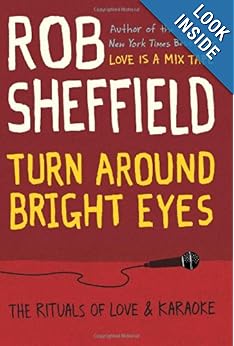
Turn Around Bright Eyes is a charming, easy read. My major criticism is that he tends to dip into this rock-boy gender essentialism that's endemic to aging Gen-x'ers who write about music. (Or maybe I just notice it more now that I am an aging Gen-x'er myself.) They way he writes about women as music fans always reads a little dismissive to me, though there's a lot less of it here than in his other books. And while I don't doubt he loves the women in his life, he tends to turn them into manic pixies.
Random Notes:
He says that to be a successful Karaoker (Karaokeier?) one should find their vocal doppelgänger: someone whose songs you can sing reasonable well. If you're a music fan, you probably already know this. I think mine is Pete Shelley from The Buzzcocks.
Rush. I can sum up everything that's ever been written about Rush: girls don't like them. Even when they do. We get it. (I had a friend tell me that Sleater-Kinney's Corrine Tucker sounds a lot like Geddy Lee. I argued that she sounds more like Undertones' Feargal Sharkey or Pete Shelley, my alleged vocal doppelganger.).By that logic, I guess that would make Geddy Lee my secondary vocal doppelganger.
If you lived in New York during 9/11, and you write a memoir that spans the 00s, you have to include your 9/11 story. I think it's been written into law now. I liked that his was honest.
Wednesday, August 28, 2013
Found at my local library

Amber Hollibaugh - My Dangerous Desires: A Queer Girl Dreaming Her Way Home
Amber Hollibaugh is a working-class woman, proudly femme, and sex-positive before it was feminist shorthand. The essays here are pretty old, but still read fresh, and it's rare to see working-class women's experiences centered.
Pat Califia - Sex Changes: The Politics of Transgenderism and The Advocate Adviser , which is really dated, but if you're interested in Pat's old Advocate advise column, it's a pretty good history lesson. My library also has a copy of Public Sex , and I really, really wish my library had a self check-out, too. I sometimes forget I live in the conservative American heartland.
The Outlaw Bible of Literature
Like most anthologies, this one is a mixed bag, but it's a pretty good collection of unheralded writers: Dennis Cooper, Kathy Acker, and John Rechy are among the most celebrated. Weirdly enough, one of the essays from Public Sex is in here.
Monday, August 19, 2013
1001 Books You Must Read Before You Die (and Other Imperatives)
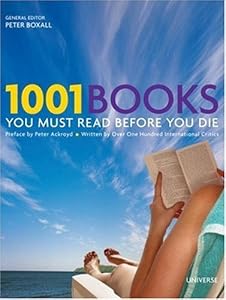
Canons get a bad rap these days. I'm fine with the canonical -- as I've said before, I feel a bit unmoored without one -- but there needs to be open discussion about why some things are considered "important" or "essential" while others aren't. It's not a bad list, but it fails where most book lists fail: dead white guys are grossly over-represented. I will say that the updated version is a bit less obvious in its choices. It's also a little less USian, which is a good thing.
Saturday, August 17, 2013
Shelving: Golden Boy by Abigail Tarttelin
(TW: There's a pretty graphic and brutal rape scene in the book.)
I picked up Golden Boy by Abigail Tarttelin after reading Hida's glowing review for Autostraddle. In a nutshell, it's about an intersex teenager named Max (referred to as "he" throughout the book) who becomes pregnant after being raped by a family friend. It's beautifully written -- I'm struggling to find anything wrong here. (I think the multiple first person POV was kind of a risk, but Tarttelin pulls it off with grace.) The books brings up questions about sex, gender, and identity, and what those things mean; and the frightening, and sadly all-too common, issue of corrective rape. Most notably, though, I think Tarttelin created a wonderfully nuanced character in Max, which is more than I can say about that other famous book about an intersex character. Max is incredibly believable, and he doesn't fall victim to a lot of the cliches that plague other novels with characters who are sexual or gender minorities. (I realize I'm lumping trans* and intersex characters together here, but there are so few books out there that get it right.) Ultimately, he has a supportive family, finds love, and finds himself.
Edited: 8/19/13
I picked up Golden Boy by Abigail Tarttelin after reading Hida's glowing review for Autostraddle. In a nutshell, it's about an intersex teenager named Max (referred to as "he" throughout the book) who becomes pregnant after being raped by a family friend. It's beautifully written -- I'm struggling to find anything wrong here. (I think the multiple first person POV was kind of a risk, but Tarttelin pulls it off with grace.) The books brings up questions about sex, gender, and identity, and what those things mean; and the frightening, and sadly all-too common, issue of corrective rape. Most notably, though, I think Tarttelin created a wonderfully nuanced character in Max, which is more than I can say about that other famous book about an intersex character. Max is incredibly believable, and he doesn't fall victim to a lot of the cliches that plague other novels with characters who are sexual or gender minorities. (I realize I'm lumping trans* and intersex characters together here, but there are so few books out there that get it right.) Ultimately, he has a supportive family, finds love, and finds himself.
Edited: 8/19/13
Tuesday, July 30, 2013
Housekeeping Redux
I redid the Goodreads shelves . I know these are more for me than anything else, but if someone finds a few good books because of them, my job is done. I de-Dworkined, so to speak. Yeah, I had a couple of her books on my feminism shelve because I think she's a good writer. I've always admired her complete conviction in her words, but she's part of that transphobic second wave canon of feminist writers, and I can't in good faith keep her on any of my lists, even when viewed with enough historical distance.
This is the problem I have with second wave feminism. A lot of those writers were my entry into feminism, and, if anything, they forced me to seek out more inclusive works. Some of those books are just plain dated. I'm reading Marjorie Garber's Vice Versa right now -- a massive tome on bisexuality that was published twenty years ago. It's very much tethered to the 90s, though the historical parts are good. And that's too bad because for an academic book, it's very readable.
This is the problem I have with second wave feminism. A lot of those writers were my entry into feminism, and, if anything, they forced me to seek out more inclusive works. Some of those books are just plain dated. I'm reading Marjorie Garber's Vice Versa right now -- a massive tome on bisexuality that was published twenty years ago. It's very much tethered to the 90s, though the historical parts are good. And that's too bad because for an academic book, it's very readable.
Wednesday, June 26, 2013
Giant List of Books That Pass the Bechdel Test
It's a Goodreads community list, so some of these choices might be debatable, but here is a list of 135 books that pass the Bechdel test.
Subscribe to:
Posts (Atom)