Going though some old cds the other day, I came across Jeff Buckley's Grace , one I'd almost forgotten I still owned and one I cannot divorce this record from my early college days lolling around between classes. It's striped hoodies and hackey-sack on the quad.
I have a well-documented love/hate relationship with everything 90s, mostly having to do with the whitewashing of nostalgia. Though not limited to the Clinton era, 90s nostalgia seems to exist in a world that begins with Nirvana and ends with Britney. I don't want to pretend Grace was the record that changed my life. It was a good debut record whose hype outlived its singer. But I'd be lying if I said he didn't have one of the best voices of an era marked with battered rasps and bored hipsters. Here's a good video that showcases his upper range.
And one of my favorites from Grace, his cover of "Lilac Wine."
Showing posts with label rewind. Show all posts
Tuesday, January 31, 2012
Monday, November 14, 2011
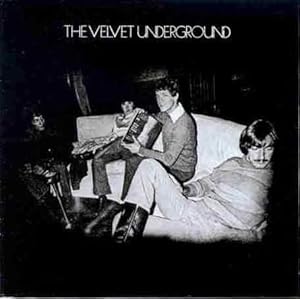
Rewind: Velvet Underground - S/T
I have a somewhat complicated relationship with The Velvets. It's long been said that not a lot of people know their music, but those who do go out and form bands themselves. The Velvet Underground was pretty much and indie or punk rock institution by the time I'd heard of them, and I never got around to forming that band myself (unless you count the "tapes" my cousin and I made when we were teens trying super hard to be all goth and angsty -- I don't). So that shoots that theory down.
The Velvet Underground has the distinction of being one of those "critics' pets" (see yesterday's post) that can do no wrong, and is at the apex of cool according to my record-collecting guy friends. The latter, though unfair, has always been an issue of mine, although I like a lot of "dude rock." If the critics -- the ones whose voices are being heard, at least -- are men, and they are the ones setting the standards, you have an unfair balance of male-dominated acts in the canon. Duh. (Okay, the Velvets had a pre-Meg White "ladydrummer" in Mo Tucker, and Nico guest croaked on the Warhol-produced The Velvet Underground and Nico, but they're thought of as primarily Lou Reed's band.)
So why does "the couch album" make it past my sensors? Eh, I have to go with the simple (and very reductive) "it's a good album." A strong collection of songs that explore things like religion and sexuality and anything that was off-limits to my adolescent brain. The cornerstone of a lot of "really good albums." I'll give the dudes this one.
The Velvet Underground has the distinction of being one of those "critics' pets" (see yesterday's post) that can do no wrong, and is at the apex of cool according to my record-collecting guy friends. The latter, though unfair, has always been an issue of mine, although I like a lot of "dude rock." If the critics -- the ones whose voices are being heard, at least -- are men, and they are the ones setting the standards, you have an unfair balance of male-dominated acts in the canon. Duh. (Okay, the Velvets had a pre-Meg White "ladydrummer" in Mo Tucker, and Nico guest croaked on the Warhol-produced The Velvet Underground and Nico, but they're thought of as primarily Lou Reed's band.)
So why does "the couch album" make it past my sensors? Eh, I have to go with the simple (and very reductive) "it's a good album." A strong collection of songs that explore things like religion and sexuality and anything that was off-limits to my adolescent brain. The cornerstone of a lot of "really good albums." I'll give the dudes this one.
Labels:
punk,
rewind,
velvet underground
Tuesday, October 25, 2011
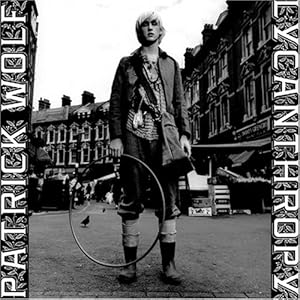
Rewind: Patrick Wolf - Lycanthropy
If you were to described Patrick Wolf's music to me -- a mix of electronic, pop, and folk paired with earnest, sometimes brutally earnest, lyrics and a predilection for the flotsam of 80s glam* -- I'd say, "No thanks. I think I'll pass," but I was sold on the single "Accident & Emergency " a few years ago and haven't looked back. His latest album, Lupercalia, has been in heavy rotation on my iPod since early summer, but his debut, Lycanthropy , I'll admit, was a much harder sell.
I have this habit of walking backwards through an artist's career, latching on to a later record, deeming it "the definitive," when in reality, it's often the result of years of stylistic experimentation, especially when the debut was recorded while the artist was still so young. Lycanthropy's precociousness is overshadowed by its standout songs, period. (Full disclosure: I'm a full decade older than Wolf, making it impossible for me to see hims as something other than a "young" artist, particularly when listening to this album, which was recorded when he was barely out of his teens.)
"The Childcatcher" is one of those songs that makes you stop and catch your breath when its over. I don't want to label someone else's experience, but the lyrics are terrifying. In his words:
*How I'd describe it.
I have this habit of walking backwards through an artist's career, latching on to a later record, deeming it "the definitive," when in reality, it's often the result of years of stylistic experimentation, especially when the debut was recorded while the artist was still so young. Lycanthropy's precociousness is overshadowed by its standout songs, period. (Full disclosure: I'm a full decade older than Wolf, making it impossible for me to see hims as something other than a "young" artist, particularly when listening to this album, which was recorded when he was barely out of his teens.)
"The Childcatcher" is one of those songs that makes you stop and catch your breath when its over. I don't want to label someone else's experience, but the lyrics are terrifying. In his words:
It was a certain relationship, I was 15 at the time but I was still a child. It wasn’t like I was 6-years-old, I was 15. I was still mentally a child and the person knew I was still mentally a child. It’s hard to communicate at the time because it’s like a complicated thing, but maybe put it into the context of a child being eight-years-old or seven-years-old; it was an easy way of communicating what was actually happening. But then there’s also the other side that five years later, like 19 I wrote the second part where it comes in with the voice of the person who did the abuse, and it turns out ‘Oh come on, you know, it wasn’t so much an abuse, maybe you just weren’t ready for it. Maybe you enjoyed it? (source )"
*How I'd describe it.
Labels:
00s,
patrick wolf,
rewind
Tuesday, October 18, 2011
Rewind: M.I.A. - Arular
M.I.A. is a polarizing figure. Accused of being fake , or her politics unsophisticated , almost everything written about her causes controversy, but the music industry needs artists like Maya:
[...] this may or may not be a bad thing. After all, people don't need to be "sophisticated" to be right. People don't need to be nuanced or thoughtful to say something important. (Sometimes sophistication is a way of keeping people powerless-- ignoring anyone who doesn't speak your diplomatic language.) And people definitely don't need to be any of those things to release good music. -- Nitsuh Abebe for PitchforkAnd people don't need to be sophisticated to make good, thoughtful music. I also think Maya gets more than her fair share of criticism because she's a woman, and one who dares to talk about politics.
Tuesday, October 4, 2011
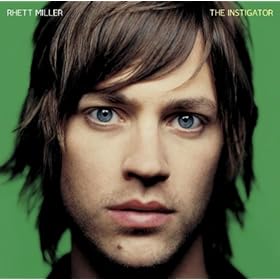
Rewind: Rhett Miller - The Instigator
Rockstar Aimz from My Aimz is True linked to a piece singer-songwriter Rhett Miller wrote for The Atlantic on the ten-year anniversary of 9/11. He was temporarily homeless after the towers came down, and I thought this bit about writing a song amid all the chaos of the day was particularly poignant:
"On 9/11, after my girlfriend, Erica, and I left our apartment, we stopped to get supplies. I saw a red notebook on the shelf, and I grabbed it and grabbed a pen. Like everything else, all of my notebooks were trapped up in the apartment, and I was looking at an immediate future without being able to write down thoughts or song ideas.His solo album, The Instigator, was released shortly after, and after reading his story, it kind of puts those songs in an entirely different perspective.
There are a couple of pages in the notebook where I wrote the lyrics to a song called "She Loves the Sunset." To write the song, I had to wait until everybody else left Erica's parents' house. Even though I'm pretty good about writing around other people, I didn't have a guitar. It was the first time I'd been without a guitar since I was 12, so it was just going to be me sitting there singing. And that's weird.
After everyone was gone, just on a whim, I grabbed a marionette that Erica's parents had brought back from Mexico. It was a man who's holding a percussion instrument called a guiro - it's like a fish that has ridges on it, and he has a stick in the other hand that he rubs across the ridges. The guiro was only a couple of inches long. So I was taking the little stick and moving it across this tiny instrument.
I took what felt to me like a traditional Mexican mariachi-sounding melody, and I wrote the song using that tiny little marionette's hands. Using his hands -- because the instrument didn't detach! I had to be holding the marionette's hands to make it work.
The only other person in the house was Erica's grandma who, at the time, had just turned 90. She thought I was crazy. But she was very sweet. She could tell that I definitely needed to be doing this weird-looking thing."
Tuesday, September 27, 2011
Rewind: Tom Waits - Rain Dogs
I hate calling albums "life-changing." Maybe "taste-changing," or better yet, "taste-challenging" is a proper description for those records that do alter your life in some way. Rain Dogs did that to me.
Rain Dogs is one-third of the trifecta that includes Swordfishtrombones and Frank's Wild Years, and is long-believed to be Tom Waits's strongest album. It's heavy on the experimental, but not so much that it would alienate more conservative music fans. Let's face it, Tom Waits is kind of a hard sell to those raised on top forty radio. I use the "mom" test. If my mom likes it, it can't be too off-putting. She loves it.
Admittedly, I haven't been much of a Tom Waits fan in recent years. His current output sounds a bit to much like self-parody, but I still regularly drag out Rain Dogs and remember a time when I thought it was the weirdest, wackiest record I could find that didn't bug my mom.
Rain Dogs is one-third of the trifecta that includes Swordfishtrombones and Frank's Wild Years, and is long-believed to be Tom Waits's strongest album. It's heavy on the experimental, but not so much that it would alienate more conservative music fans. Let's face it, Tom Waits is kind of a hard sell to those raised on top forty radio. I use the "mom" test. If my mom likes it, it can't be too off-putting. She loves it.
Admittedly, I haven't been much of a Tom Waits fan in recent years. His current output sounds a bit to much like self-parody, but I still regularly drag out Rain Dogs and remember a time when I thought it was the weirdest, wackiest record I could find that didn't bug my mom.
Labels:
80s,
rewind,
singer-songwriters,
Tom Waits
Tuesday, September 20, 2011
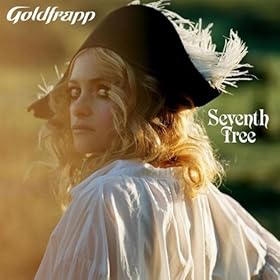
Rewind: Goldfrapp - Seventh Tree
Seventh Tree was a pretty big departure for Alison Goldfrapp -- a lot more ethereal and less "dancefloor" -- and quickly became a critical favorite. The mash of wispy, diaphanous, haunted sounds is undeniable gorgeous, plus it boasts one of the best songs about breast implants in "Clowns," but my favorite is probably the most commercial-sounding of any single Goldfrapp's ever released, "A&E."
The inspiration for the album, Alison and her musical partner, Will Gregory, claim "comes from paganism and old English children' books." (source )
Labels:
electronic,
goldfrapp,
rewind
Tuesday, September 13, 2011
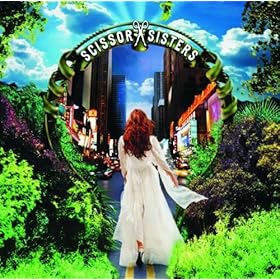
Rewind: Scissor Sisters - S/T
For far too long, I wrote the Scissor Sisters off as some sort of retread disco and nothing more. In fact, the first time I heard "i Don't Feel Like Dancing" (from a later album, Ta-Dah), I could have sworn it was Barry Gibb singing, which isn't necessarily a bad thing, but in the early 00s when garage rock was supposed to be making a comeback, and things were supposed to be "gritty" and "real," was there really a market for cheeky, fun, vaguely self-conscious dance music? Yeah, I totally blew that call.
I walked backwards through the Scissor Sisters career until I hit their eponymous first album, which heavily brings the raunch along with the fun
Labels:
00s,
rewind,
scissor sisters
Tuesday, September 6, 2011
Rewind: Freddie Mercury - "The Great Pretender"
Had he lived, Freddie Mercury would have turned 65-years-old this week. It's hard to imagine the mercurial Queen frontman -- immortalized as a Google doodle -- at retirement age, but The Guardian's Paul Lester has some ideas:
It would be lovely to imagine him living up to his reputation, ascribed to him by former bandmate Brian May in a blogpost, as the fearless, flamboyant dandy, causing havoc in the mainstream, and doing some of those colourful, creatively daring things that pop stars never tend to do when they reach a certain age, getting up to the sort of artistic mischief we probably wish we could tease out of Bowie or Jagger: work with Gaga, collaborate with Aphex Twin, do a concept album with someone boundary-pushing and young – Tyler, the Creator, say – about the perils of fame in this media-saturated era. You could certainly see him making an appearance on the next Muse album, or joining them for some neo-operatic warbling during one of their live extravaganzas, showing them how to really wow Wembley. Even a brief cameo on the last Scissor Sisters album would have been marvellous. Most likely, though, Freddie would probably be doing now what he did then: twirling that 'tache, showing us his hirsute torso, and surveying all with a wry look that suggested he was about to go and do something a lot more fun and interesting than anything we had planned. Still, it's nice to dream.I chose to focus on a single song rather than an album because, well, Freddie Mercury solo work is a bit spotty. He died too soon from AIDS to leave much post-Queen work behind, but I've always found this song unusually moving. His private life, his sexuality, even his battle with AIDS kept behind closed doors, the lyrics "I seem to be what I'm not you see," become even more poignant.
Labels:
AIDS,
freddie mercury,
LGBT,
rewind
Tuesday, August 16, 2011
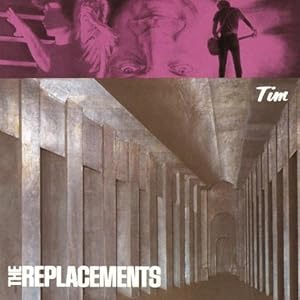
Rewind: The Replacements - Tim

He had me at "down on all fives... Lemme crawwwwwl!"
There aren't many records that from the first listen caused me to have a bona fide visceral reaction. I wish I could say the album that made me a music fan was Liz Phair's Exile in Guyville, or Tori Amos or anything else that seemed to resonate with a lot of women born in the 70s and 80s. The Replacements' Tim is, for better or worse, my "it" record though, the kind of record that Sleater-Kinney's Carrie Brownstein said :will stop you dead in your tracks beacuse now, whatever path you were on no longer exists." I actually kind of recoiled when I first played it. This band can't play, I thought, and he surely can't sing, but it was so perfect. They were smart without being painfully intellectual, raw and nervy, but still fun. I wanted to break stuff and dance. Until then I'd been somewhat of a punk rock dilettante: The Ramones were goofy, and the Clash was smart and irreverent, but I was only a casual fan. And they were relics of another generation. I didn't yet know there was a crop of younger bands in garages and basements across America, pounding out their own version of rock 'n' roll. If it wasn't handed down from the gods at MTV or coming from the speakers on my shitty $40 boombox, it didn't exist in my world. Tim was the record I'd been looking for my whole life, and I didn't even know it.
Long before the internet became the great equalizer, the only way I'd hear about bands that didn't get much airplay was through the pages of magazines like Musician, Creem, or Spin. I had been reading about this mythic beast known as the Replacements for years. They were four working class kids from Minneapolis who had a taste of success with "I'll Be You," a song from their second to last album, Don't Tell a Soul. I'd heard the song on a local AOR station, probably sandwiched between Warrant and Lynyrd Skynrd. I wasn't that impressed.
I let a few more years pass. I was in my twenties then, out of college, and looking to expand my record collection. I was thumbing through the used cd bin at a used record store when I spotted what was probably one of the ugliest album covers ever: all purples and grays with a picture of a long corridor or tunnel on the front and the title, Tim, written in yellow cursive in the upper right corner underneath what I think were rough pencil sketches of each band member. I'd read enough reviews to know that it was part of the "holy trinity" of Replacements albums. (1984's Let It Be, brazenly named after the Beatles album, and Pleased To Meet Me, which came out in 1987, were the other two.) I had five dollars burning a hole in my pocket, the exact price.
I didn't play that it right away. When I got home I set it down on my messy desk where it stared at me for a few days. I don't really know when it hit me that this was going to be the turning point in my musical education, but I had to get past my idea of what good music is. I was raised on top forty pap, and this was anything but. There was nothing polished about it. It sounded like the type of music my guy friends in ad-hoc garage bands made. Because it kind of was.
I rarely listen to Tim anymore -- to be honest, it hasn't aged well, though I blame the production more than anything -- but I definitely consider it my gateway drug to more ambitious records.
Labels:
80s,
dudes and dude rock,
rewind,
the replacements
Tuesday, July 26, 2011
Rewind: Antony and the Johnsons - S/T
There's not a lot of love for Antony Hegarty's debut album . Sure, it's overshadowed by the Mercury Prize-winning I Am a Bird Now, but the haunting beauty of his first record can't be overstated. (Note: Antony is transgender, but according to this article, prefers male pronouns. If someone knows anything different, let me know and I'll be happy to change it. I generally don't use "zie" or "sie" unless someone specially asks that I do.)
Antony's quivering tenor is otherworldly, to say the least, and downright disquieting on first listen. Nina Simone is a big influence, as well as Boy George (who later guested on I Am a Bird Now), and if you described his voice to me this way, I'd probably say "No thanks," but it's a stunning combination of force and vulnerability. He's toned down the overly dramatic vocals on subsequent albums, but the power in those early recordings is undeniable.
If it seems like I'm side-stepping something, I am. In press and online, Antony's status as a transgender person often overpowers his art. This comment from Garland Grey sums it up:
Antony's quivering tenor is otherworldly, to say the least, and downright disquieting on first listen. Nina Simone is a big influence, as well as Boy George (who later guested on I Am a Bird Now), and if you described his voice to me this way, I'd probably say "No thanks," but it's a stunning combination of force and vulnerability. He's toned down the overly dramatic vocals on subsequent albums, but the power in those early recordings is undeniable.
If it seems like I'm side-stepping something, I am. In press and online, Antony's status as a transgender person often overpowers his art. This comment from Garland Grey sums it up:
Most of the people who write about Antony focus on his transgender identity, while treating his music almost as a curious footnote. Once again, you have an artist who is engaging listeners in a discussion about intensely personal experiences – pain, masochism, desperation, and transformation – and reviewers dawdle at the edges of his music, refusing to engage.It's difficult to write about Antony and not mention his transgender identity, especially since it does inform his songwriting. This is a good thing. Trans people are still largely invisible to society, and having someone who is trans, singing about being trans, is huge.
Tuesday, July 19, 2011
Rewind: Massive Attack - Mezzanine
Mezzanine is the quintessential late-90s album. It really has that "end of an era" feeling while being on the cusp of something different and new, but vaguely ominous.
I find it easier to listen to it now, with enough historical distance. If I have one criticism of Mezzanine, it's that it's too married to the time it was first released. That being said, it's a masterpiece of production and an audiophile's wet dream, something that couldn't have happened in the iPod era where every track is excessively loud and bright.
Labels:
90s,
electronic,
mezzanine,
production,
rewind
Tuesday, July 12, 2011
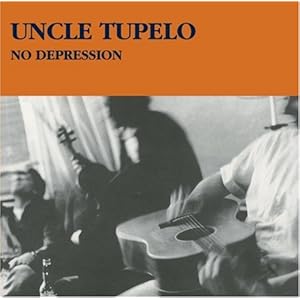
Rewind: Uncle Tupelo - No Depression
There's been a rash of nostalgia Clinton-era pop culture, and a lot penned by women describing how it changed their lives for the better, but my fondest memories from the 90s didn't lead to any kind of a feminist awakening. I'm not sure if I'm supposed to be ashamed of this or not. But no matter how often I'm tempted to rewrite my own history (subtract a Westerberg here, add a Liz Phair there), I can't really deny that the 90s was when I discovered a lot of great music that was just that -- great music -- and it wasn't necessarily tethered to my personal politics.
I write a lot about being a fan, and being a feminist, and how to unite the two. In theory I do this well; in practice, well, I tend to go with what sounds good to my ears.
(I can't write about Uncle Tupelo without first mentioning Mississippi Nights. One thing I always loved about that place was how accessible the performer was to the audience. A lot of nights, the band could be seen mulling around in the crowd while the opener was on stage. Though it was never really what you’d call a small club, the atmosphere was undeniably dive-like in the best possible way.)
I always think of No Depression as county music for people too cool for country. Let's face it, country music is incredibly polarizing and comes with some pretty hefty baggage. It's the soundtrack to conservative America. And while I'm loathe to admit it, it's also the soundtrack to my early childhood. Uncle Tupelo was as close as my city ever got to having a hometown band and, consequently, a "scene."Yeah, technically, they’re from Belleville, but at the time, Uncle Tupelo were our “local boys made good,” if not on a commercial level, then on a critical one. And on a sentimental one.
I write a lot about being a fan, and being a feminist, and how to unite the two. In theory I do this well; in practice, well, I tend to go with what sounds good to my ears.
(I can't write about Uncle Tupelo without first mentioning Mississippi Nights. One thing I always loved about that place was how accessible the performer was to the audience. A lot of nights, the band could be seen mulling around in the crowd while the opener was on stage. Though it was never really what you’d call a small club, the atmosphere was undeniably dive-like in the best possible way.)
I always think of No Depression as county music for people too cool for country. Let's face it, country music is incredibly polarizing and comes with some pretty hefty baggage. It's the soundtrack to conservative America. And while I'm loathe to admit it, it's also the soundtrack to my early childhood. Uncle Tupelo was as close as my city ever got to having a hometown band and, consequently, a "scene."Yeah, technically, they’re from Belleville, but at the time, Uncle Tupelo were our “local boys made good,” if not on a commercial level, then on a critical one. And on a sentimental one.
Labels:
90s,
country music,
dudes and dude rock,
rewind
Tuesday, July 5, 2011
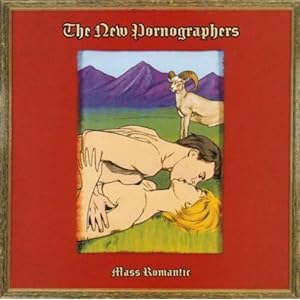
Rewind: The New Pornographers - Mass Romantic
I had to look up when the New Pornographer's Mass Romantic was actually released. I can't help but associate this album with summer, but it actually came out in November of 2000. Not surprisingly, like a lot of great records it failed to chart in Canada (where the band is based) or in the US, but garnered rave reviews from critics and became a 21st century power-pop classic.
There aren't too many bands carrying the power-pop torch these days. Mass Romantic was recorded over the course of three years and could easily sound overcooked, but A.C, Newman, the one of the New Pornographers primary songwriters, is one of the few musicians for whom "more is more" is a good thing.
"I remember 'Letter From an Occupant' was a pretty belabored song. It ended up being almost minimal, but I remember there's so much shit we put on it. There's a psychedelic 12-string guitar solo, a backwards guitar, there's a kind of really cool synth that's in there but buried. At some point, you have to choose. That was the hardest part about mixing the thing: just making that judgment call. I only feel at peace with the record now because people seem to like it." (source)
Labels:
00s,
new pornographers,
power pop,
rewind
Tuesday, June 21, 2011
Rewind: David Bowie Hunky Dory
Latching on to an album when you're in your twenties or thirties isn't the same as discovering it your teens when your young and impressionable and everything, if just for a moment, is the most important thing in the world. Lacking cool older siblings whose record collections I could raid, I muddled along, pouring over the All Music Guide when it actually existed in book form, I promised myself I'd listen to all the BIG IMPORTANT ALBUMS critics praised.
I have no idea when I first became aware of Bowie. Coming of age in the 80s, I know I should say Labyrinth, but I'm pretty sure it was when he and Mick Jagger covered "Dancing in the Streets."
The 80s ruin everything. There. I said it.
I had the same discussion about Bruce Springsteen with a friend. It took a lot of deprogramming (and one rainy afternoon with Nebraska) to disassociate Bruce Springsteen, the songwriter, with Bruce Springsteen, the fist-pumping, Born-in-the-USA, arena-rock star I'd seen on MTV as a kid. Thankfully, the cheesy image of Bowie, dancing woodenly and singing along to an old Martha and the Vandellas song was transient and easily replaced with the image of Bowie, a icon in the glam rock world who was self-aware enough to shrug off covering a 60s pop song. (Which, in retrospect, is pretty cool.)
I go back to Hunky Dory more than any other Bowie album. It sounds like what I envision the early-70s to be under the best circumstances: glamourous, androgynous, campy, with a dash of self-conscious cool. Okay, so maybe that's not so far removed from the 80s Bowie I scorned.
I have no idea when I first became aware of Bowie. Coming of age in the 80s, I know I should say Labyrinth, but I'm pretty sure it was when he and Mick Jagger covered "Dancing in the Streets."
The 80s ruin everything. There. I said it.
I had the same discussion about Bruce Springsteen with a friend. It took a lot of deprogramming (and one rainy afternoon with Nebraska) to disassociate Bruce Springsteen, the songwriter, with Bruce Springsteen, the fist-pumping, Born-in-the-USA, arena-rock star I'd seen on MTV as a kid. Thankfully, the cheesy image of Bowie, dancing woodenly and singing along to an old Martha and the Vandellas song was transient and easily replaced with the image of Bowie, a icon in the glam rock world who was self-aware enough to shrug off covering a 60s pop song. (Which, in retrospect, is pretty cool.)
I go back to Hunky Dory more than any other Bowie album. It sounds like what I envision the early-70s to be under the best circumstances: glamourous, androgynous, campy, with a dash of self-conscious cool. Okay, so maybe that's not so far removed from the 80s Bowie I scorned.
Tuesday, June 14, 2011
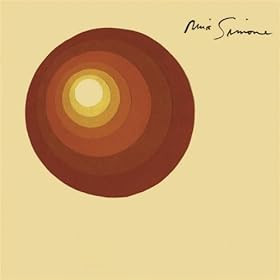
Rewind: Nina Simone - Here Comes the Sun
Here Comes the Sun is vastly under-appreciated in Nina Simome's vast catalog. Released in 1971, the eight songs, all covers of rock and pop songs of the era like "Mr. Bojangles" "Angel of the Morning," and the title track, "Here Comes the Sun," were given different arrangements and a full orchestra.
This is one of my favorite Nina Simone albums. I'm a sucker for covers, especially those that really transform the song and make it into something unique without destroying the essence of the original. The most recent, and one of the most well-known, examples of that is Johnny Cash's cover of NIN's "Hurt," but it's a rare performer who has the ability to make a song "their own."
One of the standout tracks, for me, is Simone's jazzed-up version of "Suzanne."
This is one of my favorite Nina Simone albums. I'm a sucker for covers, especially those that really transform the song and make it into something unique without destroying the essence of the original. The most recent, and one of the most well-known, examples of that is Johnny Cash's cover of NIN's "Hurt," but it's a rare performer who has the ability to make a song "their own."
One of the standout tracks, for me, is Simone's jazzed-up version of "Suzanne."
Labels:
nina simone,
rewind
Tuesday, June 7, 2011
Rewind: The Breeders - Last Splash
Only in 1993 could a song like "Cannonball" become a hit. I know it's mandatory these days to praise the 90s as some sort of alternative utopia when really radio and MTV was as staid and predictable as ever when you look at the big picture (Black Crowes and Def Leppard were still the staples on early 90s rock radio, and Pearl Jam got plenty of airplay from "classic rock" stations, something that nostalgia enthusiasts conveniently ignore), but in that weird little window of opportunity when MTV knew there was something out there called "alternative," but no one really knew what that was yet, a handful of videos that in years past would have been deemed too "fringe" for MTV's audience made the cut. "Cannonball" with its "any art student could make this" video, and "ummm-umm" chorus was one of those videos.
It's kind of disappointing, really, that "Cannonball" is the Breeders' only claim to fame among mainstream music fans, because the album it came from, Last Splash, is a pretty good -- nay, pretty great -- hard rock album.
Part of the problem, I think, is the refusal the believe a woman could front a "rock band." Though conversely, this was a good thing to come out of the alternative revolution (sorry, that's a hackneyed phrase for sure, but I'm pretty sure we called it that). A lot of female, or female-fronted bands did get significant airtime and attention, while pigeonholing them as "alternative" shortened their shelf life. Pearl Jam? Of course they transitioned pretty easily, but they would have fit in nicely, sonically, if not politically, with mainstream rock's old guard anyway.
It's kind of disappointing, really, that "Cannonball" is the Breeders' only claim to fame among mainstream music fans, because the album it came from, Last Splash, is a pretty good -- nay, pretty great -- hard rock album.
Part of the problem, I think, is the refusal the believe a woman could front a "rock band." Though conversely, this was a good thing to come out of the alternative revolution (sorry, that's a hackneyed phrase for sure, but I'm pretty sure we called it that). A lot of female, or female-fronted bands did get significant airtime and attention, while pigeonholing them as "alternative" shortened their shelf life. Pearl Jam? Of course they transitioned pretty easily, but they would have fit in nicely, sonically, if not politically, with mainstream rock's old guard anyway.
Labels:
rewind,
the breeders
Tuesday, May 31, 2011
Rewind: The Magnetic Fields - 69 Love Songs
Stephin Merritt's epic 69 Love Songs remains one of my favorite records of the 90s that's aged well enough not to be featured only as part of a nostalgia set. It's charming and quirky and just this side of snotty. On the surface, the songs actually sound like conventional love songs, that is until you listen to the lyrics carefully. And while it was a massive undertaking on Merritt's part, all three volumes work as a cohesive whole. But I always return to Vol. 1:
As much as I still love 60 Love Songs, The Magnetic Fields will be forever tainted by unfortunate comments Stephin Merritt made back in 2006:
The bizarre case against Merritt came to a head last month at the Experience Music Project's annual Pop Conference. Merritt was the keynote speaker, and in a panel conversation he described "Zip-A-Dee Doo-Dah," from Disney's legendarily racist 1946 musical Song of the South, as a "great song." He made clear, according to a partial transcript of the panel provided by his band mate Claudia Gonson, that he did not actually like Song of the South, calling it unwatchable and saying that it has just "one great song. The rest of it is terrible, actually."(Slate)Whether it was a bizarre slip or a snide remark gone awry, there's really no way to rationalize it. Praising racist material -- even in a historical context -- makes me extremely uncomfortable, and I'm reminded of it when I listen to his music.
Labels:
rewind
Tuesday, May 24, 2011
Rewind: The Perks of Being a Wallflower
I am 38-years-old and just read The Perks of Being a Wallflower . Regrettably, I wish I were a 17-year-old who’d just read The Perks of Being a Wallflower.
After hearing this book was finally being made into a movie, I thought I'd move it to the front of the queue of books I'd been meaning to read, but never got around to for one reason or another. I really wanted to like this book, I swear. I’m not just being a contrarian for the sake of being a contrarian because The Perks of Being a Wallflower has meant a lot to a number of people I know. I understand that it’s supposed to sound “how a real teenager would talk,” or more importantly, how a real teenager would write, but I couldn’t get past the stilted, awkward prose. And that’s too bad because there is a lot of good in this book (even if PW called it “trite”). Most notably Charlie, the main character, has a gay friend who’s actually not a plot device existing only for straight characters to confront their homophobia. This is a big plus, and subverts the "gay friend" trope, but Patrick's story could have been more nuanced or fleshed-out.
I'd be a hypocrite if I didn't mention the inevitable Catcher in the Rye comparisons. That doesn't bother me so much, given that nearly every bildungsroman is measured against the template that J.D. Salinger created. Perks is written in the form of main character Charlie's diary during his high school years in the early 90s. An era, I think, that should be noted for its complete absence of a unified, or agreed upon, "culture." (At least in retrospect. Maybe I'm reaching here, because I also spent the brunt of my teens in that weird twilight that was neither the 80s nor the 90s, but I think it's as central to the story as anything.) Charlie is an observer (a "wallflower") to all these things happening around him, and even to the things that happen to him. Without giving too much away, it's a sparse little story that deals with BIG ISSUES and does so without being preachy or patronizing. Also good things.
That being said, there's something lacking. I wish I could have read this when I was a kid; maybe I would have had a more positive reaction and less historical distance. Full disclosure: I’m not an adult who reads YA lit. I’m not sure I read a lot of it when I was young. I know for sure there wasn’t the market for YA books like there is today. (The Perks of Being a Wallflower was published in 1999.) And there definitely wasn't a lot of choices in LGBT lit for teenagers that didn't send a big huge message that homosexuality was immoral, or at least, doomed one to a life of loneliness and disease (the perks of coming of age in the AIDS era). In that respect, things have improved vastly -- this book being just one step along the way to that improvement.
After hearing this book was finally being made into a movie, I thought I'd move it to the front of the queue of books I'd been meaning to read, but never got around to for one reason or another. I really wanted to like this book, I swear. I’m not just being a contrarian for the sake of being a contrarian because The Perks of Being a Wallflower has meant a lot to a number of people I know. I understand that it’s supposed to sound “how a real teenager would talk,” or more importantly, how a real teenager would write, but I couldn’t get past the stilted, awkward prose. And that’s too bad because there is a lot of good in this book (even if PW called it “trite”). Most notably Charlie, the main character, has a gay friend who’s actually not a plot device existing only for straight characters to confront their homophobia. This is a big plus, and subverts the "gay friend" trope, but Patrick's story could have been more nuanced or fleshed-out.
I'd be a hypocrite if I didn't mention the inevitable Catcher in the Rye comparisons. That doesn't bother me so much, given that nearly every bildungsroman is measured against the template that J.D. Salinger created. Perks is written in the form of main character Charlie's diary during his high school years in the early 90s. An era, I think, that should be noted for its complete absence of a unified, or agreed upon, "culture." (At least in retrospect. Maybe I'm reaching here, because I also spent the brunt of my teens in that weird twilight that was neither the 80s nor the 90s, but I think it's as central to the story as anything.) Charlie is an observer (a "wallflower") to all these things happening around him, and even to the things that happen to him. Without giving too much away, it's a sparse little story that deals with BIG ISSUES and does so without being preachy or patronizing. Also good things.
That being said, there's something lacking. I wish I could have read this when I was a kid; maybe I would have had a more positive reaction and less historical distance. Full disclosure: I’m not an adult who reads YA lit. I’m not sure I read a lot of it when I was young. I know for sure there wasn’t the market for YA books like there is today. (The Perks of Being a Wallflower was published in 1999.) And there definitely wasn't a lot of choices in LGBT lit for teenagers that didn't send a big huge message that homosexuality was immoral, or at least, doomed one to a life of loneliness and disease (the perks of coming of age in the AIDS era). In that respect, things have improved vastly -- this book being just one step along the way to that improvement.
Tuesday, May 10, 2011
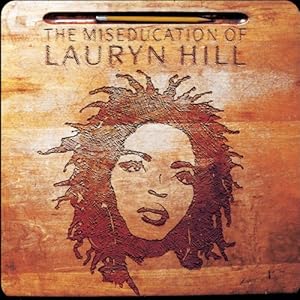
Rewind: The Miseducation of Lauryn Hill
The Miseducation of Lauryn Hill is one of those albums that will always be tethered to the late-90s, and for me, the last few whiffs of being a twenty-something. As Bonita Applebum succinctly lays it out:
One of the things that strikes me most about this album is that she's at the center of every song. It doesn't seem that revolutionary on the surface -- aren't songwriters supposed to be at the center of their songs, even when they are highly fictionalized? I think it's the expectation that women aren't supposed to claim that much for themselves. She inserts her own experiences, her own name, into her songs instead of sticking to general themes of love and loss and growing up -- though all those things are there.
Lauryn was unapologetically woman and a strong and well-spoken one at that. It is such an intensely personal album that speaks to the struggles we all face. I listen to this album on a regular basis. It is inspiring and uplifting, and it never fails to make me sing along or wop it out.I think it's also important to note how absolutely huge this record was in an era of grungy rockers and teenage pop stars. Lauryn Hill's music seemed to be everywhere the last few years of the nineties, and a year later, she completely dropped out of the public eye. She later said in Essence magazine:
People need to understand that the Lauryn Hill they were exposed to in the beginning was all that was allowed in that arena at that time… I had to step away when I realized that for the sake of the machine, I was being way too compromised. I felt uncomfortable about having to smile in someone's face when I really didn't like them or even know them well enough to like them. (source)Out of the dozen or so songs on the record, there's hardly a weak track, but one of my favorites has always been "Ex-Factor." Yeah, it was one her biggest hits, but more than a decade later still sounds fresh.
One of the things that strikes me most about this album is that she's at the center of every song. It doesn't seem that revolutionary on the surface -- aren't songwriters supposed to be at the center of their songs, even when they are highly fictionalized? I think it's the expectation that women aren't supposed to claim that much for themselves. She inserts her own experiences, her own name, into her songs instead of sticking to general themes of love and loss and growing up -- though all those things are there.
Labels:
lauryn hill,
rewind
Subscribe to:
Posts (Atom)