Showing posts with label hip-hop. Show all posts

Thursday, August 30, 2012

Lupe Fiasco's "Bitch Bad"


"Bitch bad, woman good / Lady better, they misunderstood..."

This is the chorus to Lupe Fiasco's much-blogged about song, "Bitch Bad." I'm going to have to a agree with Alyssa Rosenberg : it's great that misogyny is being addressed in a hip-hop song, but there's something a little condescending in its gender politics. Rosenberg says:
"But what irritated me about “Bitch Bad” is its desire to get credit for bringing up a provocative issue without the accompanying responsibility for calling anyone out. “Disclaimer: this rhymer, Lupe, is not usin’ ‘bitch’ as a lesson,” he rhymes, “But as a psychological weapon / To set in your mind and really mess with your conceptions / Discretions, reflections, it’s clever misdirection.” But the only meaningful discussion between “lesson” and intellectual provocation is the responsibility the speaker has for making a point at the end. Given how heavily the rest of “Bitch Bad”‘s lyrics rely on media psychology—in the verse about how girls consume media, he might as well be cribbing from the Parents’ Television Council—he’s on particularly shaky ground in terms of declaiming having any particular message. Watching him dig deeper on that insistence that he can’t be taken too seriously, telling Rolling Stone “I’m not trying to say this is what’s going to happen, or potentially what’s going to happen. Because you don’t know, the characters are fictional, based on true events. I know personally what has affected me, but that’s me personally,” is irritating."
I also take issue with the inevitable examination by the media of misogyny in hip-hop at the expense of other genres. When critics talk about aspects of the music industry toxic to women, the onus always seems to fall on hip-hip when there's a long-standing tradition of sexism and misogyny in rock music that gets overlooked.

Friday, June 22, 2012

Links & Bits: 6/22/12

This merits a longer response which I promise I'll get to over the weekend, but Jonathan Bogart has  written a great piece  about the newest crop of female rappers. Also, there is someone named Kitty Pryde  making music.

Also, Devyn Manibo's paean to J.D. Samson is worth checking out. (Bitch Magazine)

Thursday, November 10, 2011

Links & Bits: 11/11/11

Flavia writes about Europe's treatment of Roma women.

We said goodbye to Heavy D and Gay Cable Network founder, Lou Maletta .

Tom Waits gives a shout-out to the Stones in his new video, "Satisfied :"

Tuesday, October 18, 2011

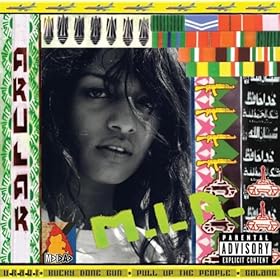
Rewind: M.I.A. - Arular

 
M.I.A. is a polarizing figure. Accused of being fake  , or her politics unsophisticated , almost everything written about her causes controversy, but the music industry needs artists like Maya: 
[...] this may or may not be a bad thing. After all, people don't need to be "sophisticated" to be right. People don't need to be nuanced or thoughtful to say something important. (Sometimes sophistication is a way of keeping people powerless-- ignoring anyone who doesn't speak your diplomatic language.) And people definitely don't need to be any of those things to release good music. -- Nitsuh Abebe for Pitchfork
And people don't need to be sophisticated to make good, thoughtful music.  I also think Maya gets more than her fair share of criticism because she's a woman, and one who dares to talk about politics.

Wednesday, June 8, 2011

Hip-Hop, Agency, and Appropriation

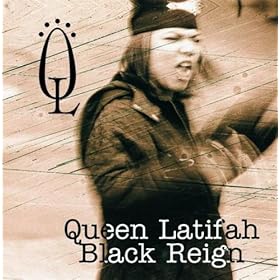
I basically feel like it’s a shame and a crime that white people and/or hip-hop critics (maybe not all critics, or fans! But I don’t hear about it very often at all, and I live with a dude who made it a project, to educate me about hip-hop, and when I mentioned this song, he didn’t know what it was) and/or feminists don’t recognize the centrality and awesomeness of this song. Which addresses street harassment, sexual assault, domestic violence, and girl-v-girl violence, in that order, and is really just super fun to listen to, particularly after your first beer. -- Sady Doyle on Queen Latifah's "U.N.I.T.Y." (source)
If I had to list a singular, stealthily feminist song from my teenage years, Queen Latifah's "U.N.I.T.Y" would be it. This, along "Ladies First," Salt-n-Pepa's "None Of Your Business," and TLC's "No Scrubs," "Ain't 2 Proud 2 Beg" and "Unpretty" are everything I wish riot grrrl was. And they were all over the radio in the early-though-mid 90s.

I said on someone else's blog about a year ago that while riot grrrl was great at addressing sexism and misogyny, and Liz Phair made a lot of young women unashamed of their sexuality, somehow listening to those artists made me feel less than empowered. Maybe it was my own naivete at having the problems of being a young women in society presented to me plainly and unfailingly, but I felt more like a victim than I ever had before. But hearing Queen Latifah sing about punching her aggressors "dead in the eye," and Salt-n-Pepa urging me to sleep with whomever I wanted without apology gave me a greater sense of agency than the feminist punk rock I was supposed to be listening to.

I hate pitting one against the other, rap and punk, because issues of class and race become too impossible to ignore (I'm a working-class white girl who grew up with hip hop), but anything thing less than admitting those songs were an integral part of my feminist upbringing would require rewriting my own history, and I'm not willing to do that.

So, then a couple weeks ago, this  blew up all over the internet:
Meet Kreayshawn, a self-described editor, cinematographer, and "rap beast" from Oakland, California. It's highly unlikely that you'll be able to get her infectious song out of her your head upon listening, and you just might end up adding some of her fab phrasing like "swag pumping out my ovaries" into your everyday vocabulary.
And you know what? I couldn't. "Gucci Gucci" is adroit, addictive as hell, and self-aware enough for my aging hipster sensibilities. So why does it make me feel so icky? Oh yeah, this:
And this is partly why Kreayshawn makes me mad. The White Girl Mob media darling blowing up the interwebs whose potential deal with Sony is making waves makes me angry in a way I haven’t been in a long time. Her appropriative swag is yet another reminder (not that we needed any more this month) of how little black women are valued in our society, even in genres we co-create. In a moment where cool is synonymous with swag, a particular manifestation of black masculinity, Kreayshawn’s dismissiveness and denigration of black women animate her success. (The Crunk Feminist Collective )
I thought this was important to note, since I found little criticism of "Gucci Gucci" coming from within the feminist blogosphere.

Addendum: According to Jezebel Kreayshawn (whose name I discovered via the comment section is pronounced "Creation." Seriously?) has been signed to Columbia Records. Said commenter Top Level Executive:
I'm not one who believes that a white artist/White group shouldn't do Black music, as most of my favorite white artists/groups are those who perform Black music. However, there's a huge and distinct difference between paying homage to Black music/Black culture and straight ripping it off...

Sunday, May 29, 2011

Gil Scott-Heron: R.I.P.

courtesy of last.fm
Gil Scott-Heron who was long regarded as the forefather of hip-hop -- a label he resisted -- died earlier this week in New York. He was sixty-two. From The Guardian:
He was known as the Godfather of Rap but disapproved of the title, preferring to describe what he did as "bluesology" – a fusion of poetry, soul, blues and jazz, all shot through with a piercing social conscience and strong political messages, tackling issues such as apartheid and nuclear arms.

"If there was any individual initiative that I was responsible for it might have been that there was music in certain poems of mine, with complete progression and repeating 'hooks', which made them more like songs than just recitations with percussion," Scott-Heron wrote in the introduction to his 1990 Now and Then collection of poems.
Although he's most known for "The Revolution Will Not Be Televised," I first heard Gil Scott-Heron's music under dubious circumstances -- I'm ashamed to admit, a morning-zoo type radio show. The song was "Whitey On the Moon," and I thought it was brilliant:

On one of his final performances at Coachella last year, blogger Jay Smooth had this to say, and I think it poignantly sums up Gil Scott-Heron's life and work:
When he finally walked out he did look frail physically. But as soon as he smiled that wry, world-weary smile, and began to talk with us and sing to us, he felt so very present, and vibrant, and alive. It was, and is, hard to imagine he’d ever be gone.