Showing posts with label country music. Show all posts

Wednesday, July 18, 2012

Kitty Wells and Country Music's Feminism


Kitty Wells, heralded the "Queen of Country Music," died earlier this week from complications from a stroke. She was 92.

Music's royalty ranking is kind of silly, but in Wells's case, it's pretty accurate: she scored the first number one country hit recorded by a woman with J.D. Miller's song, "It Wasn't God Who Made Honky Tonk Angels," written in response to Hank Thompson's "The Wild Side Of Life." Says Nathan Rabin from The A.V. Club:
“It Wasn’t God Who Made Honky Tonk Angels” epitomized what made Wells such a fascinating and fascinatingly contradictory figure. The song addresses the sexual double standard wracking country music, pop culture, and society as a whole by pointing out that the wild women Thompson scolded in song had often been led astray by unfaithful men themselves. (The A.V. Club )
As someone for whom country music provided a sort of aural wallpaper for her early childhood, I wanted to highlight this because it counters the image of the strong, country woman, and at the time, perfectly illustrates its contradictory nature in being a tough cookie, but also one who "stands by her man." (Plus, you know, that song was co-written by a man.) In his piece for The Atlantic , Jonathan Bogart called Wells a "feminist country godmother to Britney Spears," but I'm uncomfortable tossing the feminism label around casually. I rarely blog about country music, or can't, without pointing out its often problematic nature (and its image of being the domain of the evangelical, confederate flag in the garage, set). But its early roots offered an image of women, particularly of rural, and economically disadvantaged women, that wasn't seen in the Leave It To Beaver era, and one that I most associate with the women in my own family. R.I.P.

Sunday, August 28, 2011

Earworm of the Day: Lucinda Williams - Copenhagen


I wasn't entirely fair when I reviewed Blessed when it was released back in the spring. It's low-key charm actually does reveal itself through multiple listens, which sounds like a complete rock writer cliche, but it happens to be true this time. "Copenhagen," Lu's first official video, a tribute to her long-time manager who died unexpectedly in 2007, as directed by Dave Willis, co-creator of Cartoon Network's Squidbillies:
"We had that night off so we were getting ready to go out and get some dinner and we walked down from the hotel to this little place and the snow was coming down," she says. "It was all very literal of the song. It’s the combination of the news of his death and being so far away over there." (source)

Wednesday, August 3, 2011

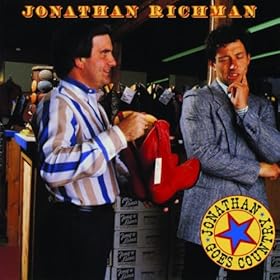
Rewind: Jonathan Richman - Jonathan Goes Country

Recently made available for download, Jonathan Goes Country is less "country" and more "Jonathan." I love Jonathan Richman, but if you were looking for an album of classic country covers, it's not to be found here. Oh sure, he does justice to old favorites like "Your Good Girl's Gonna Go Bad," and "Satisfied Mind," but overall, it's chockablock of the quirkiness he's known for. And that can only be a good thing.

“I went country on this record because I thought “ some of my songs would make good country records, because I “ thought I could do justice to some other people’s songs and “ because I could record it with my friends who are great musicians “ down in Springfield, Missouri.” -- Jonathan Richman (source)

Tuesday, July 12, 2011

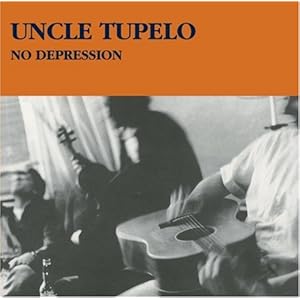
Rewind: Uncle Tupelo - No Depression

There's been a rash of nostalgia Clinton-era pop culture, and a lot penned by women describing how it changed their lives for the better, but my fondest memories from the 90s didn't lead to any kind of a feminist awakening. I'm not sure if I'm supposed to be ashamed of this or not. But no matter how often I'm tempted to rewrite my own history (subtract a Westerberg here, add a Liz Phair there), I can't really deny that the 90s was when I discovered a lot of great music that was just that -- great music -- and it wasn't necessarily tethered to my personal politics.

I write a lot about being a fan, and being a feminist, and how to unite the two. In theory I do this well; in practice, well, I tend to go with what sounds good to my ears.


(I can't write about Uncle Tupelo without first mentioning Mississippi Nights. One thing I always loved about that place was how accessible the performer was to the audience. A lot of nights, the band could be seen mulling around in the crowd while the opener was on stage. Though it was never really what you’d call a small club, the atmosphere was undeniably dive-like in the best possible way.)

I always think of No Depression as county music for people too cool for country. Let's face it, country music is incredibly polarizing and comes with some pretty hefty baggage. It's the soundtrack to conservative America. And while I'm loathe to admit it, it's also the soundtrack to my early childhood. Uncle Tupelo was as close as my city ever got to having a hometown band and, consequently, a "scene."Yeah, technically, they’re from Belleville, but at the time, Uncle Tupelo were our “local boys made good,” if not on a commercial level, then on a critical one. And on a sentimental one.

Friday, June 3, 2011

Links & Bits for 6/3/11

Stop saying "X is the last acceptable form of bigotry" (What Tami Said)
You win no one to your side by pretending yours is the only oppression that still exists. (Especially if your "oppression" is really a petty grievance, but that's another rant.) More than that, you offend everyone who labors under other oppressions every day. "X is the last acceptable form of bigotry" is a thoughtless, self-centered and privileged thing to say. More than that, it carries it's own form of bigotry. Inherent in the phrase is the idea that all that civil rights activism on behalf, for instance, gays and POCs is really just whining. X has been solved. The REAL issue is Y.
Why Wearing Mini-Skirts is a Feminist Issue (Feministe)
This is how victim-blaming works: You point to something a victim of assault did wrong, and you imply (or just say) that if she hadn’t made X choice, she wouldn’t have ended up raped. You say, of course no one is to blame but the rapist! But I’m talking about prevention! Except rape isn’t a drunken miscommunication. It’s not a gray area. If you’re blacked out and a dude takes your clothes off and penetrates you, I promise it’s not because he was under the impression you consented. It’s because he’s a rapist.
Everything You Ever Wanted to Know About My Sexual Orientation And Were(n’t) Afraid To Ask (Autostraddle)
I felt like I needed to pick a label so I’d know what to wear — like I couldn’t go to a lesbian bar unless I had short hair and a gauzy vintage t-shirt and lazy jeans slouching against my hip-bones and I couldn’t go to a straight bar unless I was wearing a dress and boots. Now I know I just need to wear what I want to wear, and let the cards fall as they may. It’s so fucking obvious, I’m not surprised I missed it. It wasn’t my perception of men/women that changed, it was my perception of myself.
One Disturbing Thing (Tiny Cat Pants)
And so, it’s not like I can comfortably watch that and feel like “Oh, Kellie Pickler, what a dumbass.” She’s clearly sharp. So, I sat there watching, thinking “How the hell does a bright woman end up not knowing that France is a country?” The presenter alluded to her very troubled home life growing up, so I was thinking, “Well, maybe she was just in and out of school a lot.” But she graduated from high school, according to Wikipedia.

Thursday, April 21, 2011

Queering Country

I've wanted to do a post about queer country artists since Chely Wright's coming out last year. In fact, I've had the title sitting in my drafts folder for just as long while the body remained blank. I simply couldn't think of many out country artists.


k.d. lang is an obvious choice, and the first openly gay country performer to garner a commercial audience. She broke a lot of ground, but surely she's not the only one. Right?


Mary Gauthier is another well-respected singer-songwriter, but is largely unheard by the mainstream music listening public. And it's a shame, because "Goddamn HIV" is probably one of the most powerful songs written about AIDS.

About a year ago, Autostraddle published a story on bisexual and lesbian country musicians (both k.d. lang and Mary Gauthier were named, and later did a feature on country-rocker, Jennifer Corday, but in the year since Chely Wright, probably the most high-profile country artists to come out in recent years, country has gone back in the closet, so to speak. And I don't know if this says something about country music, or just my taste in it in general, that although I could come up with a handful of lesbians in country, I could think of no gay men. I hope this is just an oversight on my part, but country music -- even the supposedly progressive wing known as "alt-county" is still steeped in  conservative America. The stakes may be still too high.

Tuesday, April 12, 2011

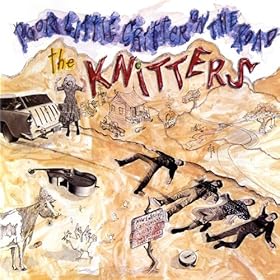
Rewind: The Knitters - Poor Little Critter on the Road

The Knitters' -- Exene, John Doe, and D.J. Bonebrake of X, plus guitarist and songwriter, Dave Alvin, and bassist Jonny Ray Bartel -- Poor Little Critter on the Road straddles the line between punk and country, and set the stage for a slew of other punks wanting to embrace country without resorting to irony or cheap jokes.

Release it 1985, there are plenty of gems among the dozen songs, most of which are covers or traditionals like "Rock Island Line," and "Poor Old Heartsick Me." The highlight, in my book, is John Doe's soulful cover of Merle Haggard's "Silver Wings:"


John Doe has such an incredible voice he can flow effortless from rock to punk to country as if he's been singing it his entire life, but the real magic is the interplay between his voice and Exene's:

Tuesday, March 29, 2011

Rewind: Shut Up and Sing

courtesy of last.fm
I'm not the biggest supporter of mainstream country. It's not the music or the artists, which I don't consider all that different from other genres of popular music, but country music has huge image problems. It's pretty hard to disassociate the sound with the stereotype: country music fans are evangelical jingoists with truck nuts and confederate flags hanging over their garage doors. Country music's image as the soundtrack of the extreme right makes it hard for me to now embrace a style of music I grew up listening to. And the times that trope plays out to be true, well, it's kind of hard to argue why country gets a bad rap.

In 2003, the Dixie Chicks were one of the top selling acts in mainstream country. When frontwoman Natalie Maines said on a British stage that the Dixie Chicks were "ashamed the President of the United States is from Texas," it caused a whirlwind of controversy in the mostly conservative country music world. The documentary, Shut Up and Sing, was released three years later, and tells the story of what happened then, and later as the Chicks tried to rebuild their career and move toward a more adult-contemporary sound.

I remember when this happened, and hadn't thought much about it in the intervening years. As someone who listens to a number of artists who thrive on controversy and being politically outspoken, I thought the whole thing was ludicrous. I didn't know about the threats, the banning, and the outright vitriol of the country music-listening public. That, sadly, doesn't surprise me, but I think it's important to look at the way women in the industry are treated when they make remarks deemed "controversial". It was hateful, mean, and downright sexist. They were called "twits,""dixie sluts," and "bimbos". I really recommend watching this, even if you aren't a country fan. As it stands, what happened to the Dixie Chicks is a pretty good example of the kind of misogyny that permeates popular music. God forbid you are woman with a thought in her head that wasn't put there by her handlers. I came away with a lot of respect for the Dixie Chicks, as artists and people.

Wednesday, February 16, 2011

The Problem with Country

Reading the back-and-forth on this thread leaves me frustrated, cringing, and wondering what I can say that hasn't already been said a thousand times over:
There is apparently a very popular musical act called Lady Antebellum? And to be fair, I have heard their hit song played in several delis across New York City and didn’t know who actually sang it until tonight, so it’s not totally foreign to me. But they’re winning Grammy awards? And their name is, I will remind you, LADY ANTEBELLUM?
Yeah, there is. And apparently they're quite popular and have been for a few years now despite the problematic name. In fact Tami wrote a post about it just over a year ago, which was reblogged at Racialicous:
“Lady Antebellum” seems to me an example of the way we still, nearly 150 years after the end of the Civil War; nearly 50 years after the Civil Rights Act; and in a supposedly post-racial country led by a biracial president, glorify a culture that was based on the violent oppression of people of color.According to an article in the Augusta Chronicle, the idea for the name “Lady Antebellum” came after a photo shoot where band members dressed in Civil War-era clothing. It seems harmless–just a nod to the band’s roots south of the Mason-Dixon Line, a recognition of the Old South.
I grew up with country music, and in a lot of ways, it is the music of my early childhood. I'm not trying to defend it, because I have HUGE problems with country music being intrinsically tied to a certain kind of right-wing, evangelical conservative, romanticizing the Civil War-era south and extolling "traditional values" based on bigotry and hatred. No one should defend that. (Truth: I've had a post sitting in my drafts folder for a year titled "Queering Country," because I can only think of two queer country artists: Mary Gauthier and k.d. lang, and neither one could be considered a "mainstream" country artist.) What I do have a problem with is the view that country music listeners are nothing but ignorant rednecks. Some of the comments on the Feministe thread veered a little to closely to that.

Of course, when you have a band named Lady Antebellum winning grammys and no one outside the progressive blogosphere talking about the history behind the name, well, that's more than a little problematic. Even though this should be a pretty straightforward issue, yes, condemn the band for the name, but can we do it without the elitism? Some of us progressives are part of that "Middle America" and we're trying.

Saturday, January 15, 2011

The one in which I discover the artistic link between Sleater-Kinney, Patti Smith, and The Dixie Chicks


A woman I once respected described Sleater-Kinney as having “all the passion of remedial math.” A half-decade later this comparison still flummoxes me.

SK’s alleged lack of passion was part of larger online discussion on why rock fans don’t (or won’t) listen to female-fronted bands. I find it disheartening, though not really surprising anymore, when a women discredits art made by other women. Maybe she was fully convinced that Sleater-Kinney’s music was atonal, dispassionate noise, but I don’t hear it. I think it’s hard to look at that and not see the bigger issue at play: the old trope that women don’t “rock.” And the few that do — the ones granted access to the boys’ side of the playground — do so only because they co-opt a “male” style of rocking.

So who got a pass that day? Chrissie Hynde for one. Patti Smith did, sort of, when she wasn’t accused of being “the last hippy,” rather than “the first punk.” (This is fairly apt, by the way, but I dare anyone who doesn’t think Patti Smith isn’t a rock star in the truest sense of the word to go to one of her shows if you get the chance.) Throughout their careers, both women have aligned themselves with men, and, at least in Patti’s case, eschewed the feminist label in favor of the “artist” one.


I think what a lot of music fans mean when they don't like an artist's work is, really, they don't like the artist's "brand." I know I'm guilty of this. Sometimes it's really hard to separate the music someone makes with its cultural implications. I don't like country music. There. I said it.

And of course, this is a lie. I like the sound of county music, but the baggage that comes with it -- the stereotype of a country music fan who has a Toby Keith bumper sticker sandwiched between an NRA one, and another that says, "She's a child, not a choice." Logically, I know not everyone who listens to mainstream country music is a right-wing, second amendment supporting, anti-choicer, but that image is prevalent enough to make me groan when someone tells me he is, well, a Toby Keith fan.


The Dixie Chicks subverted country music's "narrative," and did so in a commercially devastating way after Natalie Maines's denouncement of the Iraq war and then-president Bush. (Check out the documentary Shut Up and Sing for the whole story.) Would I like them -- or admit to -- had they not recorded this song? I don't know. "Ready to Make Nice," is a great song under any circumstances, but it also solidified their position as country music outsiders, which is part of the appeal.

Tuesday, January 4, 2011

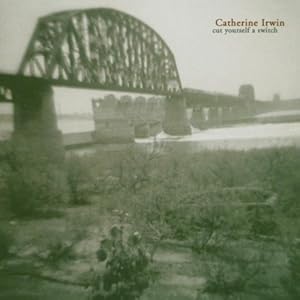
Rewind: Catherine Irwin - Cut Yourself a Switch

Released almost a decade ago, Cut Yourself a Switch is the only solo album from Freakwater's frontwoman, Catherine Irwin. Long thought of as one of the unsung heroes of the insurgent country movement of the 90s, Freakwater played country music in the most traditional sense of the word. (The country music playing on the radio starting from the early 90s or thereabouts is basically pop music with a soupcon of twang. It's not country music.) Cut Yourself a Switch follows the same path, but is even more stripped down. Yet for all its traditionalism, it still sounds fresh and modern.

Wednesday, September 8, 2010

Rewind: Sally Timms - Cowboy Sally's Twilight Laments for Lost Buckaroos

The Mekons have always had a predilection for deconstructing American country music (the British band even recorded a silly cover of Hank Williams's "Lost Highway), but veering to far outside one's comfort zone carries a high risk of failure. Country covers in particular are either too goofy, dealing in too much irony, or they're a little too reverent (boring). Frontwoman Sally Timms straddles the line nicely with her decade-old Cowboy Sally's Twilight Laments for Lost Buckaroos. Self-described as "art country," her first full-length album features originals co-written with former band member, Jon Langford, and a number of classics from Johnny Cash and Robbie Fulks. From Pitchfork:

"If genuine country music can be likened to a shot of Jack Daniels with a Jim Beam chaser, then Sally Timms' collection of country-tinged tunes might be like sipping a cup of Earl Grey tea. And I guess by "genuine" country I mean the bastard shit-kickin' Johnny Paycheck and Merle Haggard kinda country. Timms' take on the genre isn't exactly strong, intoxicating medicine for your troubles, but it might do just fine on a lonely winter's eve."

Standout track: Timms's version of Johnny Cash's "Cry Cry Cry"

Thursday, May 6, 2010

Chely Wright: Country Music and Coming Out

courtesy of last.fm
Early this week, before the People feature "officially" broke, AfterEllen's Heather Hogan posted one of the best stories on country singer Chely Wright's coming out: Five Reasons Why Chely Wright's Coming Out Matters.

This was particularly poignant:
1) It always matters when anyone comes out.

People who have already come out and are surrounded by supportive communities often forget the dark fog of fear and shame and confusion that lives inside the closet. Some people say that coming out is an ethical obligation, and that if all the closeted gay people in all the world climbed up on chairs and jumped off at the same time, the whole earth would be thrown off-course. Or at the very least, gay people would start to see some civil liberty equality.

I have pretty catholic (small "c") taste in music, and I'd never heard of Chely Wright until this week, after much speculation on which big-name country music star was going to come out as a lesbian in a People magazine story this week, and I'm not alone. Does this make it any less significant? No. Mainstream country is not exactly, well, diverse, and having an "out" star can only break down some of those barriers.

Jezebel's Dodai who posted Chely's Today Show interview adds:
At 39 years old, her coming out may not seem like a big deal to some, but it's a huge deal for her — and it's possible that her story (minus the country star part) sounds familiar to many men and women is this country who feel that they can't tell the truth.