Television's Adventure isn't under-appreciated as much as it is unappreciated -- I mean in the most literal sense. As far as post-punk albums go, it's rarely mentioned, at least in light of the massive amount of critical acclaim Marquee Moon has garnered in the past three decades.
Adventure runs slightly more commercial, but I like its relative accessibility. Tom Verlaine's ace guitar work is still here, minus some of the "doodly-doodly-doo" (technical term) soloing on Marquee Moon. I'm not a musician, and most of my musical knowledge is limited to singing, but Tom Verlaine is one of my favorite guitarists. His style manages to be both technical and soulful -- thinking and feeling.
"Glory" is my top pick from this records. Someone once said this single song foreshadowed REM, and while I think that may be taking it a bit too far, the jangly sound is unmistakably familiar:
I'd like to thank Samantha Cornwell at Visitation Rites for hipping me to Lizzy Mercier Descloux. I have a metric ton of obscure and not-all-that-obscure punk comps, and not one has a song from Lizzy Mercier Descloux.
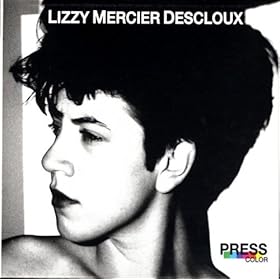
Born in Paris, raised in Lyon, french singer and musician Lizzy Mercier Descloux released her debut album Press Color in 1979. To call it minimalist would be generous. Press Color straddles the line between worldbeat, punk and dance pop, and remains largely unheard to the music listening public at large.
One of her best-known songs is a cover of Arthur Brown's "Fire." (And this performance includes an unintentional cameo from one Serge Gainsbourg.) Full disclosure: I'm not sure if I really love this, or really hate, but either way, I can't stop listening to it. And let's face it, she looks like the coolest girl in the world here.
Sad news to report today. Poly Styrene, frontwoman for X-Ray Spex and influential punk rock icon, died this week after a bout with cancer. She was only fifty-three. From PopMatters:
She always was the incisive cultural chronicler and commentator from the very beginning. X-Ray Spex’s 1978 album Germ Free Adolescents was an iconic punk release, anticipating and influencing greatly the future riot girl movement as well as being one of punk’s and late ‘70s Britain’s most important records. Poly Styrene’s music was always smart and fun in equal doses, making listeners think about gender politics, while shaking their booty and enjoying her marvelous wit. One of the great women of popular music has passed and will be greatly missed.
Poly Styrene also broke barriers by being a WOC in England's mostly white, male, punk rock scene:
Here's the thing about the 1970s British and American punk scenes: they were every bit as misogynistic and race-exclusive as the society they claimed to stand counter to. And Styrene didn't look the part of a punk -- at the time, she was a mixed-race not-skinny avowed-feminist teenager with braces and day-glo old lady clothes, who later struggled with mental health issues. But Styrene embraced her role as punk's conscience, both as critic and role model; she screamed down consumerism and magazine culture both inside and outside the scene, with a bullying shriek still heard in singers like latter-day feminist icon Kathleen Hanna. (Colorlines )
It is unfortunate (but perhaps unsurprising) that Styrene never achieved the same levels of fame that Patti Smith and Debbie Harry did. Besides being a feminist icon, she was also anti-racist and an activist and was a much needed source of pushback against the white male hegemony in punk and rock music in general.
I don't have anything poignant to add other than Poly Styrene and X-Ray Spex were a big part of my punk rock education, and I can remember the excitement I felt finally scoring a cut-out bin copy of Germ Free Adolescents, and later playing that album, feeling like I was being let in on a special secret. At the time it was one of those records that was so hard to find in my uncool Midwest town, and that made its mythos grow. The real secret was really no secret at all: women can survive, thrive even, in punk's boys' club. Poly Styrene is just one of reasons this blog exists today, or that I could have even dreamed it could.
I know that you're about to say: Disco? Huh? But bear with me.
Not having cool older siblings to hip me to those albums considered crucial for any young rock fan who just discovered there's music beyond what's playing on the radio or MTV, I turned to Rhino's compilation CDs. Actually, those things were my cool older siblings. And long before you could sample any song online, or download only the ones you loved, Rhino's comps served as a combo platter of some of the greatest unheard music.
In hindsight, it was pretty 101 stuff. Most of the big names in punk or alternative of the 70s and 80s were there: The Jam, Siouxsie and the Banshees, The Buzzcocks; and some unexpected nuggets, like the Vibrators or the Damned -- something I could never image being played on my local rock radio station sandwiched between Warrant and The Allman Brothers. (Though REM and the Replacements did manage to finagle their way onto the airwaves, if not during most people's waking hours.)
I was well-versed enough in punk rock, in that I thought of it as a somewhat antiquated style of basic three-chord rock, and as a sartorial statement marked by safety pins in the face. Current punk, as defined by my late-80s/early 90s youth, was loud, raw, inherently masculine, and mostly played by the kind of skater boys I wasn't supposed to hang around. No dancing involved unless it required bone-crushing body slams. I liked that -- the anger, the unbridled energy of it all, but I liked to dance, too. I mean, actually move in time to the music, not just pitch myself into a crowd of sweaty bodies. (Hell, I still had a poster of Whitney Houston on my wall for crissakes!)
So I was quite surprised when I first heard Gang of Four's "To Hell With Poverty" smack in the middle of my latest cut-out bin find. (The cut-outs were lousy with Rhino comps.) It was definitely punk in all its nihilistic glory, but it had a beat and well, I could dance to it. It was also smart, little snotty, and weirdly elegant in a way. The synths were pure disco. It wasn't gritty mosh pit rock, but eons away from the brainless pap playing on the radio, which I secretly still secretly loved but rarely admitted, even to myself.
I know this plays into some pretty old tropes about women as music fans: they don't care about artistry, they only want to dance. (A recent book, which I won't name, exploited the hell out of this stereotype.) And I believed it, even while trying to wedge myself into a punk scene that was, and still is, largely inhospitable to women. Right, Gang of Four is hardly the Bee Gees, but they allowed me to embrace music that isn't sweaty and hard, and that danceable beats can be arty, too.