
Showing posts with label pop. Show all posts
Showing posts with label pop. Show all posts
Wednesday, February 20, 2013
Earworm of the Day: Mariah Carey - Fantasy
The 90s, at least the first few years of the decade, were sorely lacking in good, fun pop songs. Or that's what historians and nostalgia buffs want you to believe. I spent an exorbitant amount of time watching VH1 during the mornings I'd have class, and this song was always playing, it seemed. I'm a music dork from way back, so love the Tom Tom Club sample, but really it's just a fun pop song. (And I still blame Mariah for all the homemade "alterations" I did to too many pairs my jeans.)
Friday, August 24, 2012
Links & Bits: 8/24/12
Pitchfork's People's List i s out. I'm writing a longer something about this for tomorrow, but really, it's exactly what you'd expect from a list of Pitchfork readers' favorite albums of the past 15 years: lots of white dudes.
Jezebel's Katie J.M. Baker wrote about Taylor Swift's new single and being an unapologetic pop music lover.
Feministing posted this pro-choice cover of "Call Me Maybe."
Jezebel's Katie J.M. Baker wrote about Taylor Swift's new single and being an unapologetic pop music lover.
Feministing posted this pro-choice cover of "Call Me Maybe."
Sunday, July 8, 2012
Double Standards: Female Artists and Criticism
I agree that there's a double standard in music criticism as it applies to female pop singers -- it would be stupid not to. Or maybe different standard is more apt, but I don't think that every negative thing written about Gaga or Katy Perry or Beyonce is an affront to feminism, or women in general, and I think most women would agree with this. But still, female artists see more than their share of criticism when it comes to how they're viewed in the eyes of their fans. In a post for Persephone magazine, Juniper says of current whipping girl Taylor Swift:
"The criticism can be loosely split, as I see it, into that of her music and her as a person. When it comes to how she behaves and presents herself, the criticism seems to be that she embraces traditionally defined “feminine” traits and that this is A Bad Thing. With regards to her music, it seems to be that since her lyrics aren’t exclusively concerned with furthering women’s causes, then they too, are A Bad Thing."Here's where we differ: it's Taylor Swift's brand that is being criticized, not her. Yeah, of course the two are going to overlap, but if what she's selling is an antediluvian version of femininity -- and one that's unattainable for a large faction of girls -- it's fair game, but I think we need to focus on it and why she's rewarded for it rather than attacking femininity itself.
Friday, September 30, 2011
Links & Bits: 9/30/11
Clarrisa Thorn wrote a great post for Feministe about liberal, sex-positive sex education.
Chloe listed her favorite pop singers with "giant, real voices."
Autostraddle asks, "Does Lady Gaga empower you ?" (Answer: if you've over twelve, probably no more than any other pop star.)
Mac Pogue for Bitch made a mix that breaks out of the "white, male punk" canon.
Chloe listed her favorite pop singers with "giant, real voices."
Autostraddle asks, "Does Lady Gaga empower you ?" (Answer: if you've over twelve, probably no more than any other pop star.)
Mac Pogue for Bitch made a mix that breaks out of the "white, male punk" canon.
Monday, September 26, 2011
The Male Britney, Katy, and Beyonce
Maura Johnston , a music writer for the Village Voice, posted a link on her Tumblr to a site called Voice of Men, which is really the voices of popular female singers pitched so they sound like men, except they don't. Sort of. She adds:
As the person who alerted me to it noted, “The male voice allows us to more clearly see the feminine singing styles and vocal tics that we take for granted in women.” So true.I'm not sure I'd go as far as to call them "female vocal tics," but the inflection, phrasing, and timbre in most women's singing (and speaking) voices in different enough from men's that just lowering the pitch doesn't make women "sound like men." Of course, a lot of this can be chalked up to female pop singers' pressure to "sexy it up," but I think it says more about the way women's speech is allowed to be, or is even expected to be, expressive in a way that men's speech isn't.
It also reminds me of John Oswald's "Pretender" in which he takes Dolly Parton's voice from treble all the way to bass, essentially "masculinizing" her in contrast to her hyper-feminine, campy sex appeal. When I first heard it, I thought, "Ha, she sounds just like... Cher." Then it just got weird.
Deeper, darker women's voices still sound "female," to our ears they're still within the range of what "a woman's voice" is supposed to sound like. As steeped as that is in gender essentialism, it's a large part of why we're so confused when someone steps out of that box.
Thursday, August 18, 2011
Earworm of the Day: Robyn - Call Your Girlfriend
Years ago, when I was deep into being a "serious music fan" who had no time for simple pop music, I had dismissed Robyn as another teen singer -- fun, but a lot of fluff, though smarter and savvier than the Britneys and Christinas. I regret that (though I was right about the latter). Body Talk was one of my favorite records of 2010, and the latest video doesn't disappoint.
Saturday, August 6, 2011
Should a feminist listen to this?

It can be incredibly frustrating, because I feel as though I'm being a hypocrite -- not measuring up to the narrative I've provided by authoring a blog that's (mostly) about pop culture that's supposed to be informed by feminism. Should a feminist listen to (or, for that matter, read or watch) that?
The answer, of course, is yes. A feminist can listen to anything she damn well pleases. Hopefully, she gleaned some awareness of the myriad ways women are under or poorly-represented in pop culture. But still, presenting such things uncritically is pretty disingenuous. I mean, that's what we're here for.
In the Guardian this week, Zoe Williams
She sings a song about how, if you wanted to go out with her, moron, you should have pursued that desire with a proposal of marriage. "Put a ring on it," she sings, waving her hands about like an Andrews Sister on amphetamines. "Put a ring on it", mouth the girls in the audience, dead-eyed with the madness of crowds. As if the past 50 years had never happened, as if one's own sexual destiny were a meaningless bauble, to be hung off the first john with a bank account who shows an interest. It's distressing. And yet would you prefer it to have been Coldplay again?This comes on the heels of what Emily Hauser wrote for Feministe last month:
Seriously? Beyonce, what you’re saying here is: “You shouldn’t have tried to keep the cow for free once you’d had the milk.” I kind of thought we’d gotten past that.Full disclosure: I'm not enough of a Beyonce fan to provide any sort of in-depth analysis of her lyrics, but as much as I think we need to critically look at the media we're consuming, I'm not about to vilify Beyonce for being... well, unfeminist. Or if I did, I'd have a long list in front of me and "Single Ladies" wouldn't even make the top ten. (The comments to that Feminist post provide better insight that the OP, in my opinion.) Chloe for Feministing writes about consuming better media -- music, books, magazines and tv -- that doesn't reinforce restrictive gender stereotypes. I think this is hugely important, and, frankly, impetus for starting this blog in the first place. The problem with that is -- and I say this as a recovering music snob who, at one time, would sooner ram crochet hooks into her eardrums than listen to top forty pap -- it's not an easy job. The "good" media we're supposed to seek out isn't as readily available as the "bad."The Taylor Swift, Katy Perrys, Beyonces, and Lady Gagas are ubiquitous enough to reach the girl in a small or medium-sized town with no independent book or music stores (which, yes, are growing increasingly irrelevant as books and movies become available online), or theaters that show movies not starring Seth Rogen.
In short, I have no real clear-cut answers either. Isn't that great how that works out? What I have noticed since starting this blog, I'm less likely to consume media that's harmful to women than I ever was before. There are several things I've cut out of my life, that at one time I enjoyed, after gaining more of an understanding why they're harmful (Bill Maher's sexism, even when it's against women whose political ideology runs counter to my own; the aforementioned Seth Rogen movies). This, I think, is what we're all aiming for.
Monday, July 18, 2011
Please Stop Making Me Defend Lady Gaga
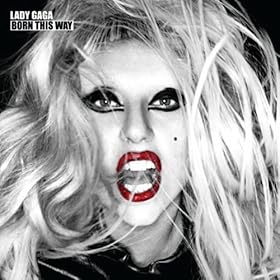
I say without bitterness that it is nothing new. I like the idea of women who are in full control, but I am tired of seeing singers who cannot deliver a song without the aide of 750 frenzied dancers assuming the erotic. It is actually fraudulent, and the exact opposite of erotic."(He also referred to Madonna as "McDonna.")
Do I disagree with him? Not entirely. I prefer my artists not accompanied by a dance troupe, and Gaga, divorced from her image, essentially sings in platitudes (within the context of pop music, this is completely acceptable), but it's disappointing when a universally respected singer-songwriter -- one whose music I've grown up with -- makes disparaging comments about a currently popular star's persona, especially its eroticism (or lack thereof). The misogyny may be covert, but it's there. By far, it's not the worst thing Morrissey's ever said, but it does nothing to belie his reputation as a aging, bitter pedant, and at best, reeks of sour grapes. And it's not that I think that female pop stars are above criticism, but hearing highly respected, if commercially ignored, artists pass judgement on the ones selling millions of albums -- you're not in the same game, right? The deification of critics' pets bothers me as just as much as the overexposure of artists like Gaga, Katy Perry and Tyler Swift get, but that doesn't mean it's open season on the latter.
Thursday, July 14, 2011
Taylor Swift = Evil Genius?
If you read one thing this week, make it Tessa's post about Taylor Swift's potential for evil genius:
Taylor Swift makes me feel like Magneto, in that I want to draw her aside and tell her “You aren’t like these people. Come with me, and I will make you the destroyer of worlds you were born to be.” And don’t tell me she doesn’t want to.
The problem is she doesn’t have the first clue how how. Curse her for turning the Kanye debacle into a maudlin feud with her condescendingly immature ballad of rebuttal instead of grabbing the man by the shoulders and saying “TEACH ME TO BE YOU.” The girl who made a video about the conflict between her sad-sack, passive-aggressive, girl next door identity and the Queen Bitch she wishes she could be needs to be taken in hand, and who better than a man caught between arrogance and self-loathing, grandiosity and heartache?
Monday, July 4, 2011
Born This Way (If Just For One Day)
As much as I write about the overall contempt "serious" music fans have for pop music, I'm still very much ensconced in the world of "serious music fans who hold pop music in contempt." Yeah, I talk a good talk, but unfortunately, I'm a big hypocrite. I don't really listen to a lot of pop music -- and I mean in the truest sense of the word: the kind of three-minute, "gets the blood pumping" songs that are played ad nauseam on radio, if radio still played music. And so much of it just makes me feel really old. I think it's okay not to be that into music made by people young enough to be your children, the same way it's okay not to really dig your parent's records. (Or the way they say "dig" and "records.") However, I found a major loophole: parades. "Born This Way" sounds freaking amazing when played by a marching band. Really, Lady Gaga (and Katy Perry for that matter) sounded just perfect at the Pride Parade last weekend. I can't remember who the author was, but last year someone on his blog said he had the same reaction to hearing Lady Gaga in a club -- it all made sense.
So maybe I'm not such a rockist after all.
Oh, and Weird Al parodies are always welcome:
So maybe I'm not such a rockist after all.
Oh, and Weird Al parodies are always welcome:
Thursday, June 2, 2011
Moby Calls Britney, Ke$ha Not Music
 |
| last.fm |
"It's manufactured. I appreciate it as pop culture phenomenon and some of the songs I like if I hear them in a shopping mall or something, but it doesn't function as music for me.He also called it "adverstising for ringtones."
Music is something that communicates emotion and integrity in a really interesting, direct way, [...] And when I listen to the pop music you're describing, it's hyper-produced corporate product. That isn't really even a criticism, but I just think calling it music is a misnomer."
The interview made the rounds of the blogophere, not surprisingly depicting Moby as a bitter almost-been, but you know what? I actually kind of agree with him. Or rather my younger, music-snob self would have agreed with him before I opened my eyes to whose music is considered art, and whose is commerce. And Moby himself is hardly averse to capitalizing on his "product:"
Setting aside his blatant hypocrisy – licensing your entire album to commercials, as Moby did with Play, makes you guilty of producing "advertising for Vauxhall Corsas", if not ringtones – it's an argument that seems to follow most pop music around these days. At the heart of it is the theory that all music needs to have been wrenched from the emotional core of a tortured soul, ideally recorded in a basement toilet and augmented only by the scratching of fingers on guitar strings and tears, ACTUAL TEARS. It forgets that music can be fun and instantaneous, or that great pop stars are often used as a front for great pop songs, often written by great songwriters (Max Martin, Cathy Dennis, Stargate). It also hints at another old adage: that pop is for children who lap it up without giving it a second thought. (source)I think the obvious needs to be said that whenever another musician -- nay, an artist -- decides to criticize pop stars as non-musicians or non-artists, the object of that criticism is usually women. Pop music, the kind that dominates the charts and can actually be heard on MTV or VH1 during normal waking hours is largely made by women. In contrast, look at any critic's best-of list, and men usually dominate. When women do make those lists (like the current Rolling Stone 500), it's often as performers, and not songwriters or producers. According to Marissa Meltzer, who wrote a meaty chapter on pop music in her book, Girl Power: The Nineties Revolution in Music , "Our culture seems to have a particularly hard time with the suggestion that female pop stars have agency [...] despite (Spears) very public transgressions, she does seem to be far more self-aware than most critics are willing to give her credit for."
Wednesday, March 23, 2011
Kate Nash Isn't a Pop Star, and She Doesn't Want You To Be Either
 |
| courtesy of last.fm |
I'm the first to admit, I'm, for better or worse, Jack Black in High Fidelity. I've written numerous accounts my trying reconcile my love of weird, obscure, and unheard music (good) with my secret obsession with mainstream pop culture (bad), but the older I get, and the more aware I've become of whose music is seen as art, and whose is seen as commerce, the more I am able to find value in "disposable" pop music. By all means, yes, encourage young women to write songs -- any opportunity for creative expression is a good thing -- but how about not vilifying the Katy Perrys and Ke$has to raise up the Kate Nashes. This isn't directed at the Jezebel (who actually does a pretty good, if somewhat limited, job of promoting female artists), but critics at large who dismiss pop artists as part of "junk" culture.
This, from a grammar, is more about electronica, but can also be applied to any style of music seen as less "substantive" or "organic":
This idea that singing, say electronic pop, automatically means taking up a disempowered, manufactured, pandering role, even if the woman in question is creating everything herself. The slippage involves being more interested in what the muse seems to represent socially that the actual relationship between the female artist and the art she's making.Of course, that's not to say anyone is above criticism, but instead of framing it as "pop music, bad" we could teach young women interested in being performers how to have more control over their image -- their brand -- or some sense of agency in an environment where they are continually devalued.
Thursday, March 17, 2011
Fifteen Minutes: The Price of Being an Internet Meme
I couldn't bring myself to watch the entire Rebecca Black video.
If you've been under a rock for the past week -- or away from youtube -- a teenage girl posted a video to youtube, a vanity project of sorts, a song called "Friday." The lyrics are as basic as one could imagine (lots of "partyin' and fun, fun, fun) and it's autotuned to bits. In that respect, it's not all that different from the simplistic pap pumped out by corporate music makers. Except it's not. It's oddly surreal in its awfulness, and it's gone viral. I refuse to link to it here, but as you can guess, not all of the attention has been positive. The idea behind making a "vanity" record, which I'm assuming this is, reminds me of the song poems of the mid -20th century. Here's an example (and a sort explanation of the history behind the song-poem phenomenon):
Addendum: "Friday" just broke into the iTunes Top Ten. Color me not all that shocked, really.
If you've been under a rock for the past week -- or away from youtube -- a teenage girl posted a video to youtube, a vanity project of sorts, a song called "Friday." The lyrics are as basic as one could imagine (lots of "partyin' and fun, fun, fun) and it's autotuned to bits. In that respect, it's not all that different from the simplistic pap pumped out by corporate music makers. Except it's not. It's oddly surreal in its awfulness, and it's gone viral. I refuse to link to it here, but as you can guess, not all of the attention has been positive. The idea behind making a "vanity" record, which I'm assuming this is, reminds me of the song poems of the mid -20th century. Here's an example (and a sort explanation of the history behind the song-poem phenomenon):
The business of recording song poems was promoted through small display ads in popular magazines, comic books, tabloids, men's adventure journals and similar publications with a headline reading (essentially) Send in Your Poems - Songwriters Make Thousands of Dollars - Free Evaluation. The term lyrics was avoided because it was assumed potential customers would not understand what the term meant. Those who sent their poetry to one of the production companies usually received notice by mail that their work was worthy of recording by professional musicians, along with a proposal to do so in exchange for a fee. The early 20th century versions of this business involved setting the words to music and printing up sheet music from inexpensively engraved plates (wikipedia).As for the "brains" behind "Friday" and the public's reaction to it, Jezebel's Dodai says:
It's unclear whether Ark Music Factory is, as one reader emailed us, "creepy guys preying on rich kids' improbable dreams," or an indie label trying to break into a niche market — or both. But the popularity of Rebecca Black's video says more about the American public than it does about Ark Music. From Britney to Miley to Toddlers And Tiaras, we love to snicker at girls attempting to entertain. We delight in belittling and sneering at these young women. Oh, the media — and pop culture in general — teaches these kids that putting on a show is the best way to get everyone to love you.I've been that girl, and only by the grace of god did youtube not exist when I was thirteen. I have a shoebox full of tapes my cousin and I made with our "fake" band. They're horrible in a Shaggs sort-of way. The difference was we had only minor delusions of fame, but no one would hear those songs but us. It was done strictly for the joy of playing rock star for an afternoon, which is what I hope Rebecca had in mind, if a little less organically. I don't want to read the youtube comments, and I'm a big believer in "publishing at your own risk." But I don't think some kid's rock star fantasy is worthy of mockery, no matter how embarrassingly bad. That she doesn't seem to be embarrassed by it makes me feel a little worse.
Addendum: "Friday" just broke into the iTunes Top Ten. Color me not all that shocked, really.

Subscribe to:
Posts (Atom)