Showing posts with label nirvana. Show all posts

Saturday, June 16, 2012

Hi, you're old. Love, The Internet

Last.fm
While I truly believe this tweet that Justin Bieber is bigger than Kurt Cobain as evidenced by his number of Twitter followers is the work of a not particularly clever troll, I had to cringe at the thought of a preteen calling out a long-dead icon from her parents' generation. At the risk of sounding like a bitter, aging member of Generation X, "Really? I mean, come on. Are we actually that old?"

I'm a hypocrite. I'll acknowledge -- and write lengthy posts about -- music fandom being the domain of elitists who like to impose their own standards on just about everyone with the gall to call themselves a music fan, but I like having a canon. I feel a little unmoored without one.

As for the tweet, I've been trying to come up with an embarrassing anecdote from my inchoate music listening days where proclaimed the Monkees greater than the Beatles (although Mike Nesmith remains one of the world's greatest unheralded songwriters), or insisted Green Day invented punk, and.. I can't. Maybe it's just a case of selective memory, or the luck of growing up in an era where my embarrassing pop culture transgressions were kept locked away in diary somewhere, but growing up in a family of music fans. I didn't dare. I'll also add I was pretty lucky to have been exposed to a variety of music and was given some pretty good "history lessons." But I still listened to top forty pap.

Actual embarrassing pre-teen journal
I can pinpoint when exactly I went from being an average preteen whose musical acumen began and ended with what was playing on the radio to realizing there was something else out there: this, that elusive, mortifying diary entry with cool, scary Robert Smith sharing a page with The New Kids On The Block, and the NKOTB of my mom's generation, The Monkees. I'm not sure if I even knew The Cure's music yet -- I probably saw his picture in a magazine and thought, "Cool. Definitely not mom-approved." I laugh at this now, but it made perfect sense then. Who says you can't listen to goth and pop? No one. (And I'm sorry, but the Cure was pretty damn poppy even if their lyrics were a just bit too funeral.)

So I'm not too worried about seventh-graders who think Bieber is greater than Cobain. Assuming this isn't a troll, but a living, breathing kid who decided to take to her Twitter and call out some some old farts and their old fart music, maybe someone will hand her a punk mixtape, or she'll discover a the vast jazz collection at her local library, or broaden her musical horizons some other way. Or not, and that's probably okay too. (Just stay off my lawn!)

Saturday, October 8, 2011

Nostalgia For All? Not Quite...


(Sorry for the awkward title. I swear I have a point, despite how disjointed this post seems.)

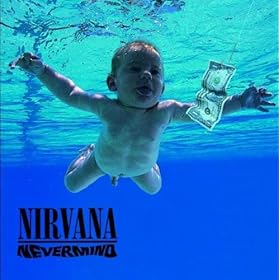
Tom Ewing's post for the Guardian about never really listening to Nirvana's Nevermind hit a nerve. I've written here, many times, about various aspects of pop culture that "defined my generation"  that either passed me by completely, or that I've come to piecemeal years later through fan and critical accounts. This is especially true with music, which is odd because I'm a music blogger. I understand -- and appreciate -- certain records' acclaim, but the original context is missing.
There are records you come to late – very late, in this case – but also records you miss out on through no fault of your own: you weren't born, you weren't old enough. There's a mystique to these: you hear about them through storytelling, and you get to use the album to magic up a time you could never have seen. These imagined contexts can be stronger, stranger and richer than anything in the grooves. At 13, I was enthralled by a coffee table book called Top 100 Albums of All Time – not because I cared about the placings, but because the terse descriptions and glossy sleeve photos conjured a world of far-off adult experience. John Fogarty leaning on his guitar as if it really were an axe, dappled by sunlight on the cover of Green River – I love Creedence Clearwater Revival now, but that picture and the words "swamp rock" made me imagine something far deeper, muddier and more elemental than the actual records.
I can agree with this. I think it's completely possible to create your own context, and historical distance often adds to a band's mystique. The Replacements were a band I can to really late: a half-decade after they broke up. I have no memories of the drunken, sloppy shows that are a huge part of the band's image. I don't remember staying up late to see their television debut on Saturday Night Live when lead singer Paul Westerberg dropped the f-bomb (frankly, I don't know why this is considered a benchmark in their career). They were basically a collection of images and second-hand stories, and that made them hugely appealing. I was a fan of the ghost more than the band.

But more importantly, I think there's a danger in labeling things "universal." So much of the 20th anniversary Nirvana talked about Nevermind being the single most record that defined Generation-X, and while it would be silly to deny its influence, its appeal is far from universal. I wish it were mentioned more often, or at all, that 90s nostalgia is incredibly white-washed. Or maybe just nostalgia blogging is. I think people forget that not everyone has access to the same things, or that those things resonated with everyone. When I think of Nirvana in 1991, I remember feeling like it wasn't for me, or someone like me. Everyone I knew still had huge hair and listened to metal. I didn't want that either, but Nirvana was, as my cousin said, "the jocks' band." I'm guessing Kurt wouldn't have appreciated this.

This isn't the first time I've written about the the current deluge of 90s nostalgia being almost exclusively the domain of white, middle-class 30-somethings (at what's getting published is). In fact, I almost feel like I'm taking a cheap shot, conveniently inserting it here, but when I find writing that doesn't necessarily wax poetic about how wonderful the 90s were, or how this big, huge record resonated with the writer, I heave a little sigh of relief that I'm not just being a contrarian when I say, "That's not my nostalgia."

Sunday, September 25, 2011

Kurt Cobain: Stealth Feminist?

Nevermind , the album that turned a large chuck of my music-listening generation onto "alternative" rock, and is credited for stomping on the then already decaying corpse of metal, turns twenty years old this month, but I have to come clean: I never was a Nirvana fan. I wasn't much into the "grunge" sound to begin with. It was too plodding, too fuzzed-up, too funeral, and too content to wallow in its own misery. It sounded like what I imagine clinical depression would if it were soundtracked -- a sort of "lying around in your own muck" music. Plus it was still dangerously close to metal -- in sound anyway. Take away the hairspray, leather, flashy videos and metal's misogyny and... okay, maybe Nirvana wasn't like its AOR predecessors at all.

Can I focus for a while on that last thing? Rock's overtly misogynistic lyrics? I have to credit Nirvana for, at least, providing an alternate version of rock's masculinity that didn't take pleasure in degrading women.

Amanda Marcotte wrote a great piece for The Daily Beast about Nirvana's "secret feminism ," but I don't think it was really all that secret. Kurt did, from what I could tell, respect women as artists and as peers: he married one. And even if Kurt and Courtney's version of marital bliss strayed, er, pretty far from the norm, I'm pretty sure they were soul mates. Kurt also wrote lyrics that twisted gender roles, sometimes singing from a woman's point-of-view, most notably in the controversial song "Rape Me, from Nevermind's follow-up, In Utero" :
Many of the women interviewed initially found “Rape Me” an unsettling song, but eventually came around to seeing it as Cobain’s clumsy but well-intentioned attempt to incorporate feminist theory into his worldview. It’s one of the few songs in all of rock history to acknowledge rape as a crime of power and violation, instead of excessive sexual desire. Many feminists object to using rape as a metaphor this way, but what was undeniable was Cobain’s extreme hostility to the possessive mentality that leads to rape.
I'm in the camp that says rape shouldn't be used as a metaphor, or at least tread very, very lightly if you do especially when you are a cis, straight, white man with tons of industry respect and critical and commercial clout. I definitely have mixed feelings about that one. On one hand, I love that a man is able to put himself in a vulnerable position, but there's still a hint of appropriation going on. But during a time when not many people were talking about rape as a crime of power, not sexual conquest -- at least not outside academia -- it was a risky move, and one that paid off in the end.

Thursday, August 25, 2011

The Year Punk Came to DVD

Technically, punk never broke in 1991. Yeah, that makes me sound like some sort of rockist snob like Jack Black's character in High Fidelity, but I've always found the title of the documentary, 1991: The Year Punk Broke, curious. Looking back at the early 90s -- which is something I'm loathe, but compelled to do -- they weren't very punk unless you had access to a network of zines, mom-and-pop record stores, or college radio. For most of us, the underground was just that -- underground. I was well into my twenties before I'd heard of Sonic Youth, the subject of this doc which will finally be released on DVD in the next few weeks. Lots of 90s alt-rock stars abound, including Nirvana (who was "breaking" at the time), Babes in Toyland, and Dinosaur Jr.

I was only on the periphery of the 90s punk scene, grabbing little snippets on the lone, low-powered community radio station before the big RAWK! one picked up Nirvana and Pearl Jam (the latter I have no doubt would have fit with their playlist had grunge never happened), or weirdly enough, though the pages of fashion magazines peddling flannel and ennui as a fashion statement. It's easy to forget in the days before youtube, Facebook, and multi-tiered cable how hard it was to find music that fell outside the top forty, a term that's now become obsolete -- and meaningless.

Wednesday, August 10, 2011

Now For Something That Will Make You Feel Very Old

The baby dancing around in this video...


grew into the stunning young woman in this series of photographs by Hedi Silmane. She looks a lot like her father. Especially in the profile shots.

Friday, August 5, 2011

Links & Bits: 8/5/11

Read Latoya's post on Nirvana, riot grrrl and race for Racialcious. She explores a lot of what I think is wrong with the current deluge of 90s nostalgia.

Chloe from Feministing  says if you want better media, start consuming better media.

Lawsonry's Elizabeth Sturgeon talks about feminism and atheism, and what the two can learn from each other.

Kreayshawn has "white girl problems."

Jay Smooth on Lauryn Hill and having an artist "owe" you: