As someone who grew up around, and came to loathe, a certain kind of working-class masculinity, I agree with Ta-Nehisi Coats's Atlantic piece on poverty, masculinity, and power. Granted, that loathing comes bundled with loads of internalized classism, but it merits discussion. Street harassment he says is, "is a kind of implied violence, a tool most embraced by those who lack the power to set laws, men who are in doubt of themselves. Real men objectify women with dignity and decorum."
Now, I take this to mean that real men -- men who have social or economic power and influence -- objectify women in more covert, socially acceptable ways: the subtle sexism when boss calls a female employee "sweetie," or the institutionalized kind when she's passed over for a promotion in favor of a younger male colleague. I'm still not entirely sure where Emily Heist Moss was trying to say with her critique of Coats's essay, but she provides an example that I think affirms what Coats was saying. The young, white law student might have hit the privilege jackpot, but by virtue of being a student, he's not exactly powerful. She also centers women's experiences -- a good thing -- but it misses the point of Coates's essay. I'm not making excuses -- all kinds of objectification and sexism contribute to the larger picture that as many inroads women have made, there's still a lot of work to be done. But as a person who's solidly working-class, I have no idea where my alliances are supposed to lie.

Showing posts with label class. Show all posts
Showing posts with label class. Show all posts
Wednesday, July 10, 2013

Wednesday, March 27, 2013
The horror of being "average"
I wanted to write a longer piece about education, schools, and privilege, something that would piggyback off a brief post I wrote last week about being labeled as a "smart kid," but as a single person with no children of my own, I don't really have a dog in this fight. Then I read this. And I read it again, just to make sure.
It's been over two decades since I've been in school. My grade school didn't have a "gifted and talented" program. The only way you could get into an "accelerated" class was to move up to the next grade, and they didn't do that too often. I only knew one kid who skipped a full grade, and I and three other kids were moved from a third grade math class to a fourth/fifth grade one, but overall we were taught that you weren't any better than the kid in the next seat. My high school loved tracking, so much that instead of the standard three ability levels we had six. I was in what I guess could be called "second honors" or "upper average." (We called ourselves the dumb smart kids.) There were major problems with the tracking system. It was largely dependent on recommendations from your grade school teachers, and in an already competitive school, it was a huge part of a student's identity. It was also pretty subjective. I didn't fit their gifted template: my parents weren't professionals, I had an ethnic last name, and I lived in "bad" zip code. I transferred to another school my sophomore year, one with a traditional "one, two, three" system, and was a "one." As far as I can tell, I didn't gain any IQ points from one semester to the next, but someone thought I was a "one," so that's what I was.
Not that return to tracking is the answer (though some people think it is ), but it's frustrating to read stories about parents doing everything they can just to make sure their child is not, god forbid, average, particularly when the system that grants kids "gifted" status is a classist one.
Tashi’s teacher told me to get her tested again with an outside consultant, so I called my sister-in-law Lisa, who has three gifted daughters. Lisa said, “You tested her through the school system. Are you that stupid?” She told me no one gets in that way. She said, “The smartest way to get Tashi into gifted is to pay an outside consultant $300.”Call me naive, but if you have to pay $300 for a consultant to tutor your child into the gifted program, doesn't that make the idea of "gifted and talented" kind of meaningless? Not to mention the injustice of a system that bestows the label of "gifted" to only those who can afford it.
It's been over two decades since I've been in school. My grade school didn't have a "gifted and talented" program. The only way you could get into an "accelerated" class was to move up to the next grade, and they didn't do that too often. I only knew one kid who skipped a full grade, and I and three other kids were moved from a third grade math class to a fourth/fifth grade one, but overall we were taught that you weren't any better than the kid in the next seat. My high school loved tracking, so much that instead of the standard three ability levels we had six. I was in what I guess could be called "second honors" or "upper average." (We called ourselves the dumb smart kids.) There were major problems with the tracking system. It was largely dependent on recommendations from your grade school teachers, and in an already competitive school, it was a huge part of a student's identity. It was also pretty subjective. I didn't fit their gifted template: my parents weren't professionals, I had an ethnic last name, and I lived in "bad" zip code. I transferred to another school my sophomore year, one with a traditional "one, two, three" system, and was a "one." As far as I can tell, I didn't gain any IQ points from one semester to the next, but someone thought I was a "one," so that's what I was.
Not that return to tracking is the answer (though some people think it is ), but it's frustrating to read stories about parents doing everything they can just to make sure their child is not, god forbid, average, particularly when the system that grants kids "gifted" status is a classist one.
Thursday, March 21, 2013
Some thoughts on class, education, and critical thinking
This, from Feministe's Barnacle Strumpet, could have been the impetus for a larger discussion about class, privilege, but I think too many people are confusing education with enlightenment. Here's the original comment.
I think what bothers me about feminism as academic pursuit isn't that it's less organic, but that's academia must always exist in the classroom. Another commenter correctly pointed out that academics write books and, provided you're blessed with a good public library system, anyone can read those books. but the consensus is "classroom is always better. always." Or when I read, as I did a few years ago, about a woman who was a women's studies scholar, but had never heard of Alice Walker, I tend to doubt the classroom is always best.
I find it problematic, the idea that a person requires a college education, specifically in a liberal arts degree like Women’s Studies, to have critical analytic skills, or to have ” a deeper understanding of oppression that transcends divisions of race, gender, class, and sexuality. ”
It implies that people without such studies must lack those things. And if it doesn’t make that implication, and people without such studies have those things, then what is the value of paying thousands of dollars to get such things when you can get them elsewhere for less cost?
I’m not even an oppenent of Women’s Studies programs. They certainly have as much right to stand as history or art programs, or a lot of other ones. If people want them to exist, want to study them, then they have value simply from that, and should exist.I agree with this, and it's why I rarely comment on feminist blogs these days. You shouldn't have to build a case for Women's Studies programs to exist, but the justification that they're necessary because there is no other way to acquire critical thinking skills is ludicrous.
I think what bothers me about feminism as academic pursuit isn't that it's less organic, but that's academia must always exist in the classroom. Another commenter correctly pointed out that academics write books and, provided you're blessed with a good public library system, anyone can read those books. but the consensus is "classroom is always better. always." Or when I read, as I did a few years ago, about a woman who was a women's studies scholar, but had never heard of Alice Walker, I tend to doubt the classroom is always best.
Sunday, March 17, 2013
"Smart" is a privilege, not a disadvantage
I'd been wanting to talk about this for a while, even before Rachel's post for The Social Justice League. Going from a grade school where we were told none of us was better than the person in the next seat, to a high school where tracking was taken to new and self-esteem shattering levels, I don't put much faith in "smartness." Of course I value intelligence (my definition of intelligence is close to Ozy's ), but not"smartness" as an identity based on IQ and SAT scores, or where one went to college -- which is heavily, if not entirely, tethered to class.
Monday, January 21, 2013
Broke vs. Poor
Jezebel linked to a great article in The Nation that offered some much needed clarification on being broke versus being poor using too recent examples from television: Girls's Hannah and Fiona from Shameless.
"Watching the season premieres of HBO’s Girls and Showtime’s Shameless this past Sunday put the contrast in stark relief. The two main characters, Girls’s Hannah and Shameless’s Fiona, are both penniless twentysomething women finding their way through big cities, but they live in completely different worlds. Hannah’s infamous humiliation is that she relied on her professor parents for rent money for years; Fiona’s deadbeat folks have left her to raise her five siblings alone. Hannah struggles to find a job worthy of her college degree; Fiona juggles several gigs at a time, leaving no time to even finish high school. In other words: Hannah is broke. Fiona is poor. And never the twain shall meet?"I'm happy to see an article explaining the difference between systemic, multi-generational poverty, and the kind of poverty that comes with a safety net and a college degree. Being degreed isn't much of a consolation when both are working side-by-side at McDonalds, but there's a crucial need for clarification when taking about being temporarily "broke." (My biggest issue with the Occupy protests and the "I am the 99%" meme that circulated throughout Tumblr last year.) That being said, I think there's room for an even more nuanced discussion on class.
Wednesday, January 2, 2013
Classism Redux
This week I've seen a handful of feminist or SJ bloggers addressing classism within their circles, and while I'm happy that it's being discussed, there are a few things bothering me that I'd really like to touch on here in the sanctity of my own site. Within progressive circles, classism is often acceptable, even encouraged, giving bloggers who don't have class privilege a platform is a huge step, though I don't see this happening, and the kind of topics covered with the feminist blogosphere especially, that shows. (For example, I almost never see union rights discussed on feminist blogs, though the percentage of female union workers is near that of men.) However, like most marginalized groups, working class and poor people are treated are often treated as a monolith.
Here's a complaint I see frequently: the language used within the SJ world alienates those who don't have access to it. This is largely true, but it's not so much that it's overly academic, but insular in the most general sense of the word. That being said, I'm hesitant to talk about my own background, or even participate at all, if it means my words are going to seen as less sophisticated because I don't have an advanced degree from a fancy school. There are ways to acquire knowledge that aren't tied to academia, a fact that gets lost in the shuffle when those talking about classism have class privilege. I'm pretty well read, I think, in a canonical sort of way, but I read none of the big, important feminists in school. I remember a few years ago a commenter on a pretty big deal blog said that she was women's studies major, yet she had never read Alice Walker. That speaks volumes about academic feminism, but those are still the voices we're centering?
When I started this site a few years ago, I wanted that women who didn't think feminism was for her to feel welcome, but not patronized either. Dryly pedantic doesn't work for blogging as a rule, but I want to assume she knows who Alice Walker is, or bell hooks, or hell, Judith Butler, who's like the grand dame of dry academic writing. Or at least, I don't want to assume because she didn't go to the good schools or doesn't comes highly degreed that she's never heard of them.
Here's a complaint I see frequently: the language used within the SJ world alienates those who don't have access to it. This is largely true, but it's not so much that it's overly academic, but insular in the most general sense of the word. That being said, I'm hesitant to talk about my own background, or even participate at all, if it means my words are going to seen as less sophisticated because I don't have an advanced degree from a fancy school. There are ways to acquire knowledge that aren't tied to academia, a fact that gets lost in the shuffle when those talking about classism have class privilege. I'm pretty well read, I think, in a canonical sort of way, but I read none of the big, important feminists in school. I remember a few years ago a commenter on a pretty big deal blog said that she was women's studies major, yet she had never read Alice Walker. That speaks volumes about academic feminism, but those are still the voices we're centering?
When I started this site a few years ago, I wanted that women who didn't think feminism was for her to feel welcome, but not patronized either. Dryly pedantic doesn't work for blogging as a rule, but I want to assume she knows who Alice Walker is, or bell hooks, or hell, Judith Butler, who's like the grand dame of dry academic writing. Or at least, I don't want to assume because she didn't go to the good schools or doesn't comes highly degreed that she's never heard of them.
Saturday, September 15, 2012
Parsing Class
(Parts of this are from the comment I left on the following link.)
Aunt B. wrote a great, nuanced post on subtle classism -- in part spawned by the popularity of TLC's Honey Boo Boo -- something lacking in the feminist and social justice blog world. The nuance part, I mean.
I feel like class issues are jettisoned to the margins of the feminist blogosphere, due in no small part to progressive circles acceptance -- even encouragement -- of the kind of the covert classism that allows its members to laugh at a show like Honey Boo Boo while othering those "not like us."
And at the same time, I don't know how to properly label my own experience. I grew up solidly working-class, but privileged in a lot of ways. I went to private schools; my home may not have been lined with bookshelves but I lived across the street from a good library. I generally didn't want for much, but I knew not to ask for too much, too. That being said, there was a lot of things I didn't have, but I'm hesitant to call myself "poor." Being an only child played a big part in that privilege.
We often define ourselves along these very narrow axes: rich/poor, privileged/not privileged. And when something doesn't fit, we rewrite our own narratives to make it fit. I wish it were addressed more; that limbo between worlds where a lot of fall, and what it means.
Aunt B. wrote a great, nuanced post on subtle classism -- in part spawned by the popularity of TLC's Honey Boo Boo -- something lacking in the feminist and social justice blog world. The nuance part, I mean.
I feel like class issues are jettisoned to the margins of the feminist blogosphere, due in no small part to progressive circles acceptance -- even encouragement -- of the kind of the covert classism that allows its members to laugh at a show like Honey Boo Boo while othering those "not like us."
And at the same time, I don't know how to properly label my own experience. I grew up solidly working-class, but privileged in a lot of ways. I went to private schools; my home may not have been lined with bookshelves but I lived across the street from a good library. I generally didn't want for much, but I knew not to ask for too much, too. That being said, there was a lot of things I didn't have, but I'm hesitant to call myself "poor." Being an only child played a big part in that privilege.
We often define ourselves along these very narrow axes: rich/poor, privileged/not privileged. And when something doesn't fit, we rewrite our own narratives to make it fit. I wish it were addressed more; that limbo between worlds where a lot of fall, and what it means.
Thursday, September 13, 2012
The right way to be a grown-up
There are many things wrong with this piece, the least of which is the infantilization of all things feminine. This should be old news by now, but yes, one can proclaim herself a feminist and still like sparkly nail polish; one can be an adult woman and still like hair bows.
Policing femininity is always problematic, but that's not the only thing going on here. There's a hefty does of classism, too. The proper and correct way to be an adult woman is to be a middle-class, preferably white, one. I'm reminded of an essay I read years ago about how my generation refuses to grow up. The author posited that because he never saw his father in jeans, he was undeniably grown-up; the author wore nothing but. Obviously working-class fathers who wear jeans to work and come home with dirty hands don't qualify as adults either.
Policing femininity is always problematic, but that's not the only thing going on here. There's a hefty does of classism, too. The proper and correct way to be an adult woman is to be a middle-class, preferably white, one. I'm reminded of an essay I read years ago about how my generation refuses to grow up. The author posited that because he never saw his father in jeans, he was undeniably grown-up; the author wore nothing but. Obviously working-class fathers who wear jeans to work and come home with dirty hands don't qualify as adults either.
Friday, September 7, 2012
Links & Bits: 9/7/12
There's a new David Foster Wallace bio out.
Melissa Harris-Perry's "eloquent rage ."
Class and TLC's Honey Boo Boo.
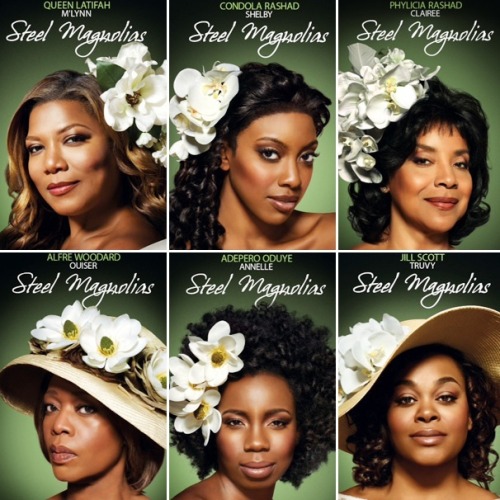
Here's a look at the cast of the remake of Steel Magnolias via Racialicious's Tumblr:
Melissa Harris-Perry's "eloquent rage ."
Class and TLC's Honey Boo Boo.
Here's a look at the cast of the remake of Steel Magnolias via Racialicious's Tumblr:
Wednesday, June 13, 2012
On Class, Femininity, and Sluthood
(Note: by femininity I mean the outward symbols of femininity.)
Lately, I've been reading a lot about the right to be feminine -- a woman's choice to wear makeup, heels, even, gasp, the occasional "slut clothes." A few months ago, someone in Tumblr feed left a message that said, "Every woman should own "slut clothes" and even wear them sometime." Slut is a pretty loaded term, and I don't begrudge anyone wanting to reclaim it, but slut doesn't carry the same set of connotations for every woman. I wish this were addressed more often (or ever) in the feminist blog world. In other words, it's easier to reclaim "slut" when you're privileged on every other axis.
I think what bothers me most, though, is that any criticism is often seen as an attack on women and feminism itself. When someone prefaces a post with "I don't wear makeup (or heels, or short skirts) for anyone but myself," (like here ), it should be okay to counter with, "Okay, but your actions don't exist in a bubble." I don't have to wear concealer or lipstick, but I know I'm treated a little nicer if my dark circles are well-hidden and my lips are rosier. And from my own experiences as a working-class woman, and being around other working-class women, the word slut doesn't simply mean a sexually available woman, but one who hasn't learned to code-switch properly and play the part of a middle-class "good girl."
This comment , from a Feministe post titled, Confessions of a Fun Feminist, is a pretty accurate description of the fine line working-class women walk to be seen as competent as their middle-and-upper class sisters:
Lately, I've been reading a lot about the right to be feminine -- a woman's choice to wear makeup, heels, even, gasp, the occasional "slut clothes." A few months ago, someone in Tumblr feed left a message that said, "Every woman should own "slut clothes" and even wear them sometime." Slut is a pretty loaded term, and I don't begrudge anyone wanting to reclaim it, but slut doesn't carry the same set of connotations for every woman. I wish this were addressed more often (or ever) in the feminist blog world. In other words, it's easier to reclaim "slut" when you're privileged on every other axis.
I think what bothers me most, though, is that any criticism is often seen as an attack on women and feminism itself. When someone prefaces a post with "I don't wear makeup (or heels, or short skirts) for anyone but myself," (like here ), it should be okay to counter with, "Okay, but your actions don't exist in a bubble." I don't have to wear concealer or lipstick, but I know I'm treated a little nicer if my dark circles are well-hidden and my lips are rosier. And from my own experiences as a working-class woman, and being around other working-class women, the word slut doesn't simply mean a sexually available woman, but one who hasn't learned to code-switch properly and play the part of a middle-class "good girl."
This comment , from a Feministe post titled, Confessions of a Fun Feminist, is a pretty accurate description of the fine line working-class women walk to be seen as competent as their middle-and-upper class sisters:
When push comes to shove, it matters a whole hell of a lot whether my [working-class] grandmother presents as “trashy” or middle class. People who count are going to take me seriously because I have credentials. My grandmother has nothing to go on but her self-presentation. If I show up at the doctor in sweats and no makeup, the doctor will look at my chart and see that I’m a grad student at a prestigious university and talk to me like I have a brain, even though I’m a slob. If my grandmother does the same, the doctor will assume she’s stupid and make decisions for her. There’s not as much at stake for me.When I first read this, I wrote:
This perfectly illustrates why I could never embraced the word “slut,” and subsequently, slutwalks. It’s easy to call yourself a slut when you’re a middle/upper-middle class person with the “right credentials” because at the end of the day, those things still get to define you, whether you’re a “slut” or not. Yeah, “trashy” is kind of a problematic word, but my grandmother was exactly the same way: always present better than what you are. My mom and her brother grew up on the poor side of working-class, but their clothes had to be spotlessly clean, starched and pressed. I don’t think I’ve ever seen a picture of my mother in play clothes, and that attitude filtered down to me. To this day, I’ve never worn sweats or flip-flops in public.I know this post can easily be interpreted as slut-shaming on my part (in fact, I'm pretty sure it will be). Women without class or race privilege are often sexualized in a way that women with are not, which makes wanting to reclaim that kind of sexualization harder to do.
Thursday, June 7, 2012
Dealbreakers
I'm glad that Caperton addressed the not-so covert classism in having "dealbreakers" that build relationships on not necessarily wanting an "intellectual peer," but defining intellectual prowess on having a college degree. From the original story that sparked this post and its ensuing discussion:
I know it's easy to read this as, "Why should she have to settle?" But I think Amanda missed the point with her comments :
No one is saying she should have to settle for someone who doesn't "do it for her intellectually," but I question why she was with him in the first place if she knew he didn't. It has less to do with Duke's apparent lack of interest in politics and literature, but the underlying classism in the piece itself.
"Duke was not like me: He was a reclusive Boston native who didn’t read, wasn’t political, and didn’t even own a computer. I grew up overseas, devoured newspapers, and felt happiest surrounded by lots of friends, debating into the night. But our connection ran deep and easy. We spent each prematurely dark night of that New England winter at my house exploring the places our young lives overlapped–laughter, food, pot, sex."She went to college; he didn't. Even if you add in that he still received handouts from his mother, it's the classism is patently obvious. She grew up overseas, read, read some more, read lots of newspapers and had intellectually stimulating discussions; he drew. And skateboarded.
I know it's easy to read this as, "Why should she have to settle?" But I think Amanda missed the point with her comments :
I feel you want to judge this woman for not wanting to be with a guy who doesn’t do it for her intellectually, and your half-hearted hat tips to the concept of enthusiastic consent aren’t very convincing. Women’s hearts and bodies aren’t a democracy. If our hearts aren’t set afire by men who don’t share out interests in politics and literature, that doesn’t make us bad people. It doesn’t make us “elitists”.
There’s enough pressure on women to ignore what we really want from life and love and instead offer our bodies and our hearts up selflessly, giving up the hope of real satisfaction so as not to be “bad” girls who care about “shallow” or “elitist” things like what will make us happy. Sad to see a feminist blogger double down on that pressure.Maybe I'm especially attuned to class, given that it's a privilege I don't share with the majority of the feminist blog commentariat, but after reading the original article, I almost became hyper-focused on the class bias -- not to mention ableism. (Part of the reason Duke had a real aversion to furthering his education was his dyslexia.) And maybe I'm making this too personal (or god forbid, too about me), but as someone whose path to higher education was a little winding and bumpy, this is the kind of stuff that keeps me from participating in the feminist/activist blog world.
No one is saying she should have to settle for someone who doesn't "do it for her intellectually," but I question why she was with him in the first place if she knew he didn't. It has less to do with Duke's apparent lack of interest in politics and literature, but the underlying classism in the piece itself.
Thursday, April 19, 2012
Manic Pixie Blogger
I know I'm no longer part of a site's target audience when all I can do, with enough anthropological distance, is sit back and enjoy the ride.
Sorry if that sounds a little flip, but a lot of the comments on this thread leave me a little flummoxed and really feeling my age. I'm not here to dissect Cat's writing (what she wrote in light of Whitney Houston's death was excellent, by the way), or judge her lifestyle, but it's incredibly naive to ignore that the image she's projecting, or the one bestowed upon her, is not something that's available or achievable to all, or even most, women, which makes her "relatable-ness" a little less, er, relatable. As commenter miamaya succinctly put it, "Would Cat be “fascinating” if she weren’t conventionally attractive? She makes me think of all the gushing over Edie Sedgwick and how magnetic and charismatic she supposedly was. I searched to find out what she actually accomplished and found out she had no notable accomplishments aside from being an addict who hung out with the cool crowd and wore funky clothes."
No, she wouldn't. And to be certain, this isn't an attack on her looks or her background, but romanticizing the "self-destructive little rich girl" image is a pretty damaging thing. That kind of charisma and charm only works when paired with looks and money.
When I was younger, I idolized Edie Sedgwick -- or, at least, the idea of Edie Sedgwick. It was a pretty fucked-up thing to do, but her life seem so glamorous and so unlike mine. Even after several viewings of Ciao! Manhattan, I still have no idea who she was other than this cool chick who did tons of drugs and hung out with Andy Warhol. Years later, I came across the same trope reading Prozac Nation and Thing of Beauty, the biography of supermodel, Gia Carangi. I could never be those girls, not because of nagging self-esteem issues, but because if I did a smattering of drugs or partied it up, I'd end up in prison or in a ditch, and frankly, not that many people care if I do. I welcome honest conversations about addiction, but not to the point that it's exclusively the domain of economically privileged, attractive white girls. It's not the only face of addiction, but it's the one that's most romanticized.
Sorry if that sounds a little flip, but a lot of the comments on this thread leave me a little flummoxed and really feeling my age. I'm not here to dissect Cat's writing (what she wrote in light of Whitney Houston's death was excellent, by the way), or judge her lifestyle, but it's incredibly naive to ignore that the image she's projecting, or the one bestowed upon her, is not something that's available or achievable to all, or even most, women, which makes her "relatable-ness" a little less, er, relatable. As commenter miamaya succinctly put it, "Would Cat be “fascinating” if she weren’t conventionally attractive? She makes me think of all the gushing over Edie Sedgwick and how magnetic and charismatic she supposedly was. I searched to find out what she actually accomplished and found out she had no notable accomplishments aside from being an addict who hung out with the cool crowd and wore funky clothes."
No, she wouldn't. And to be certain, this isn't an attack on her looks or her background, but romanticizing the "self-destructive little rich girl" image is a pretty damaging thing. That kind of charisma and charm only works when paired with looks and money.
When I was younger, I idolized Edie Sedgwick -- or, at least, the idea of Edie Sedgwick. It was a pretty fucked-up thing to do, but her life seem so glamorous and so unlike mine. Even after several viewings of Ciao! Manhattan, I still have no idea who she was other than this cool chick who did tons of drugs and hung out with Andy Warhol. Years later, I came across the same trope reading Prozac Nation and Thing of Beauty, the biography of supermodel, Gia Carangi. I could never be those girls, not because of nagging self-esteem issues, but because if I did a smattering of drugs or partied it up, I'd end up in prison or in a ditch, and frankly, not that many people care if I do. I welcome honest conversations about addiction, but not to the point that it's exclusively the domain of economically privileged, attractive white girls. It's not the only face of addiction, but it's the one that's most romanticized.
Thursday, April 12, 2012
The fourteen year-old girl I wasn't
I was clearing out some old bookmarks when I came across Flavia's Tiger Beatdown piece on Lana Del Rey, specifically the criticism that she's patently "anti-feminist" devoid of any agency, and exists only as an "object of desire." I've linked to this piece before, for sure, because it's one of the most nuanced things I've read about the woman. That's not what struck me, though. This was, so much that I had sort of an "ah-ha" moment:
I almost didn't want to write this, because it seems unduly judgmental of other women and how they navigated through adolescence -- but I suspect a lot of women nodded in agreement.
I keep going back to a quote from Lynda Barry I read some years ago. Maybe it's only tangentially related, but it comes closest to illustrating my own childhood reluctance to embracing all things girly: "On my street there were a lot of girls, but girlish girls were few. Mostly we were tomboys." Most of the girls I grew up with were James Deans, too, once they grew out of their tomboy stage.
I'm not sure if I have a larger point to make other than within contemporary feminism, there's a huge emphasis placed on choice: the choice to wear lipstick, shave one's legs, and wait for that James Dean. I don't begrudge other women's choices, and I think I've been around long enough to know that you can have those things without turning in your feminist card. However, someone who doesn't embody "traditional femininity" (yes, I realized that's a loaded term) should chalk her choice up to internalized misogyny. It's seems irresponsible not to, but it's also a little reductive. Growing up on the poor side of working-class, a lot of what passes for traditional femininity simply wasn't available to me. We couldn't afford the outward signs of girldom -- the canopy beds and pretty dresses -- I learned not to desire them. Plus (and this is a big plus) I didn't want to seem meek or silent: being tough and cool, "like one of the guys" was a way out. In her book Skin, Dorothy Allison touches on the problems feminism has historically had with class. She states: "Traditional feminist theory has a limited understanding of class difference and how sexuality and self are shaped by both desire and denial. " Feminism is still in class denial.
Because I, too, hoped my very own James Dean would rescue me from such unforgettable shame. The shame of growing up, of having a body that didn’t fit, of being a lonely and sad teenage girl. The kind of girl who grew up to be a staunch feminist but who would have also loved Lana Del Rey.I actually relate to a lot of what Flavia wrote: I didn't fit the blonde, blue-eyed, lithe ideal -- not by a long shot, but (and I included this in the comment I left on the original post) I didn't fantasize about having a James Dean-type swoop down and save me, as much as I fantasized about being James Dean myself: kind of a cool, aloof loner. I did my best to cultivate that attitude through high school. I'm not saying it was a superior choice, but it did, and still does to an extent, inform the way I process things. It's easy to be critical once you're set on being the consummate outsider.
I almost didn't want to write this, because it seems unduly judgmental of other women and how they navigated through adolescence -- but I suspect a lot of women nodded in agreement.
I keep going back to a quote from Lynda Barry I read some years ago. Maybe it's only tangentially related, but it comes closest to illustrating my own childhood reluctance to embracing all things girly: "On my street there were a lot of girls, but girlish girls were few. Mostly we were tomboys." Most of the girls I grew up with were James Deans, too, once they grew out of their tomboy stage.
I'm not sure if I have a larger point to make other than within contemporary feminism, there's a huge emphasis placed on choice: the choice to wear lipstick, shave one's legs, and wait for that James Dean. I don't begrudge other women's choices, and I think I've been around long enough to know that you can have those things without turning in your feminist card. However, someone who doesn't embody "traditional femininity" (yes, I realized that's a loaded term) should chalk her choice up to internalized misogyny. It's seems irresponsible not to, but it's also a little reductive. Growing up on the poor side of working-class, a lot of what passes for traditional femininity simply wasn't available to me. We couldn't afford the outward signs of girldom -- the canopy beds and pretty dresses -- I learned not to desire them. Plus (and this is a big plus) I didn't want to seem meek or silent: being tough and cool, "like one of the guys" was a way out. In her book Skin, Dorothy Allison touches on the problems feminism has historically had with class. She states: "Traditional feminist theory has a limited understanding of class difference and how sexuality and self are shaped by both desire and denial. " Feminism is still in class denial.
Tuesday, March 27, 2012
Worst States or Worst-Governed States?
"Setting up some kind of system where there are “crappy” states and “awesome” states doesn’t seem too helpful. I wonder if it allows people in “awesome” states to be complacent about the problems in their own backyards, while alienating people in the “crappy” states. People in “crappy” states might be complacent about their problems, too, thinking that their state is just “crappy” and nothing can be done about it. Or they might think the best move on their part is to flee to an “awesome” state, further depleting their state of people who can actually be a positive force for change." -- Commenter Anna from Feministe's "Arizona is officially the worst state in the union now, right?"I saw this comment last week and wanted to highlight this, but I forget to include it in Friday's links. This encapsulates everything that's wrong with the feminist/activist/progressive bog world's reporting on laws, particularly in the American south and midwest, that deny rights and power to marginalized groups. It's one of the biggest reasons why I rarely comment anymore. Classism is overlooked, expected, or even encouraged in supposedly liberal circles, and it alienated readers from parts of the country that are poorer, rural, and more conservative.
Saturday, March 24, 2012
Shelving: Rereading Women by Sandra M. Gilbert
I really wanted to like this books. Feminist criticism, whether in music, literature, or even mainstream pop culture, remains marginalized, but Gilbert's book just left me with more questions than answers, primarily, what place does academia have in feminism? (Not the other way around.)
 Though most of the essays in Rereading Women date from the 80s to the late 90s, in the introduction she writes on becoming a feminist in the 50s and 60s, and touches on the rift between second and third wave feminists:
She also disagrees with Jessica Valenti, who in her book, Full Frontal Feminism says, "When I started coming home from grad school with ideas and theories that I couldn't talk to [my mother] about, academic feminism ceased to be truly useful to me. I think feminism should be accessible to everybody. no matter what your education level. And while high theory is pretty fucking cool, it's not something everybody is going to related to."
Exactly, which is the biggest problem I had with this book. Working-class and women of color were given nary a footnote. Trans and gay women are nowhere to be seen. While its a pretty powerful thing to have a feminist literary canon, it's becomes nullified by its exclusion -- in essence, it's no better than the patriarchal one before it.

"Students and interviewers often ask such questions, eagerly wondering, 'How did you...?' 'Why did you...?' and 'When did you...?' Many of them, participants in the Riot Grrrl Revolution that's part of what's now known as Third Wave feminism, have some stereotypical ideas about those of us who rose to consciousness as the Second Wave crested and flung new ideas all over the world."I wish I didn't have to, because I've more than once written about riot grrrls insularity, but isn't pretty stereotypical, too, of older feminists to lump younger ones into easily defined categories? If every woman born after 1970 who identifies as a feminist is, by default, a "riot grrrl" feminism, then I want a different word to describe what I am. This is a huge pet peeve of mine.
She also disagrees with Jessica Valenti, who in her book, Full Frontal Feminism says, "When I started coming home from grad school with ideas and theories that I couldn't talk to [my mother] about, academic feminism ceased to be truly useful to me. I think feminism should be accessible to everybody. no matter what your education level. And while high theory is pretty fucking cool, it's not something everybody is going to related to."
Exactly, which is the biggest problem I had with this book. Working-class and women of color were given nary a footnote. Trans and gay women are nowhere to be seen. While its a pretty powerful thing to have a feminist literary canon, it's becomes nullified by its exclusion -- in essence, it's no better than the patriarchal one before it.
Thursday, February 16, 2012
Read This: How Thick Is Your Bubble (Kate Harding)
I'm always really happy to see Kate Harding writing again, though it took me a minute before I realized I'm not the target audience. Class is rarely talked about in the feminist and social justice blogosphere, and like most liberal spaces, classism is misunderstood, accepted, and even encouraged. An honest discussion about class issues is a welcome sight. In the post there are links to quiz to see how thick your bubble is (meaning how removed are you from working-class America), and Kate added a few of her own queries.
How Thick Is Your Bubble:
But I answered "yes" to most of Kate's questions, too, missing only a handful: I've never been to a gay wedding -- gay marriage is still illegal in my state, and there haven't been any newsworthy acts of violence at the public school in my neighborhood, at least none that I know of. There are a few things I could add to it, like "have you or your family ever lived a year without health insurance?" a big issue for working-class families. I think it's also fair to note that one can live among poverty, and not be directly affected by it. Another bubble.
How Thick Is Your Bubble:
"I am one of the people [author Charles Murray of the book Coming Apart: The State of White America] speaks about—born, raised, and lucky to have remained upper-middle-class, with zero lived experience of poverty, rural America, or hand-roughening work. I’ve eaten at an Applebee’s recently only because my sister has kids and lives in the suburbs; I’ve walked a factory floor only because my dad was the boss; I score no points for living in an economically and educationally mixed neighborhood because I am one of the white gentrifiers. I’m friends with a few people who were raised in evangelical Christian families and communities, but they’re all atheists now. (Wait! I was just reminded that one is now a Reform Jew.) I lettered in yearbook, and the only uniform I’ve ever worn was a teal polyester skirt suit required by the bank where I worked for six weeks in 1993, before I quit in tears and admitted to my wealthy, supportive parents that yes, fine, I wanted to go back to college. I have a master’s degree, a professional husband, no kids, and a sense of entitlement a mile wide."I took Murray's quiz, and as someone who grew up working-class and still identifies as such, I have no bubble -- at least not an obvious one, and not in the way Murray defines it. Most of my neighbors did not have college degrees, my parents did not hold managerial positions (my mom moved up into one after years of hard work), and we lived pretty close to the poverty line -- something I didn't really become aware of until I was in my teens. I watched a metric ton of junk tv and ate fast food most days. Despite that, and like how Harding describes her life now, my upbringing was atypical. My neighborhood was ethnically diverse. My dad was sort of a hippie who let my friends call him Lou. Neither of my parents could be called religious. (Dad's agnostic; mom's vaguely spiritual. The most religion I got ever from either was when my mom taught me to read Tarot cards and how to do someone's astrological chart.) We didn't have a car, but I went to a private school. I lived a block away from a good library and a short bus ride from an art museum. By the time I was in college, I knew someone who was dying from AIDS. I lived -- and still live -- in the American Midwest, but feel divorced from middle-America.
But I answered "yes" to most of Kate's questions, too, missing only a handful: I've never been to a gay wedding -- gay marriage is still illegal in my state, and there haven't been any newsworthy acts of violence at the public school in my neighborhood, at least none that I know of. There are a few things I could add to it, like "have you or your family ever lived a year without health insurance?" a big issue for working-class families. I think it's also fair to note that one can live among poverty, and not be directly affected by it. Another bubble.
Thursday, January 5, 2012
When the other is the reader: class bias in the liberal blogosphere
I feel like I've been writing the same post over and over for the past year, but I can't seem to repeat this enough, especially when I see headlines like this one from Jezebel: When We Talk About Single Ladies, Let’s Not Forget The Working Class. When "we" talk about the working class. Um, the working class is part of that "we." It's pretty sad when class bias permeates a piece about class bias, but in liberal spaces classism is acceptable -- even encouraged.
Also, I think we need to make the distinction between the long-standing, multi-generational class oppression and the temporary kind that comes with being new to the workforce and heavy in debt with student loans. I'm not saying those things aren't important -- and as the occupy movement has show, that line is becoming thinner and thinner -- but the face of the feminist blogosphere in particular is white, middle-class and college educated.
I've largely stayed away from the discussion at hand, but I really wanted to highlight this comment from Feministe commenter Shelly:
So where's the solution when class bias is so deeply woven into progressive circles -- the kind of bias that says "thank goodness they aren't me?" We might not be you, but we're reading you.
Also, I think we need to make the distinction between the long-standing, multi-generational class oppression and the temporary kind that comes with being new to the workforce and heavy in debt with student loans. I'm not saying those things aren't important -- and as the occupy movement has show, that line is becoming thinner and thinner -- but the face of the feminist blogosphere in particular is white, middle-class and college educated.
I've largely stayed away from the discussion at hand, but I really wanted to highlight this comment from Feministe commenter Shelly:
It seems this site is a community only for educated, white, urban, coastal women in the USA and a handful of women in other countries who are similarly situated. Also they have to know feminist theory and the proper lingo. If not, their voices don’t matter.Granted, I hit a few of these markers myself, but I’m not coastal (I live in a conservative part of the country), I’m not middle-class, and what feminist theory I have has been acquired piecemeal — as in I’ve never taken a formal women’s or gender studies course — but I’m pretty well-read. It’s not like I don’t know this stuff. and frankly, I find it a little insulting that the only way to familiarize oneself with feminist theory and the “proper” lingo is to take a class, but I think it's sometimes easy to forget that not everyone has access to the same resources. I rarely comment, not necessarily for those reasons, but that the minute I identify myself as working-class, my words will be interpreted as less than sophisticated.
So where's the solution when class bias is so deeply woven into progressive circles -- the kind of bias that says "thank goodness they aren't me?" We might not be you, but we're reading you.
Tuesday, December 20, 2011
FEM 101: Not All Women Benefit from Feminism

This is from bell hooks's book, Where We Stand: Class Matters, a full decade old. And even though she was talking about the early second-wave feminists of Friedan's era, it's as relevant today. And it's pretty disheartening:
It was not gender discrimination or sexist oppression that kept privileged women from working outside the home; it was the fact that work open to them would have been the same low-paid unskilled labor open to all women. This elite group of highly educated females stayed at the home rather than do the type of work large numbers of middle-income and working-class women were doing.It's also disheartening to see so many commenters willing to defend feminism without looking at its history of exclusion.
Friday, December 16, 2011
Links & Bits: 12/16/11
Jorge Rivas from Colorlines on the problematic Diane Sawyer special on Native American children
Shakesville talks about the lack of women in Time's Person of the Year features.
Bitch Magazine's Gretchen Sisson on the classing of voice on America's Next Top Model
Wednesday, November 30, 2011
Blue Dot in a Red State
I’ve wanted to write something about how class privilege factors into the liberal blogosphere without falling into the trap of “it’s the last acceptable prejudice”, but class bias is expected, overt, and even encouraged.
I'm a minor player in the feminist/SJ blogging community. Mine own is less about politics than pop culture, but I read and comment on quite a few progressive sites, and it infuriates me that "dumb rednecks" is and acceptable response to a story about the goings on in conservative parts of the county. How does class play into this? Area of the county where working-class and rural poor -- even extreme pockets of poverty -- out number middle-class and wealthier people overlap conservative areas of the US Even if this isn't entirely true, the perception is still there, and even without the class bias, condemning an entire swath of the county as "stupid rednecks" is really unfair, but this comment from Feministe's Capertopn is one of the few where I've seen it explicitly addressed:
You know what I'd like to see? A story about abortion restrictions in red states written by a woman who actually lives in one. I'd like to see more stories about working-class women -- women are disproportionately poor -- written by actual, working-class women. But most importantly I'd like to see the larger sites at least acknowledge that some of those women are a part of their readership.
I'm a minor player in the feminist/SJ blogging community. Mine own is less about politics than pop culture, but I read and comment on quite a few progressive sites, and it infuriates me that "dumb rednecks" is and acceptable response to a story about the goings on in conservative parts of the county. How does class play into this? Area of the county where working-class and rural poor -- even extreme pockets of poverty -- out number middle-class and wealthier people overlap conservative areas of the US Even if this isn't entirely true, the perception is still there, and even without the class bias, condemning an entire swath of the county as "stupid rednecks" is really unfair, but this comment from Feministe's Capertopn is one of the few where I've seen it explicitly addressed:
Okay, this is not going to devolve into the usual volley of how backward and stupid and ignorant and racist/sexist/whateverist and worthless and unsalvageable the South is. As regions go, it’s a nice one to beat up on and feel superior to. I get it. It’s a classic. But it’s made up of people, and that’s what you’re calling worthless and ignorant. The number of Southerners on this very blog should be evidence enough that no, it’s not beyond help, it’s not beyond salvaging, and there are people working to actually effect change while you sit and sneer. If you have a worthwhile comment, by all means make it. But I’m not going to hear an entire region of people, including Feministe regulars, getting slagged off for an entire thread.Usually this happens when there's a post about a state's restrictions on abortion, or gay marriage. As someone who actually lives in a state with a poor track record of providing safe, legal abortion without question, and one with no chance of gay marriage become legal anytime soon, I get it. It needs to be discussed. But I also know that there is a vocal minority trying to change those laws.
You know what I'd like to see? A story about abortion restrictions in red states written by a woman who actually lives in one. I'd like to see more stories about working-class women -- women are disproportionately poor -- written by actual, working-class women. But most importantly I'd like to see the larger sites at least acknowledge that some of those women are a part of their readership.
Subscribe to:
Posts (Atom)